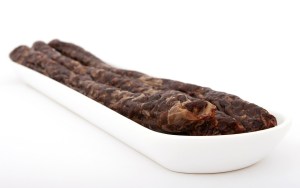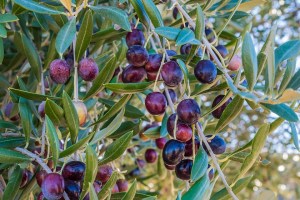

Arousing The Fighting Spirit In Your Men

fight1

The historian Sextus Julius Frontinus (c. 40-103 A.D.) wrote an interesting book called Stratagems (Strategamaton) which provides historical examples of various military ruses.  It is actually a vast digest of historical examples that was meant to serve as a commander’s handbook of military advice.  One of the chapters I was reading recently I wanted to share with readers here.  It is called “How An Army Should Be Aroused To Battle (Quemadmodum incitandus sit ad proelium exercitus).

Frontinus gives us a series of examples on this topic.  He teaches by way of illustration, not by explanation.  The reader is expected to draw his own conclusions on the wider principles involved.  Here are his examples (taken from I.11 et seq.) of how armies and men can be inspired to do battle.

1.  Fulvius Nobilior was fighting against the Samnites with a small force.  He was losing.  So he pretended that one legion of his enemy had been bribed by him to turn traitor, even though this was not true.  Fulvius had his men set aside a large sum of money in furtherance of this assertion.  He promised his men that when victory had been achieved, he would amply reward those who had contributed gold and silver for the alleged “payoff.”  Fired by this promise, the Romans attacked with ferocity and won a great victory.  Sometimes it is necessary to deceive even your own men.

2.  Caesar was fighting against the Germans and their king, Ariovistus.  He called his men together and told them that he was especially selecting one of his units–the Tenth Legion–to attack the enemy alone.  He praised the unique qualities and heroism of unit to his other units.  By doing this, he inspired in the other units a healthy feeling of competition and envy.  In this way, he raised the fighting morale of all his units.

3.  Agesilaus, a Spartan general, had pitched his camp near the city of Orchomenos.  He learned that many of his soldiers were storing their possessions within the safety of the town.  So he told the townspeople not to accept any of his soldiers’ belongings.  He reasoned that his men would fight better knowing that they were fighting for their worldly goods, and that there was no safe place for such things except through combat.

4.  Epaminondas once lied to his men about the intentions of the Spartans.  He told his men–falsely–that if they were to lose to the Spartans, that the Spartans would slay all males and destroy the city of Thebes.  Inspired by courage born of desperation, the Thebans attacked the Spartans with ferocity and overwhelmed them.

fight2

5.  Pericles, on one occasion before battle, had one of his troops actually dress up as a “god” and appear partially obscured in a grove of trees and announce that the Athenians had been divinely selected for victory.  When his men heard things, they were filled with ardor.

6.  The commander Quintus Sertorius was once using barbarian troops who were known to be superstitious.  So he brought around his camp a perfectly white deer, and took it around with him.  He used this animal as a talisman and a good-luck charm, and claimed that it had come to him by way of the gods.  His men were inspired by this spectacle.  (This incident is mentioned in Aulus Gellius, XV.22).

7.  Alexander the Great was known to manipulate the entrails of animals so that it appeared that the livers of the sacrificial victims were imprinted with his initials.  By using such hocus-pocus, he would convince his men that the gods were on their side.

8.  Gelo, the tyrant of Syracuse, knew his men were fearful of their enemies the Carthaginians.  To dispel this feeling, he had some captured Carthaginians stripped naked and paraded, so that his men could see that they were fragile mortals like all other men.

9.  Cyrus, king of the Persians, liked to keep his men busy and occupied.  He ordered them to cut down a forest on one day.  On the next day, he gave them a feast.  When he asked them which even they liked better, they told him, “the feast.”  He responded by saying that a feast has no taste unless it has been won by labor.  This was how he motivated them for battle against his foes.

10.  Lucius Sulla used the same tactic as Cyrus.  He wore out his men with tedious and exhausting tasks, so that eventually they came to prefer battle to having to fulfill his manual labor assignments.

These, then, are some of the ways that ancient commanders inspired their men to enter battle with enthusiasm.  The methods use a mix of trickery, shame, and psychological insight into the motivations of men.  Here is illustrated a principle:  appeals to altruistic goals are often not enough.  To get men moving, something more is often needed.  This is not an absolute principle; in history, men have often been inspired by religious, ideological, or patriotic motivations.  But other incentives certainly do help.

Read More:  Invective Has A Distinguished Lineage

Onde a história, a ciência e a biologia se cruzam (A Reader’s Translation)

A reader has translated one of my recent articles that was published here on June 7 (“Where History, Biology, And Religion Intersect“) into Portuguese for publication on his blog.  I thought that was pretty cool.  He sent me the link, and I wanted to share it.

“Onde a história, a ciência e a biologia se cruzam”

Here’s the link

Great work, Miguel.

It’s all about spreading the love around…


Quintilian’s Guidelines For Boys’ Reading

writer

The Roman rhetorician and teacher Quintilian (c. A.D. 35-100) is a rich source of tutelage for the student of proper speaking and writing.  His Institutio Oratoria explores hundreds of subjects related to rhetoric and educational techniques.  He remains a master of melioration.  One section of his treatise (I.8) discusses guidelines related to reading habits for boys.

1.  Reading, says Quintilian, should in the first place be “manly and dignified” and should “show a certain seriousness” (virilis et cum sanctitate quadam gravis).

2.  The boy should be able to understand the basics of the text.  That is, it should not be on such an advanced level that it leaves him bewildered.  He might not know everything, but he should have enough to keep his attention.

provide3

3.  Young minds are very impressionable.  Care should be taken regarding what is put in front of them.  Reading material must, therefore, be morally improving.  I’ve written about this before in various places (i.e., in my book Thirty-Seven), and will say it again:  the formation of character in young men is where the modern educational system shows itself to be woefully deficient.

4.  Quintilian recommends the epic poets Homer and Virgil as good places to start.  Of course, the youth will not be able to process all that is happening, but at least he will be exposed to the very best right from the beginning:

Ideoque optime institutum est ut ab Homero atque Vergilio lectio inciperet, quamquam ad intellegendas eorum virtutes firmiore iudicio opus est; sed huic rei superest tempus, neque enim semel legentur. [I.8.5].

(“Therefore it is the best method that one begin with reading from Homer and Virgil, even though a more experienced judgment is needed for comprehending the virtues of these books; but there will be time enough for this, since these books are not read only once.”)

The point here is to expose the young mind to good things at a time when they will be able to shape consciousness.

5.   Tragedy and lyric poetry is very good and can be used for instruction, but care must be used in its selection.  There is much licentious material in these Greek poets, and in Horace also, our strict schoolmaster Quintilian cautions (Nam et Graeci licenter multa e Horatium nolim in quibusdam interpretari).

6.  Overt erotic poetry should be reserved only for later years.  Young boys have no business being exposed to such material.

7.  Comedy is very good for instruction, as it teaches boys to stay on their toes and cultivate their rhetorical abilities.

8.  In all things, the texts selected should be those that “nourish the mind and character (quae maxime ingenium alant atque animum augeant praelegenda).”  Academic scholarship must take a distinct back seat to the shaping of character.  Character first, everything else second.

9.  Very often, the older material is better than the newer literature, since the older material has stood the test of time.  Older writers took greater care in stylistic formation and precision.

10.  Quintilian valued “a high moral tone” and “manliness” in his writers for young men.  Has anyone ever given us better guidance than this, in our modern era of complete neglect of these virtues?  He says:  Sanctitas certe et, ut sic dicam, virilitas ab iis petenda est, quando nos in omnia delicarum vitia dicendi quoque ratione defluximus.  And this means the following:

Truly, a dignity and, if I may say, a manliness, must be sought from them [writers], since we have degenerated into moral vices even in our way of speaking.

12.   We should also read the speeches of the great orators, and use their verbal agility as a guide in forming our own writing and speaking skills.

All in all, this is admirable advice.  If I had a son, this is the kind of general guidance I would want to see applied in his studies.  Character first, knowledge second.  Unfortunately, it is wisdom that has been nearly forgotten.


Read More:  The Wisdom Of Thomas a Kempis


The Roman Preparation Of Salt Pork

pork1

My most recent articles here have focused on a different type of subject matter than that which I normally write about.  Change is refreshing.  In recent weeks, I’ve had a lot of enjoyment going through the primary Latin works on agriculture and farming:  these are Columella’s Res rustica, Cato’s De agricultura, and Varro’s De re rustica.

I had not imagined that I would like reading about this sort of thing, but it’s been a very eye-opening experience.  Organic farming is an interesting subject.  Judging by the responses to these articles, there are other who feel the same way.

Why?  For one thing, we have begun to appreciate just how important it is for our food and drink to come from good origins.  If we want to think and act in healthy ways, we must ensure that we are literally composed of good ingredients.

We moderns pump our meats with hormones and antibiotics, and drench our fruits and vegetables with chemicals.  Is this a net good?  There are trade-offs in life with everything, and the achievements of modern science should not be minimized.  The modern food distribution system, with its conveniences and modest prices, is something that our remote ancestors could only have dreamed of.

At the same time, it is a mistake to think that we have not paid a price for all this.  In Roman times and for many centuries afterwards, animal husbandry and the cultivation of produce was done “naturally” using human and animal labor.  The Romans did not have to try to be “organic” farmers; they just were.  Reading the food preparation recipes in the three authors named above (Columella, Cato, and Varro) in the original language made me imagine just how good foods must have tasted in those days.

Everything was raised and produced naturally.  We have paid a price for our modern food system.  On balance, it was probably worth it, but I know that I’m going to make more of an effort to cut out of my diet any foods that are too tainted with chemicals, hormones, and antibiotics.

I will describe here Columella’s preparation of salt pork.  This preparation caught my eye, since salt pork plays a major role in an important dish that I grew up with:  New England cod and clam chowders.  Salt pork has many other uses, of course.  It can be found in a number of Spanish and Portuguese dishes, and figures in the cuisines of other nations as well.

We will now find out how the Romans prepared it.  My source here is Columella (XII.55).

Columella’s Preparation of Salt Pork

1.  Columella begins by warning us of the necessity of removing all moisture from the meat during the treatment process.  A good way to begin, then, is to prevent the pigs from drinking the day before they are to be slaughtered.  This rule applies to all animals, and especially to the pig.  (Omne pecus et praecipue suem pridie quam occidatur, potione prohiberi oportet, quo sit caro siccior).

2.  The pig should be dispatched quickly and humanely.  Then the carcass should be boned (bene exossato).  The boning (i.e., removing the bones) makes the flesh preserve better (magis durabilem salsuram facit).

3.  The flesh should then be thoroughly salted with rough, coarse salt that has been “toasted” or smoked (cocto sale).   The salt should be liberally stuffed into the cavities where there still may be bones remaining.

4.  The carcass (presumably cut in half here) should be stretched out on wooded planks.  Covering them with another board, place heavy weights on top of this.  This will act to press out any remaining blood and moisture from the flesh.  Let this sit for three days.

pork2

5.  After the third day, you should change the salt by rubbing off the old salt and rubbing on new handfuls of salt.  The goal is to replace the old salt with fresh salt, so that the pork continues the drying process.

6.  If the weather is mild and not wet, you can leave the carcass to cure in this way for nine days.  If the weather is wet or rainy, you should let it cure for about ten days.

7.  Take the pork to a fresh water source like a pond or river and wash out the salt as thoroughly as possible.

8.  The carcass should then be hung up in a larder (in carnario), where it can receive a small amount of smoke.  Besides adding flavor, the smoke will also serve to dry up any remaining moisture (In carnario suspendi, quo modicus fumus perveniat qui, siquid humoris adhuc continetur, siccare eum possit).

9.  Columella advises us to carry out the salting process at a time when “the moon is waning” (luna descrescente), especially during the middle of winter, especially February.  We note this advice with an amused smile, and can safely say that the phases of the moon have no relation to one’s success in salting pork.


Read More:  Ancient Methods Of Preserving Olives


Making Mead The Roman Way

grapes2

This is Columella’s recipe for the alcoholic drink called mead; it is found in his Res rustica, XII.41.

Mead is a fermented drink made from honey, to which may be added spices and other aromatics.  Wines of various types as well as mead were the principal alcoholic drinks in the days of ancient Rome.  Beer, although a staple drink in the ancient Near East, Egypt, and among the Gauls and Germans, was known to the Romans but not favored.

Mustum optimum sic facies, says Columella:  Here is how you make good mead.  Let us follow his prescription, and hope for the best.  I am simply summarizing Columella’s recipe here, and have not prepared it myself.

It is interesting from a historical perspective, but I would like to hear if anyone actually tries to make mead this way.

1.  Remove from the “wine vat” a quantity of must (He calls it mustum lixivum, which is simply the juice of crushed grapes).  Must is grape juice that been partially fermented, or not fermented at all.  Since the average person does not have a wine-vat, we assume that any must will do here.

2.  Columella advises us to use the juice of grapes that have been picked on “a dry day.”

3.  Put ten pounds (X pondo) of honey into a large urn (urna) of must, and carefully mix them together.  We assume here that one can reduce the volumes proportionally, if a smaller batch of mead is to be made.  How much must should be mixed with the honey?  Here we must use some detective work.  The text of Columella only uses the word “urn” (urna).

grape1

An urn was both a generic word for large storage vessel, and also a unit of liquid measure.  I am assuming here that Columella meant it to indicate unit of liquid measure.  According to the Oxford Latin Dictionary, the term urna signified half of an amphora.  So one urna was about 13 liters, or nearly “3 imperial gallons.”

4.  Pour the must and honey mixture in a large vessel and “seal it up with plaster.”  (I am assuming here that we can safely omit the plaster, and use any reliable form of sealing that permits the gases of fermentation to escape.  I include it only to show how things were done in Columella’s day).

The sealed vessel should be placed in a cool, dry loft, for fermentation.

5.  The vessel should be retrieved after thirty-one days, opened, and strained.

6.  It should then be placed into another vessel, sealed with plaster, and then put where “the smoke will reach it” (in aliud vas mustum eliquatum oblinire, atque in fumum reponere).  Notice how plaster sealing is used again here, as an efficient way to permit gases to escape from the jar.

It is not clear why Columella thinks smoke is a good thing for the mead.  Perhaps it was a way to give it some flavor.  The mead could be drunk at any point after this time.


Read More:  How The Romans Collected Beehives

Ancient Methods Of Preserving Olives

olives2

We continue our perusal of Roman organic and agricultural practices.  Columella (XII.49) give the following instructions for the preparation of olives.

Basic Method

1.  During September and October, while the olive harvest is ongoing, the bitter Pausean olive (acerba Pausea) can be harvested.

2.  The olive should be crushed and soaked for a short time in warm water, then drained.

3.  Olives should then be mixed with fennel and mastic seeds, together with rough salt that has been “toasted.”   (cum cocto sale modice permixtam).  The smoky salt will impart a nice flavor to the whole.

4.  This entire affair is then put into a jar.  Over the jar of olives, salt, and spices, pour enough “must” to cover them.  Must (mustum) is unfermented or only partially fermented grape juice.  Then pack in additional fennel on the top, and seal the jar.

5.  After three days of immersion, the olives can be eaten.

olives1

Another Method

This method of olive preservation is good for the Pausean, orchite, shuttle, or royal olive.  It’s very similar to the method given above.

1.  Soak the olives in cold brine for some time.

2.  Line the bottom of a large jar with fennel.  In a separate pot, place fennel and mastic.

3.  Take the olives out of the brine and squeeze them dry.  Then mix them with the fennel and mastic.

4.  Put the olives and spices in the large jar with the fennel at the bottom.  Then fill the container with an equal mixture of brine and must.

5.  Cut up finely some leeks, rue, mint, and Italian parsley, and add these herbs to the jar of olives.  Their flavor will infuse the whole.  You can also add a little peppered vinegar, honey, olive oil, or mead if you desire.

5.  Olives so treated will keep for a whole year.

Variations

There are some good variations on these preparations:

1.  When olives have been treated with brine, you can pour out the liquid and replace it with two parts of boiled must and one part of vinegar.  This also works well.

2.  Columella tells us that (XII.49.10) he has crushed good olives in a press, mixed them with toasted salt, fennel, mastic, and rue.  The berries are then left alone for three hours, so that they absorb some of the salt.  All of this is then stored in jars, and covered in good olive oil.  Then dried fennel is pressed on top, and then the jars are sealed.

Black Olives

1.  Dark olives should be picked in good weather and placed in baskets.  To every modius of olives you should add three heminae of salt.

olives3

(The modius and hemina were Roman units of measure.  The modius contained 16 sextarii or 1/6 of a medimmus, a “peck”.  A hemina was one-half of a sextarius).

2.  The olives should be then left for thirty days to allow the “lees” to drip out.

3.  Then dump the olives in a tub and sponge off as much salt as you can.  The olives can then be packed in jars, using must and fennel as preservatives as described above.

Another Black Olive Preparation

1.  The black olives are picked, sifted, and cleaned.

2.  The olives are then put into a mill and crushed.  When made into a pulp, toasted salt is added for flavor.

3.  Then other dry spices are added:  caraway, cumin, fennel, and anise seed.

4.  The olives and spices are then jarred, and oil poured on top of them to fill the jars.

These, then, are Columella’s basic olive preservation recipes.

Read More:  How The Romans Collected Beehives

Ahab Contemplates The Head Of A Whale

There are moments in life for quiet contemplation.  These are moments when we set aside our worldly cares, our tumescent and irritating thoughts, and contemplate the awesome Unknowable of what is in this world.  Of all that has ever been, or is, or will be, we in our poor powers of comprehension will only know the minutest fraction of a fraction.  We become aware of our limited vision, of our puny pretensions, when we see creatures who have access to realms that are beyond our powers.

Is there any living thing more awesome to contemplate in person than a giant redwood tree, extending its many fingers to the sky?

I had one such reminder of this truth today, and wanted to share it with readers while the feeling was still fresh.

This soliloquy comes from Chapter 70 in Herman Melville’s Moby Dick.  The title of the Chapter is The Sphynx.  On deck lies the carcass of a captured whale, in the process of being stripped of its blubber.  The severed head of the whale has been hoisted against the ship’s side.

Another writer might see nothing of significance here.  After all, this is just the stinking remains of a whale.  But Melville sees something more.  He uses the ordinary, the repulsive, and the insignificant to make grand philosophical statements.  This is one of the reasons why Moby-Dick is such supreme literary achievement.

Read this passage aloud to yourself in a quiet moment.  It is Ahab’s soliloquy on the whale’s head.  The Shakespearean grandeur of the prose is unmatched.  It remains for me one of my favorites passages from the book:

Taking a few turns on the quarter-deck, he [Ahab] paused to gaze over the side, then slowly getting into the main-chains he took Stubb’s long spade–still remaining there after the whale’s decapitation–and striking it into the lower part of the half-suspended mass, placed its other end crutch-wise under one arm, and so stood leaning over with eyes attentively fixed on this head.

It was a black and hooded head; and hanging there in the midst of so intense a calm, it seemed the Sphynx’s in the desert.  “Speak, thou vast and venerable head,” muttered Ahab, “which, though ungarnished with a beard, yet here and there look hoary with mosses; speak, mighty head, and tell us the secret thing that is in there.  Of all divers, thou has dived the deepest.  That head upon which the upper sun now gleams, has moved amid this world’s foundations.

Where unrecorded names and navies rust, and untold hopes and anchors rot; where in her murderous hold this frigate earth is ballasted with bones of millions of the drowned; there, in that awful water-land, there was thy most familiar home.  Thou has been where bell or diver never went; has slept by many a sailor’s side, where sleepless mothers would give their lives to lay them down.

Thou saw’st the locked lovers when leaping from their flaming ship; heart to heart they sank beneath the exulting wave; true to each other, when heaven seemed false to them.  Thou saw’st the murdered mate when tossed by pirates from the midnight deck; for hours he fell into the deeper midnight of the insatiate maw; and his murderers still sailed on unharmed–while swift lightnings shivered the neighboring ship that would have borne a righteous husband to outstretched, longing arms.  O head! Thou has seen enough to split the planets and make an infidel of Abraham, and not one syllable is thine.”


Read More:  On Duties:  A Guide To Conduct, Obligations, And DecisionMaking

Ancient Roman Advice On Dog Grooming And Care

We will continue our excursions into Columella’s Res rustica with a summary of his advice on the buying, care, and grooming of dogs.  In his day, as in ours, the dog was an essential animal to have on the farm.  Besides companionship, it provided security and assisted in the management of other domesticated animals, such as sheep and goats.
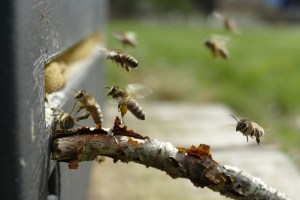

Continue reading

How The Romans Collected Beehives In The Wild

Who Was Columella?

In perusing forgotten volumes, we occasionally come across something of great interest.  I had one such experience yesterday, and thought that writing about it would be a refreshing departure from some recent more serious fare.  Sometimes learning should be frivolous.

Continue reading

Where History, Biology, And Religion Intersect

Some recent articles I’ve read have made me reflect on the interrelationship between religion, science, and history. How do they intersect, and how has one influenced the other?

Continue reading