
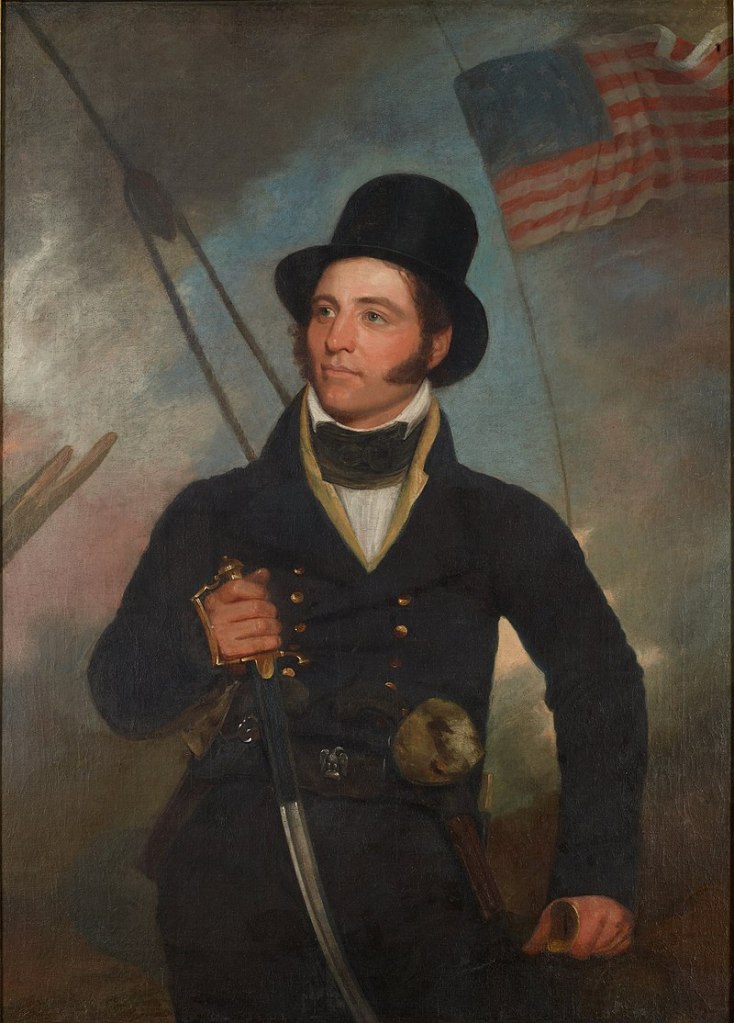
The Defense Of The “General Armstrong”

Samuel Chester Reid was born in 1783 and first went to sea at the age of eleven.  Various adventures, including time as a captured prisoner of the French at Basse-terre in the Carribbean, honed his resourceful instincts; and privateering seemed a logical choice of career.  Upon the outbreak of the War of 1812, Reid assumed command of the brig General Armstrong.  She sailed from New York with a crew of about ninety men, composed of the expected assortment of adventurers, rogues, and merchant sailors. 

Continue reading
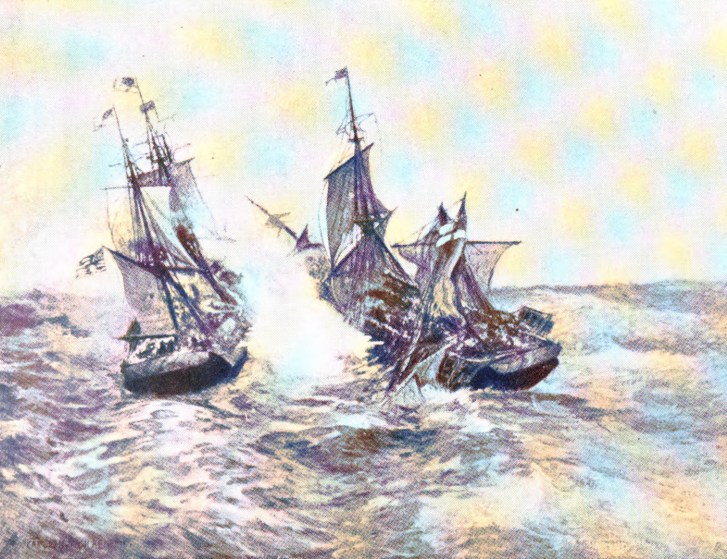

A Well-Timed Ruse: The “Peacock” Captures The “Epervier”

The naval actions of the War of 1812 are instructive for several reasons.  These derive from the particular circumstances of the war, and from the nature of armed conflict in general.  In the War of 1812, the United States was at a significant disadvantage to her British adversary; the British navy was the best in the world, able to project power across the world in a way that the US Navy could not.  British officers were in general better trained and equipped, and often could rely on numerical superiority in engagements at sea. 

Continue reading

The Almond, The Virtues, And Liberty Of Conscience

The philosopher Philo of Alexandria relates the following anecdote in his short treatise On the Life of Moses (II.23.178).  The prophet Moses, we are told, had appointed his brother to the office of high priest.  His decision had been based on his brother’s merits, but there was inevitably some grumbling by people who believed that the appointment was the result of familial favoritism. 

Continue reading

The Strength Of Organized And Cumulative Effort

When studying the history of the exploration of the African continent, one is struck by the relative recentness of our acquisition of its geographic details.  Ancient man undoubtedly mounted expeditions here and there, but none of them has left a lasting modern mark.  Egyptians, Carthaginians, Greeks, and Romans eventually contented themselves with an awareness of the continent’s general contours.  Its interior they count not penetrate; deserts, mountains, rain forests, disease, heat, and hostile native peoples proved too forbidding.    

Continue reading