
More futility than nobility is found in the wars of the emperor Justinian. His capable general Belisarius reconquered Africa and Italy, humbling the strutting pride of the Vandals and Goths; but these fugacious victories only hastened the West’s final ruin.
The historian Procopius chronicles, in laborious detail, the Italian and African campaigns. As the Gothic War came to a close in 553 A.D., Rome was reduced to terminal penury. The city had exchanged hands five times; it had been subjected to siege, blockade, and determined looting. From an imperial high of over one million, Rome’s population plunged to a low of 40,000 destitute souls, many of whom were entirely dependent on the Vatican’s largesse. So many men had been killed or conscripted into the legions that whole regions of Italy were left uncultivated. Milan was reduced to smoking rubble.
Africa fared no better, and perhaps worse. When the historian Procopius first arrived there with the army of Belisarius, he noted the region’s prosperous agriculture, commerce, and general felicity; but in less than twenty years, this picture had entirely reverted to a spectacle of “silent solitude,” to use Gibbon’s phrase. Those with means fled to Sicily or Constantinople, and those without suffered in silence. If the testimony of Procopius’s Anecdota is to believed, five million Africans perished as a result of Justinian’s wars. The Vandal nation, whose fighters once exceeded one hundred sixty thousand (excluding women and children), was extirpated. It does not figure in the pages of history after the sixth century. “[S]uch was the desolation of Africa,” says Gibbon, “that in many parts a stranger might wander whole days without meeting the face either of a friend or an enemy.”
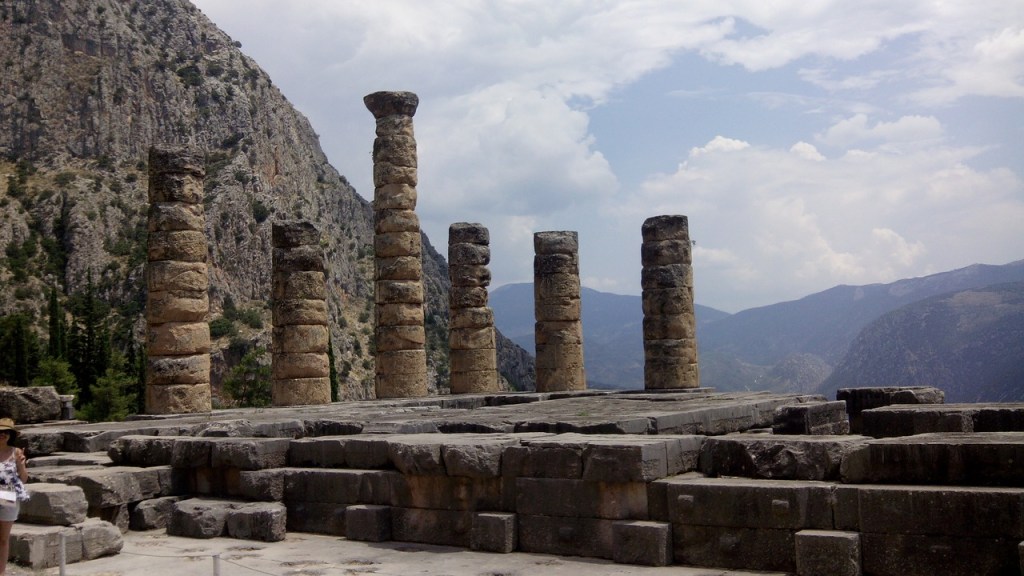
If the chroniclers of the period are to be believed, tens of thousands of civilians in remote Italian towns died of malnutrition. Justinian’s wars also finished the destruction of Rome’s ancient aristocracy. It is during this period of history that the Roman senate, once the arbiter of the world’s destiny, faded into a wretched and irreparable oblivion. The bleak mood of the epoch is conveyed by the last known verses uttered by the ancient Oracle at Delphi. We are told by the historians that this final pronouncement was delivered to the emperor Julian. It contained the following melancholy lines, according to the rendition of the poet Algernon Swinburne:
Tell the king on earth has fallen the glorious dwelling,
And the water springs that spake are quenched and dead.
Not a cell is left the god, no roof, no cover;
In his hand the prophet laurel flowers no more.
Why would Justinian have devoted so much resources and effort in these futile military adventures? What corrosive vanity imbued his ambition? Could he have foreseen that, far from saving the West, he was hastening its destruction? Might he have realized that it would have been better to focus on reforming his own administration, securing his eastern borders with Persia, and laying the foundation for lasting civil and military institutions? But these questions do not take into account the psychological dimension of power and governance. “[T]he wars, the conquests, and the triumphs of Justinian,” says Gibbon, “are the feeble and pernicious efforts of old age, which exhaust the remains of strength, and accelerate the decay of the powers of life.” We must agree with him.

It was pride and greed that fueled these delusive campaigns. The Byzantine state barely had the resources and manpower to hold its Balkan territories. And yet it felt compelled to plunge into distant and fruitless adventures that would yield it nothing. The delusion, obstinate pride, and avarice of old age is not something found only in historically distant periods. We see it manifested today in our own political systems. Sclerotic, ancient members of the Senate and Congress cling to their positions with unshakeable ferocity, refusing even to consider resigning. Younger and more vigorous voices are blocked or ignored; and the more detached from reality these doddering infirmities become, the more their attitudes harden into intransigence. Nothing is more destructive to the life of a republic than the alienation of its leadership from its citizens.
Just as there is wisdom in knowing when to leave the dinner table when one’s stomach is full, there is indignity in the man who does not know when to retire from his occupation. No one is so indispensable that he or she cannot be effectively replaced. He who refuses to heed the call to step down from the stage risks making a fool of himself, as Willie Mays did, floundering around in center field after he was long past his prime. Judge Ruth Bader Ginsburg’s selfish and conceited refusal to retire—even after her partisans and supporters begged her to do so—led directly to the current conservative composition of the Supreme Court.
These are character flaws that should be reflected on. There is what I call a certain delusion of indispensability that grips the mind of some people who occupy seats of power for too long. They believe that they are not just necessary, but indispensable, to the proper functioning of a system. They cling to their positions for dear life, because they know, in their heart of hearts, that they have no meaningful or productive lives outside of power. They will subscribe to, and seek to implement, policies that are in their own interests, and not in the interests of the nation they are required to serve. Procopius makes it clear that Justinian himself suffered from this delusion of indispensability: only he could reconstitute the empire, only he knew what was best, and only he could play dice with the fate of the world. It is a terrifyingly dangerous delusion, the stuff by which the smoking ruins of civilizations are produced.
Every phase of life can be profitable and useful; there is no inherent reason why old age should be unproductive. But one must know when to make a transition from one phase to the next. One must possess the wisdom and humility to know when to exit the stage, and allow other players to serenade the audience.
.
.
Read the new annotated and illustrated translation of Cicero’s On The Nature Of The Gods, which is now available in hardcover, paperback, and Kindle editions:


.
 Quintus Curtius
Charles de Gaulle supposedly once said “Graveyards are full of indispensable men.”
LikeLiked by 1 person
Great quote.
LikeLike