
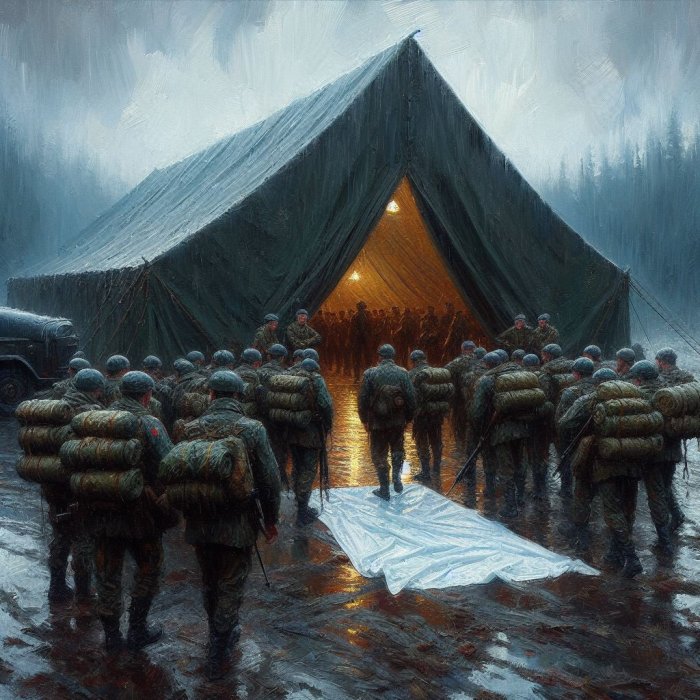
The Soviet defector and writer Victor Suvorov published a book in 1987 called Spetsnaz: The Inside Story of the Soviet Special Forces. Suvorov, whose real name is Vladimir Bogdanovich Rezun, was himself a Spetsnaz veteran and a Soviet intelligence officer. I enjoyed his book Inside the Soviet Army as well; and he has written other volumes which I have not yet had the opportunity to examine.
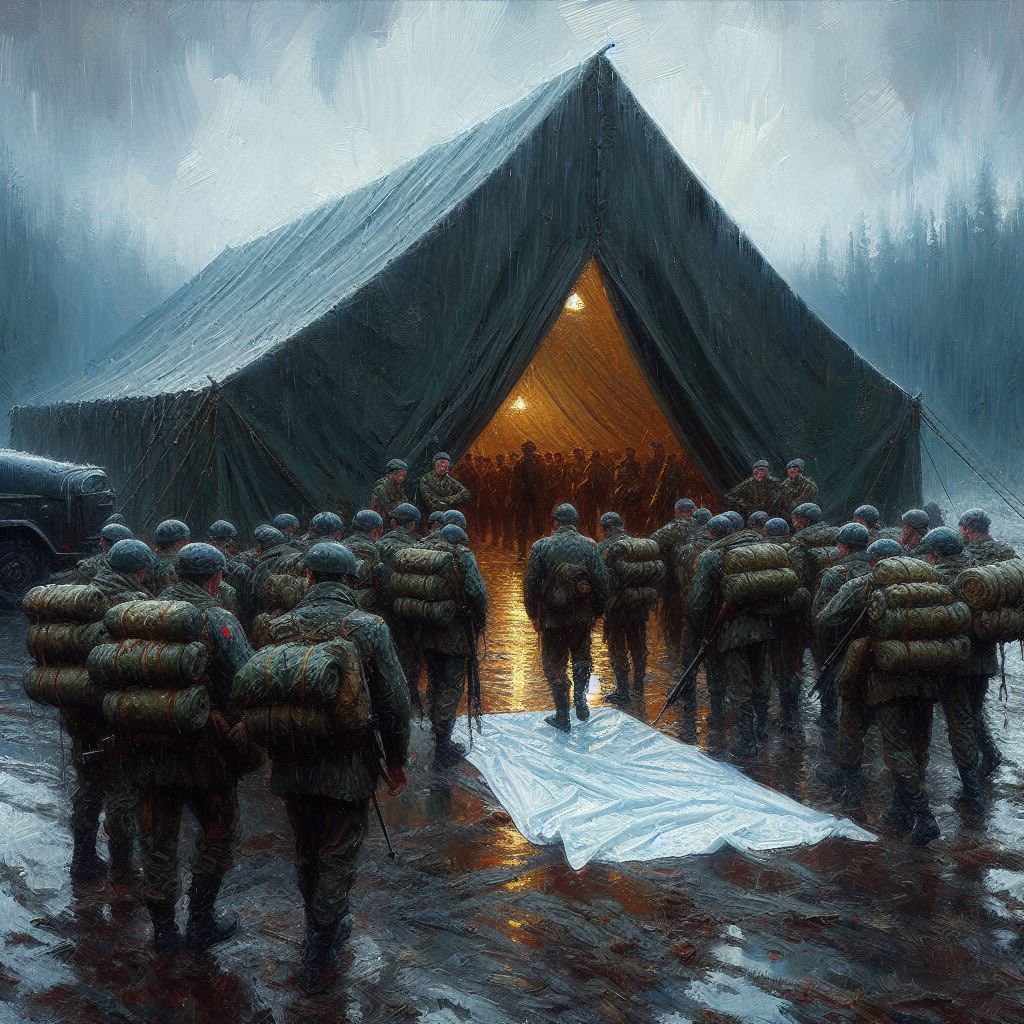
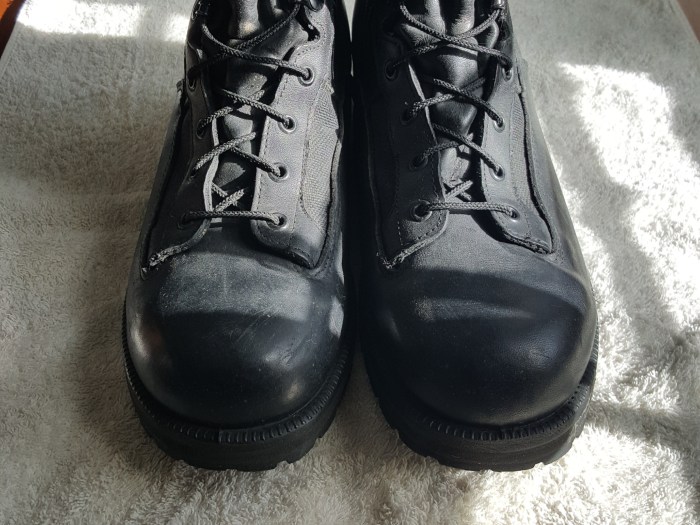
His book about Spetsnaz contains an anecdote that caught my attention. There is a chapter which describes some of the training that new recruits must endure. One strange ritual involves a pristine white towel placed on the ground at the entrance to the large tents where recruits sleep. When recruits return from a training session, they are coated in mud. Their boots alone will carry over a kilogram of it. As the mud-encrusted trainees line up to enter their huge tents, which are used as barracks, they will see a perfectly clean white towel placed on the ground in front of the entrance. Sergeants and other instructors are screaming at them, jostling them, and taunting them to move quickly.
Forced to enter the tents, the recruits hesitate when they see the white towel. Fearing some unannounced test, they do not wish to besmear the white fabric with foul mud. Most of them will leap over the white towel to enter the tents. Suvorov describes the scene:
“Get inside, damn you!” The sergeant urged them on. The first soldier thrust aside the heavy wet tarpaulin which served as a door and was about to enter when something stopped him. On the muddy, much trampled ground just inside the entrance a dazzlingly white towel had been laid down in place of a doormat. The soldier hesitated. But behind him the sergeant was pushing and shouting: “Go on in, damn you!”
The soldier was not inclined to step on the towel. At the same time, he couldn’t make up his mind to jump over it, because the mud from his boots would inevitably land on the towel. Eventually he jumped, and the others jumped across the towel after him. For some reason, no one dared to take the towel away. Everyone could see that there was a reason why it had been put there right in the entrance. A beautiful clean towel. With mud all around it. What was it doing there?
Everyone avoided the towel—everyone, that is, except one man. One trainee stood on the towel, wiped his muddy boots on it, and went off for his bunk. And then something very strange happened. Whereas all the other recruits were hazed, beaten, and harassed all night by the instructors, the man who had wiped his feet on the towel was left alone. He was left unmolested; he was allowed to eat full rations; and he was not required to clean anyone else’s weapon except his own. So what is the purpose of this odd ritual? Is it just a meaningless form of harassment of new recruits, signifying nothing deeper, about which no larger conclusions may be drawn? Or is there something more? Suvorov explains it this way:
The sense of this particular ritual is clear and simple: we are nice people. We welcome you, young man, cordially into our friendly collective. Our work is very hard, the hardest in the whole army, but we do not let it harden our hearts. Come into our house, young man, and make yourself at home. We respect you and will spare nothing for you. You see—we have even put the towel with which we wipe our faces for you to walk on in your dirty feet. So that’s it, is it—you don’t accept our welcome? You reject our modest gift? You don’t even with to wipe your boots on what we wipe our faces with! What sort of people do you take us for?
Suvorov goes on to say that the towel ritual was an old one, one that had originated in the Soviet penal battalions. Whatever its origin, and despite its use as a military training ritual, I think it communicates more than one valuable lesson. The first is one about the acceptance of hospitality. When it is offered, you accept it. You do not impose your own conditions on it; you do not modify it, dilute it, or critique it. There is a relevant passage in James Boswell’s Tour of the Hebrides, a travel account of his and Samuel Johnson’s trek through the Scottish highlands in 1773. Boswell astutely noted the following comment by his friend:
He [Johnson] was angry at me for proposing to carry lemons with us to [the Isle of] Skye, that he might be sure to have his lemonade. “Sir,” said he, “I do not wish to be thought that feeble man who cannot do without any thing. Sir, it is very bad manners to carry provisions to any man’s house, as if he could not entertain you. To an inferior, it is oppressive; to a superior, it is insolent.”
Samuel Johnson’s statement about the lemons, I think, showed a high degree of sensitivity to the hospitality of others. He was aware that showing up at someone’s house with a bag of lemons might imply that his host’s accommodations alone were not good enough for him. When one is accepting hospitality from others, one does not attempt to insert personal requirement. There is a second lesson imparted by the anecdote about the Spetsnaz white towels. And this lesson is related to principles of leadership.
It requires courage to act contrary to what one’s peers are doing. Every single recruit entering the tent could see his comrades jumping over the towel and going out of his way to avoid it. Yet only one man had the courage to stand squarely on it, wipe his feet, wreck its pristine cleanliness, and move forward. Seen in this way, the towel game is a leadership test. Who among all the assembled trainees has the fortitude to swim against the current? Who will accept the challenge of soiling untrod ground? Who will dare to do what everyone else is afraid to do? It strikes me that the crisis of leadership we see around us today is rooted in precisely this sort of squeamish hesitancy to tread on pristine terrain. There are times when the linen must be dirtied; and a true leader will not be afraid to muddy the towel, so to speak. Pristine fabrics have no place in the dirty business of life; they are found only in laundromats and bedding closets. And the fates of nations and men are not decided there.
.
.
Take a look at the new annotated translation of Cicero’s On The Nature Of The Gods.
 Quintus Curtius
[…] The White Towel […]
LikeLiked by 1 person