
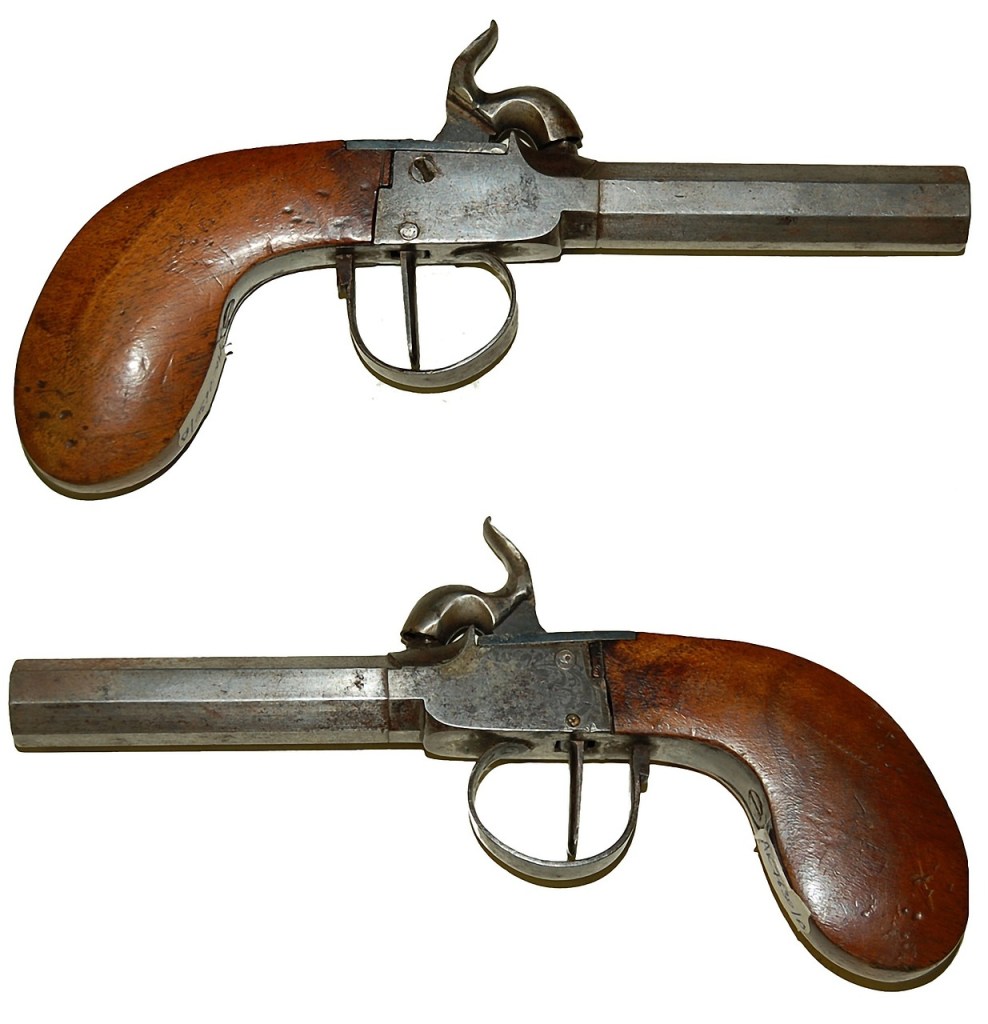
In the early years of the American Revolutionary War, there existed a loose association of military men who lacked faith in George Washington’s ability to lead the Continental Army, and who were convinced he should be replaced. Although Washington’s position was never seriously in jeopardy, these undercurrents of discontent eventually broke through the surface, taking the form of a bizarre duel between partisans of both sides.
Thomas Conway was born in Ireland in 1735. He became a colonel in the French Army in 1772. At the outbreak of war in the American colonies, Conway volunteered his services; and as the Americans desperately needed men with military experience, he was appointed a brigadier general in the Continental Army in 1777. General Washington, however, took a disliking to him, believing him to be an unscrupulous careerist. These sentiments were confirmed when, after Washington opposed Conway’s promotion to major general, Conway wrote a secret letter to Washington’s rival General Horatio Gates in which he directly criticized Washington’s handling of the war. In Conway’s view, Washington was a weak commander in pursuit of a failed strategy. It is clear that Conway conveyed to other officers similar sentiments denigrating his commander.
When the contents of the letter were revealed, Washington reacted angrily. It was not his style, however, to engage in direct squabbling with subordinates or peers. This was a task he wisely left for his supporters. Washington enjoyed the confidence of Congress; and when Conway’s insubordination became known, he was forced to resign his command. This was not enough for Washington, who was known never to forgive a betrayal under arms; he encouraged his supporters to challenge Conway to a duel. One general, John Cadwalader, did precisely this, and Conway accepted. The stage was thus set for a strange, but somehow appropriate, physical resolution to a long-festering struggle.
Who was John Cadwalader? He was born to Quaker parentage in New Jersey in 1742 and pursued a mercantile career in Philadelphia. As an adult he joined a volunteer militia called the Philadelphia Associators—which had been founded by Benjamin Franklin in 1747—and was chosen a senior officer at the outbreak of the Revolution. He fought alongside Washington during the campaigns in New Jersey in 1776 and 1777. Angered by Conway’s disloyal conduct towards Washington, Cadwalader challenged him to a duel in 1778. A collection of anecdotes of the Revolution published in 1822 describes the requirements of gentlemanly honor as they were understood in that era:
The particulars of this duel, originating in the honorable feelings of General Cadwalader, indignant at the attempt of his adversary to injure the reputation of the commander-in-chief by representing him as unqualified for the exalted station which he held, appears worthy of record. Nor ought the coolness observed on the occasion by the parties to be forgotten, as it evinces very strongly, that though imperious circumstances may compel men of nice feeling to meet, the dictates of honor may be satisfied without the smallest deviation from the most rigid rules of politeness.
The two duelists, Conway and Cadwalader, arrived at the agreed location accompanied by their seconds. By Cadwalader’s side was General Dickenson of Pennsylvania; and with Conway was Colonel Morgan of Princeton, New Jersey. It was agreed that when the command was given, the two men could fire in their own time, either by deliberately taking aim, or by firing an “off hand” shot. Under the rules of the time, the requirements of honor would generally have been satisfied simply by appearing for the duel and standing before one’s opponent. Some duels ended with dashing gestures of forgiveness, either by shaking hands on the spot, or by one party discharging his weapon harmlessly in the air or over his opponent’s head. But other duels went to the bitter end.
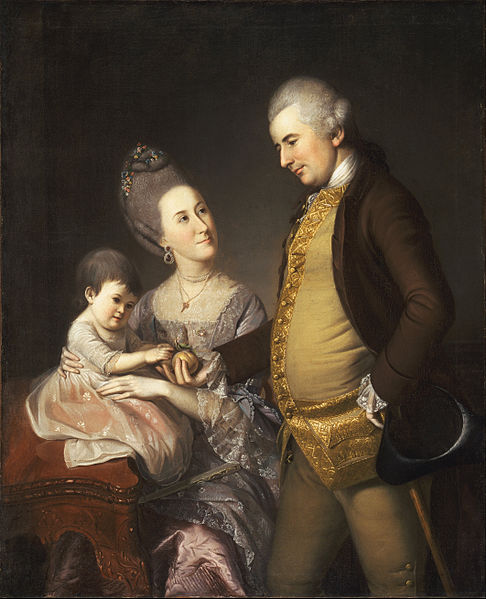
The command to proceed was given. Conway took aim at a distance of twelve paces, fired his pistol, and missed. Then a gust of wind came; Cadwalader calmly waited, keeping his pistol down by his side. “Why do you not fire, General Cadwalader?” cried out Conway. “Because we came here not to trifle. Let the gale pass, and I shall act my part,” was the cold response. To his credit, Conway kept his composure, presented his chest to his adversary, and said, “You shall have a fair chance of performing it well.” Cadwalader then raised his firearm and discharged it. The ball appeared to hit Conway directly in the face; he pitched forward and fell to the ground like a bag of stones.
When the seconds rushed to examine Conway, they were shocked to find that the pistol ball had passed through Conway’s mouth and emerged from the back of his head. The ball had lodged in a knot of hair at the back of Conway’s neck. Blood was pouring from the wound, but the seconds managed to control it. One account of the event holds that Conway, when he was able to speak, addressed Cadwalader from the ground, and said, “You fire, general, with much deliberation, and certainly with a great deal of effect.”
Conway was carried from the field, but miraculously recovered. When he was not expecting to live, Conway penned a letter of apology to Washington, which read as follows:
Philadelphia, February 23, 1778
Dear Sir:
I find myself just able to hold my pen during a few minutes, and take this opportunity of expressing my sincere grief for having done, written, or said anything disagreeable to your Excellency. My career will soon be over; therefore, justice and truth prompt me to declare my last sentiments. You are in my eyes the great and good man. May you long enjoy the love, esteem, and veneration of these States, whose liberties you have asserted by your virtues.
I am, with the greatest respect,
Your Excellency’s most obedient and humble servant,
[Thomas] Conway
Conway left the United States after Revolutionary War ended. He returned to service in the pre-revolutionary French Army, rising to the rank of general in 1787. In fact he seems to have led a charmed life. Condemned to death during the French Revolution, he appealed to Great Britain for help, and thus escaped the guillotine. By 1794 we find him returning to service on behalf of the English crown as a commander of the so-called Irish Brigade. He died in 1795 and was interred in Bath Abbey. Alexander Garden’s Anecdotes of the Revolutionary War assesses Conway with the following verdict:
Intrigue was the cherished sphere of his actions; ambition the predominant passion of his heart; and he appeared but little scrupulous as to the means employed, while he successfully pursued his plans for its indulgence. His aim was to vilify, and by the degradation of others to advance his own fortunes. We accordingly find him incessantly harping on the incapacity of the Commander in Chief [Washington] to direct the operations of the army; and denouncing not only the ignorance of military tactics, displayed by the leaders of particular corps, but the total want of knowledge in the army generally, of the exercises the most essential to its perfection. Nor were his censures without effect. He gained proselytes in Congress, and through their influence promotion. But, when convinced of the injustice of his conduct, and awed by the superior virtue and talents of General Washington, he threw aside the veil of prejudice that had obscured perception. The handsome manner in which he made his apology, does him high honor, and ought to be recorded.
The precise location of Conway’s grave in Bath Abbey is not known. Apparently renovations done in the 1860s caused his headstone to be misplaced or merged with the tombs of others. So does a life of treachery and careerism lead to an implacable oblivion.
.
.
Read more on leadership and struggle in the annotated translation of Cornelius Nepos’s Lives of the Great Commanders.
 Quintus Curtius
You must be logged in to post a comment.