
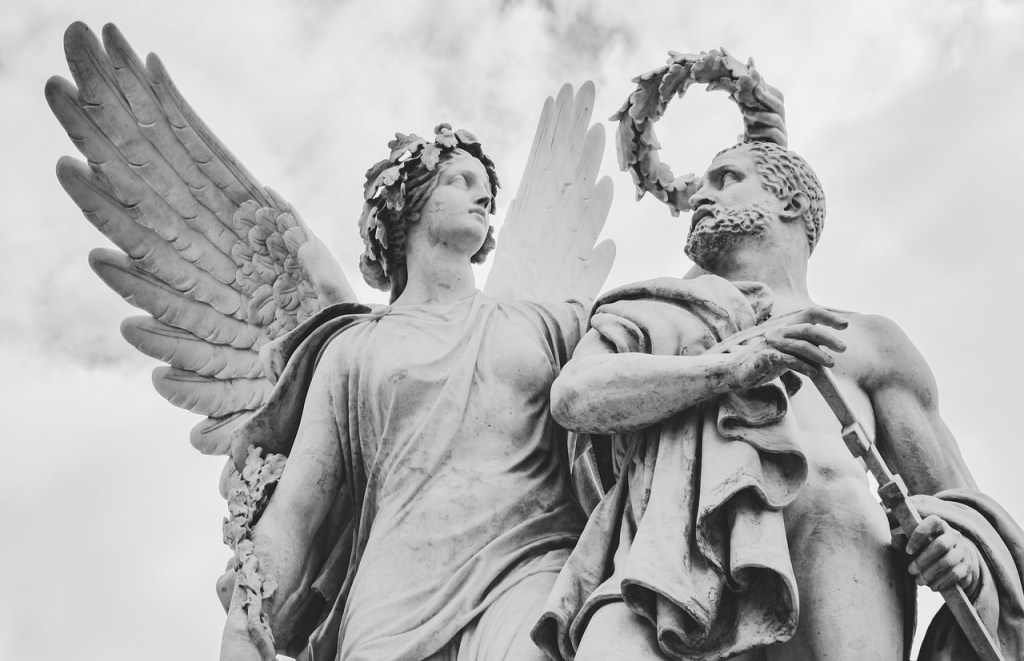
In a letter to Holy Roman Emperor Charles IV in 1361, the scholar Petrarch included the following lines of advice:
The soft sentiments and external warnings of wives, daughters, and average friends are invariably the opponents of great plans. We should block our ears, as Odysseus did, in order to evade the Sirens’ rocks as we steer towards the port of glory.
[Molles affectus et externi monitus coniugum natarumque ac vulgarium amicorum altis consiliis semper adversi sunt; obserande aures Ulixem in morem, ut in portum gloriae sirenum inter scopulos evadamus.]
There is true wisdom in this observation, I think. Whenever we intend to undertake a new enterprise, perhaps one that may involve boldness, risk, or sacrifice, we should be careful not to solicit the counsel of the timid. The first impulse of the fearful is to cast doubt on what is unfamiliar. Lacking a lofty spirit themselves, the timid resent its visible presence in others; and the natural inclination of the meek is to disparage what is for them unattainable. Instead of injecting an intrepid soul with confidence, the timid will seek to fill it with doubt and anxiety. So we must remember, in matters of great importance, not to take counsel of the fears of others.
Equally important is the necessity of not taking counsel of our own fears. Confronted with frightening expanses of unknown terrain, the human mind will by nature multiply and amplify its alarms, usually without any rational basis in fact. A startling example of this was the behavior of George B. McClellan, the commander of the Army of the Potomac during the American Civil War. He was an able administrator and an undoubted master of logistics; but, as the war progressed, it was clear that he was temperamentally unsuited to command armies in battle. McClellan always believed he was deficient in men or materiel. He subjected his commander-in-chief, the unhappy President Lincoln, to endless excuses and delays. And, in his distressed imaginings, the Confederates opposing him were always three times greater in number than they actually were.
As a result, McClellan never took vigorous action to prosecute the war in the eastern theater; and on the infrequent occasions when he did, he failed to exploit any advantages that circumstances presented him. Not only did McClellan take counsel of his fears, he allowed them to dominate his thinking to the exclusion of all evidence to the contrary. McClellan’s behavior stands in sharp contrast to that of Ulysses S. Grant, who throughout the war displayed a ferocious tenacity and willingness to engage the enemy. There were times when this aggressiveness led Grant into trouble, but it never brought him to ruin.
Grant was rightly suspicious of councils of war, knowing that conferences of generals usually bred defeatism, and produced plans crippled by compromises and half-measures. He preferred to rely on his own instincts, his own feel for terrain, and his own deep understanding of what war truly entailed. Unlike almost all of his contemporaries, Grant understood that the war would not be won by Napoleonic maneuvering and tactical stratagems. It was in essence a war of unification, and it would only end when the Confederacy was bludgeoned, battered, and pounded into submission by blockade, coordinated penetration, and the complete destruction of its ability to wage war. A related example of ignoring the counsels of timidity and defeatism was General MacArthur’s bold landing in Inchon, Korea in 1950. Everyone was against MacArthur’s risky amphibious attack, including the Joint Chiefs; but his strategic sense of the possible enabled him to see opportunity where others only saw peril. Of course MacArthur’s character flaws would bring his career to an inglorious end later in the war, but this does not detract from our central point.
The danger in closing one’s ears to the counsels of the timid is, of course, the possibility that one may be wrong. The timid are not always mistaken; and what at first may appear to be undue caution may, in fact, be only wisdom or prudence. How will we be able to tell the difference? Is there some way reliably to distinguish recklessness from sound action that sweeps aside passive timidity? The short answer is that we cannot know until that time, as a witch says in MacBeth,
When the hurlyburly’s done,
When the battle’s lost and won.
The answer is that, until the final act of the drama is played out, we cannot really know. All we can do is rely on our own judgment, which hopefully will have been made robust through hard study and experience. It is said by the Roman military historian Frontinus (Strat. I.11.11) that Lucius Sulla often tried to give his men the impression that he could foretell future events. He apparently went to great lengths to do this, knowing the importance of morale in contributing to victory. To prepare his men for battle, he would in full view of his army pray to a small idol taken from the Temple of Apollo at Delphi. The unspoken message to his men was this: victory had already been promised to Sulla, and all that now remained was for the gods to hasten its arrival. In his own way, Sulla was, as Petrarch said in his letter to Charles IV, evading the rocks of the Sirens and steering towards the port of glory.
.
.
Read more on these and related subjects in the new translation of Cornelius Nepos’s Lives of the Great Commanders.
 Quintus Curtius
You must be logged in to post a comment.