
In Gibbon’s history (Ch. 51), there is an anecdote related to the Arab military campaigns in Persia in A.D. 639 to 640. It concerns a nobleman named Hormuzan, who was, we are told, “a prince or satrap of Ahwaz and Susa.” Modern historians have identified him as the governor of Khuzestan, and one of the Persian military officers during the famous Battle of Qadisiyya in A.D. 636. Gibbon apparently extracted this story from the historical writings of Al Tabari or Al Masudi.
In any case, Hormuzan was defeated in battle and brought before the victorious caliph Omar. Omar ordered his high-born captive to be stripped of his silken robes and gem-encrusted tiara. He then addressed the humbled Hormuzan with these words: “Do you now understand God’s judgments, and do you now comprehend the different rewards that come from infidelity and obedience?” The Persian responded, “Alas! I am now only too aware of them. At one time, my nation was stronger, but now the situation is reversed.” He then said that he was thirsty, and would like a drink of water. But Hormuzan was afraid that he might be slain by the caliph’s attendants before he had a chance to quench his thirst, and voiced his apprehensions to Omar.
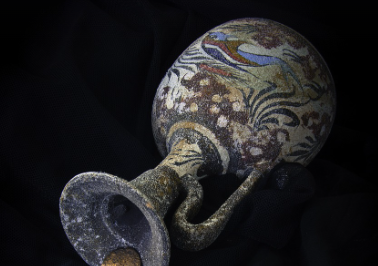
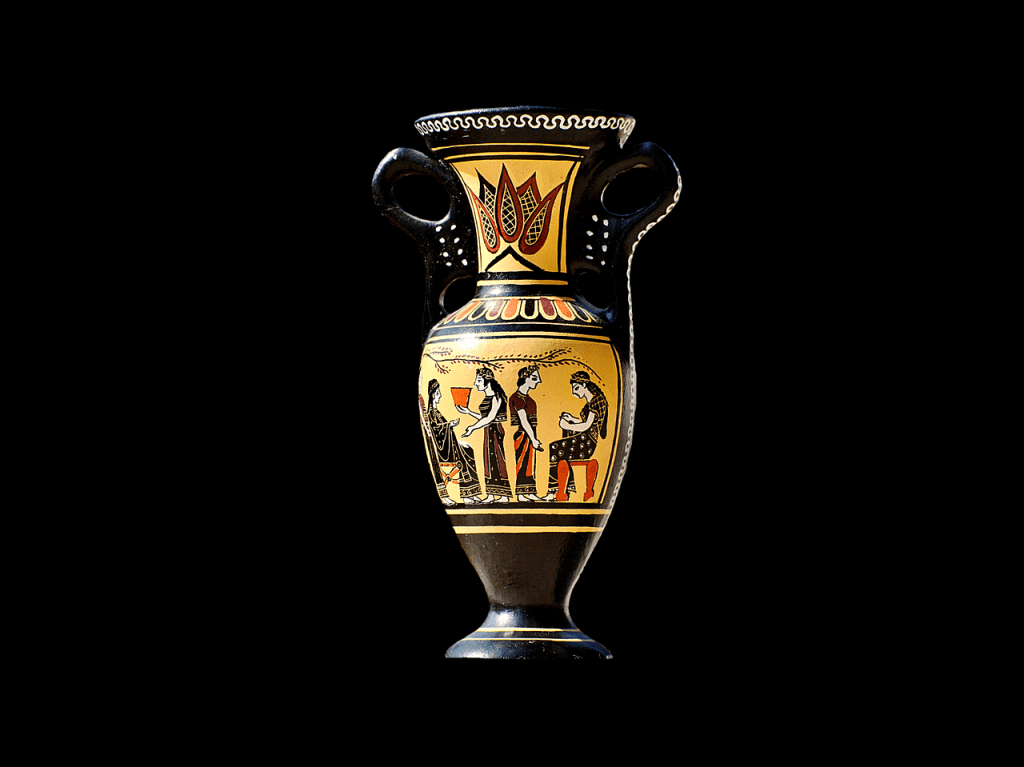
“Do not be alarmed,” said Omar. “Your life is safe till you have drunk this water.” The subtle Persian interpreted this statement of Omar as a binding guarantee, and immediately contrived a plan of self-preservation. Hormuzan accepted a vase of water handed to him; but instead of drinking from it, he raised it over his head and hurled it to the ground, smashing the vessel and spilling out the water. Omar was inclined to punish this behavior, but was reminded that his guarantee must be honored. And so it was that Hormuzan was able to extract from Omar a pledge to keep him alive and safe until he had imbibed the water from the caliph’s vessel—which, of course, would never happen now that the vase was destroyed.
We are told that Hormuzan later converted to Islam, and was even able to secure a stipend of two thousand gold pieces. It is a pretty story, but we will let the reader judge its veracity for himself. There are times when one’s life may be preserved through the use of such cunning legalisms. The problem arises when the other side refuses to subscribe to such literal interpretations of passing comments; more often, men and nations must fight for their survival and their freedom. Such things are not won through promises and adroit legalisms. Conquerors and occupiers never feel themselves bound by promises or agreements, and do not concede rights out of magnanimity; freedom and survival are, in the final result, only earned through struggle.
Frontinus (I.11) tells a related story in this regard. Cyrus the Great in 558 B.C. wished to inspire the fighting spirit of his men, as he prepared to confront the Median empire in battle. He exhausted them by assigning them the task of clearing a large forest. The next day, after they had finished, he treated them to a sumptuous meal, and asked them whether they preferred hard labor or luxurious feasting. The answer, of course, was the latter. Cyrus was quick to correct their delusions. “It may be so,” he said. “But it is only through brute labor that you can earn the right to feast. One must endure the former before one can enjoy the latter. In the same way, you will never be able to enjoy freedom and happiness until you endure the struggle of defeating the Medes.”
.
.
Read more on the necessity of independence, resistance, and leadership in the new annotated translation of Cornelius Nepos’s Lives of the Great Commanders
 Quintus Curtius
You must be logged in to post a comment.