
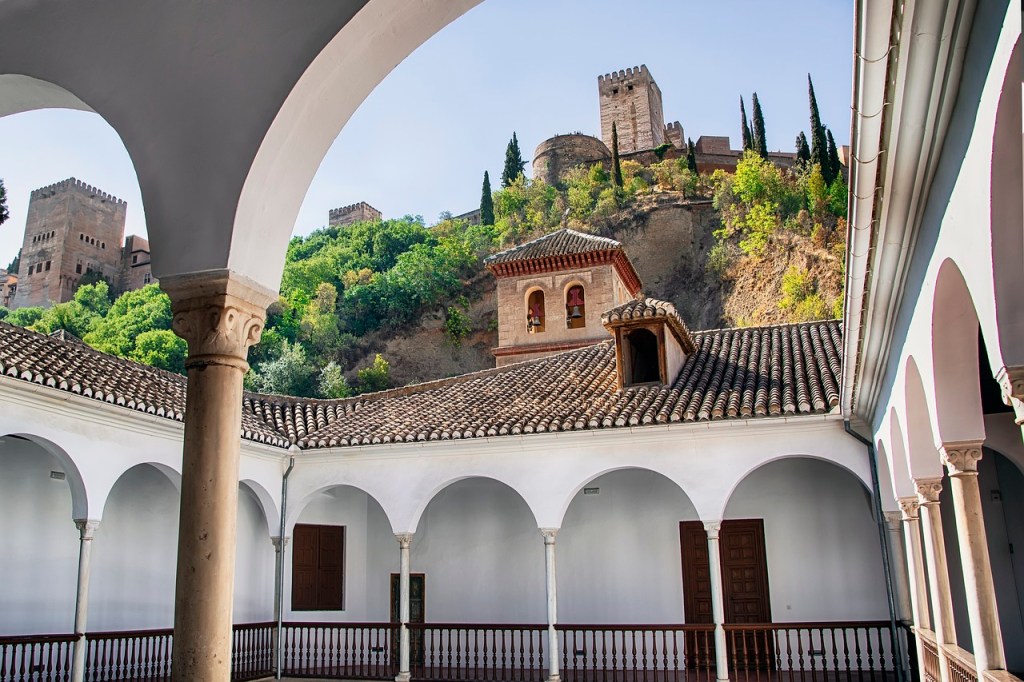
The historian Edward Gibbon, in Chapter LII of his history, offers an instructive quotation alleged to have been spoken by the first emir of Cordoba, Abd Al Rahman III. This prince ruled a considerable part of Spain for a period of thirty-two years, from A.D. 929 to 961. Upon the death of this laborious and tolerant caliph, the following rumination was found among his writings:
I have now reigned about fifty years in victory or peace; beloved by my subjects, dreaded by my enemies, and respected by my allies. Riches and honours, power and pleasure have waited on my call, nor does any earthly blessing appear to have been wanting to my felicity. In this situation I have diligently numbered the days of pure and genuine happiness which have fallen to my lot: they amount to FOURTEEN—O man! Place not they confidence in this present world!
Even allowing for the expected melancholia of aged and infirm kings in their sunset years pondering the rapid passage of time and the futility of earthly pursuits, this quotation carries the distinctive whiff of despair. Did Abd Al Rahman really mean what he said? Was his life in fact an unbroken sequence of thankless toils, unrelieved by enjoyment or happiness? How can happiness be measured? How can it even be defined? The answers to these questions will of course be different for different people. For me happiness can be so many things, I can hardly know what it is at any given time. I suppose there must be some element of permanence in the equation: that is, what we consider “happiness” should not be fleeting or transitory. In his Tusculan Disputations (V.14), Cicero says,
For nothing that contributes to building a happy life should dry up, or be subject to physical destruction, or crumble to the earth. He who lives in fear of losing these things will find happiness his grasp. We want, then, the happy man to be secure, unconquerable, enclosed, and protected, so that so that he remains unaffected not only by small amounts of fear, but by no fear at all.
If we condition our happiness on physical possessions, where will we be when those material things vanish, or are taken away? There must be something more valuable, more permanent and lasting, than this. Edgar Allan Poe, in his short story The Domain of Arnheim, proposed that there were “four conditions” of happiness. They are: (1) the maintenance of good health; (2) the love of a woman; (3) a contempt for ambition, which never permits the soul to relax; and (4) some “object of unceasing pursuit.” I take this last condition to mean a worthy goal. But this is not all. Poe says that, other things being equal, the extent of attainable happiness is in direct proportion to the spirituality of this “object of unceasing pursuit.” That is, the loftier and more noble the object, the greater the resulting happiness in attaining it. There is a link with virtue here; and this makes good sense to me, this suggestion that there would be some direct connection between virtue and happiness. Cicero makes this point a bit later in Tusculan Disputations (V.13) when he says,
For the human soul emanates from the divine mind; and if it is right for me to speak this way, it can be compared with nothing else except God. If this soul has been so cultivated, and if its sight has been so nurtured, that it is not confused by the deceptions of life, then a fully developed mind will be the result…If everything is happy that lacks nothing and is complete and abundant in its particular kind, and if this is the characteristic sign of virtue, then without doubt all men in possession of virtue are happy.
I do not think it is possible to be truly happy without this embracing of virtue, which remains the only lasting and permanent thing a man can attain. And how does this point about virtue connect with the point previously made, that a man must have some noble “object of unceasing pursuit”? I think the connection is found in this way: the adoption of a noble, worthy object, or goal, for one’s life, means that a man chooses to sublimate his own ego, and forego his own gratifications, to this one object. The pursuer of the noble goal becomes, in effect, a knight serving a liege lord. He submits himself to the quest, and becomes this quest. How can we expect things to be otherwise? For a man needs nothing more than a crusade, a devotion and defining purpose, upon which he may lavish his labors and attentions; it must be one whose fulfillment will stand as something greater than himself, greater immeasurably than his fleeting mortal existence.
And I think this is what Edward Gibbon meant when he offered, in a footnote, his own personal response to Abd Al Rahman’s morose quote about happiness, mentioned above. It is a rare example of Gibbon interrupting his history to open a window into his intimate thoughts. “This confession [of Abd Al Rahman],” he says, “will be triumphantly quoted by the detractors of human life. Their expectations are commonly immoderate, they estimates are seldom impartial. If I may speak of myself (the only person of whom I can speak with certainty), my happy hours have far exceeded, and far exceed, the scanty numbers of the caliph of Spain; and I shall not scruple to add that many of them are due to the pleasing labour of the present composition.” And so there we have it: his “object of unceasing pursuit.” Gibbon knew that he had found a redeeming happiness in his literary work. His history achieved an immortality that has ennobled his name, and nurtured the edification of posterity.
.
.
Read more in the new translation of Cicero’s Tusculan Disputations.
 Quintus Curtius
You must be logged in to post a comment.