
In November of 43 B.C., Rome was gripped by a terrible sense of foreboding. The historian Appian, in his Civil Wars (IV.1.4) relates that all kinds of strange portents were observed around the city. Statues sweated blood; a newborn infant uttered words; lightning struck sacred temples; and cattle spoke with a human voice. So alarmed were some senators that they summoned expert diviners from Etruria to weigh these ominous signs. The most authoritative of these was an elderly man who told them, “The monarchical rule of ancient times is returning. You will all be slaves except me.” Once the Etruscan priest spoke these words to the startled senators, says Appian, he closed his mouth and held his breath until he dropped dead before them.
In that month the three triumvirs—Octavian, Lepidus, and Antony—convened to decide the fate of their political enemies, whether those enemies were real, potential, or fabricated. They had gained power and would now be able to massacre anyone who may have opposed them in the past. The primary vehicle by which they would accomplish their goals was murder, carried out in the form of mass proscriptions. In the end they settled on a list of about two thousand names. Anyone who killed a proscribed individual would receive a financial reward; anyone who tried to save a name on the list would, of course, be immediately added to it.
In reality the proscriptions were a reign of terror. As one might imagine, many of those marked for death had little or no involvement in Caesar’s assassination. They were persons the triumvirs thought would pose a threat to their nascent power; and for this reason alone, they had to be liquidated. The historian Appian describes in detail how the conflagration of violence that ensued involved the settling of many old scores, and were often nothing but crimes of opportunity, greed, passion, and cold calculation. We need not dwell on these depressing scenes of agony and horror recorded on Appian’s pages. Suffice it to say that there were many examples of slaves betraying their masters, wives turning in their husbands, sons betraying their fathers, and covetous neighbors informing on each other for material gain.
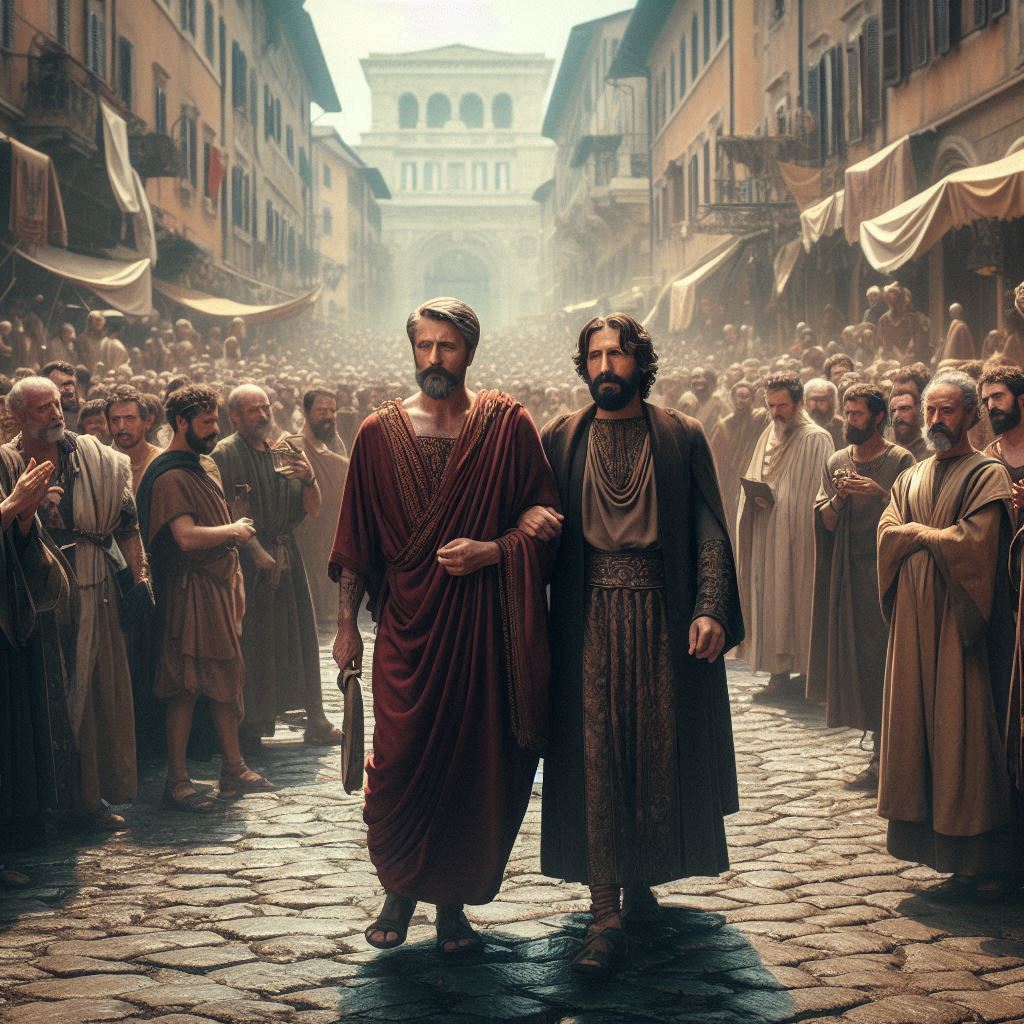
But periods of extreme duress bring out not only the very worst qualities of human nature, but also the very best. The proscriptions of 43 B.C. witnessed such stunning episodes of bravery and selflessness that no sensitive historian could fail to pause and marvel at them. We will relate two here. The first is the story of a father and son, both named Metellus. The elder Metellus, says Appian (IV.6.42), had been one of Antony’s commanders. He was taken prisoner at the Battle of Actium in 31 B.C., but had not been recognized. The younger Metellus fought in the same battle on Octavian’s side, and had also held a command. When the victorious Octavian was processing prisoners on the Greek island of Samos, the younger Metellus was sitting beside him. Suddenly the elder Metellus—broken, exhausted, and covered with grime and dirt—was led before Octavian.
When the old man’s name was called out, the younger Metellus recognized him and leapt to embrace his father. The young man begged Octavian to spare his father, saying “He was your enemy, I was your fellow soldier. He has earned your punishment, but I your reward. Either spare my father on my behalf, or kill me at the same time.” Appian says that Octavian was so moved by this scene that he spared both men, despite remembering that the elder Metellus had previously rejected many of Octavian’s offers to join his side.
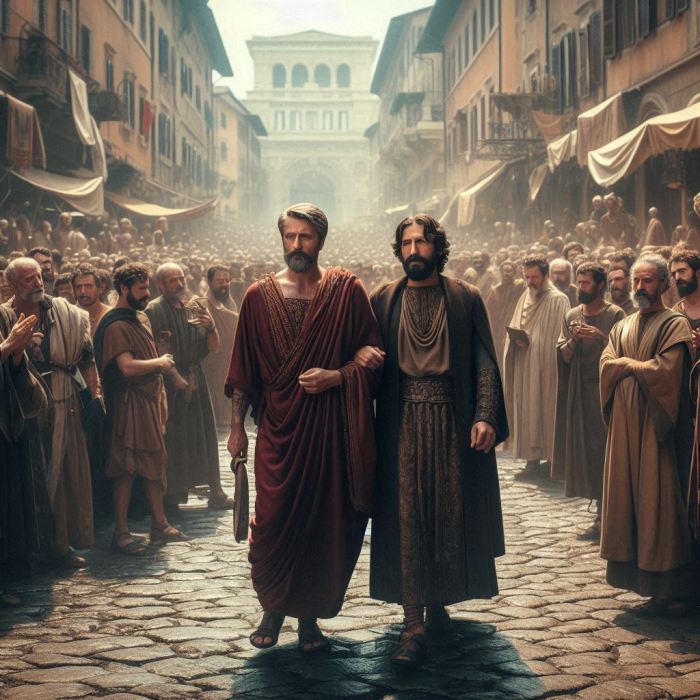
A truly remarkable story is that of Marcus Lollius, which is also found in Appian (IV.6.29). Marcus had been an officer of Brutus, the arch-conspirator against Caesar. This, of course, earned him a prominent place on the proscription list. After Brutus’s defeat, Marcus attempted to conceal his identity by disguising himself as a slave. He was then purchased by a master named Barbula. Barbula, after dealing with Marcus for some time, began to realize that he had purchased an educated and experienced man. His suspicions about his “slave” naturally grew, but Barbula at this time did not probe too deeply. In fact, he put Marcus in charge of many of his domestic affairs. One is reminded of certain tense scenes from the 1984 film The Killing Fields, in which the captive journalist Dith Pran is forced to conceal his education and pedigree while serving a suspicious Khmer Rouge official.
Barbula eventually began to ask his slave Marcus questions about his background, hoping to hear some kind of incriminating confession. Barbula even promised to try to seek a pardon for him if he would confess. But Marcus maintained his mask, even inventing a new origin story for himself, complete with fictional relatives and ancestors. To test Marcus further, Barbula told him he intended to bring him to Rome. Barbula reasoned that if Marcus were in fact proscribed, he would seek an excuse not to go; but Marcus showed no nervousness, and consented to the journey. When master and slave reached Rome, one of Barbula’s friends recognized Marcus and privately told Barbula who he was.
But as Fortune would have it, this friend of Barbula’s turned out to be a decent man, rather than a heartless informer. Working through a friend of a friend and various intermediaries (it is gratifying to see how little has changed since ancient times), he was able to secure from Octavian the removal of Marcus’s name from the proscription list. Even more incredibly, Marcus was eventually introduced to Octavian, and became a friend of his; he even served as one of Octavian’s officers in the Battle of Actium. And in this very same battle, Marcus’s old master Barbula was serving with Mark Antony’s forces. What strange circumstances of life does Fortune craft for us!
When Antony was defeated, Barbula was taken prisoner, and tried to conceal his identity by adopting the guise of a slave. Marcus sought out and bought Barbula, pretending not to know his true identity. Marcus then conducted Barbula before Octavian, and related the entire bizarre story of their history together, no doubt to the wily triumvir’s extreme amusement. Marcus told Octavian that, just as Barbula had once secured his own pardon from him, so he would now like to return the favor by securing Barbula’s pardon. The charmed Octavian, we are told, granted the request without hesitation. So was the mercy and compassion of one man returned in equal measure by another. We are reminded that Fortune links the destinies of all men, and reserves for herself the role of Ultimate Arbitress of their affairs.
.
.
Read more about fate and destiny in the new annotated translation of Cicero’s On the Nature of the Gods
 Quintus Curtius
You must be logged in to post a comment.