
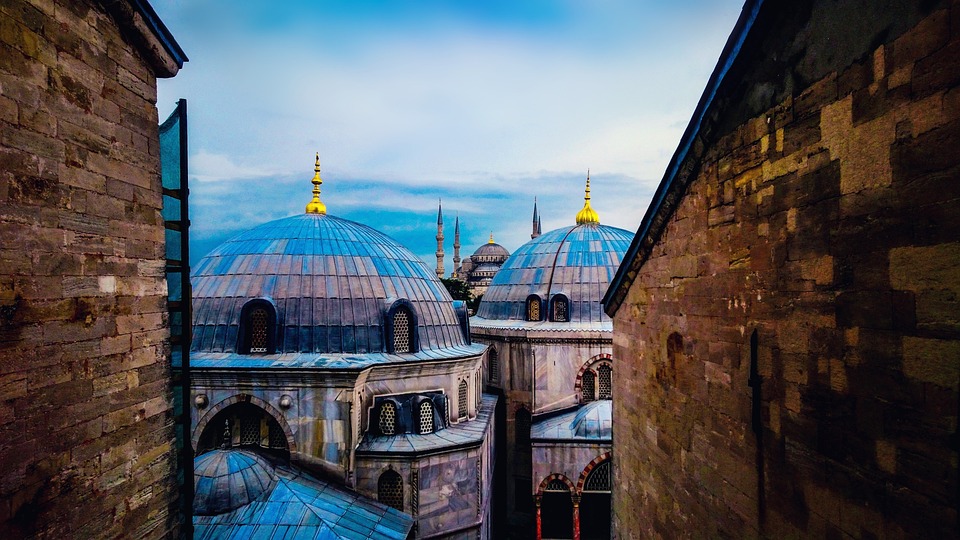
Among the most remarkable events of the late medieval period was the rise and growth of the Ottoman state in Anatolia and beyond. George Finlay, in his seven-volume history of Greece, called the Ottoman Empire “one of the most singular creations of human genius.” In the empire’s early centuries, at least, we cannot disagree with this verdict. How was it that a tiny, obscure tribe of Asiatic migrants came to conquer the proud and ancient domains of the Byzantine Greeks with such rapidity?
While it is true, as Gibbon notes, that “the Greeks, by their intestine divisions, were the authors of their final ruin,” this explanation does not assign proper credit to the formative genius of Ottoman political power. For it was through resilient institutions, and not the scimitar, that the early sultans extended their borders relentlessly outwards. Historians have conferred on Osman I the title of founder of the Ottoman Empire. Osman’s father rode into the decrepit Seljuk state with only about four hundred horsemen. The son inherited the father’s vigor and moral rectitude; and Osman soon acquired a small province and established himself as an independent potentate. Osman’s son Orhan should properly be counted among the great rulers of history, for he, like Numa Pompilius and Solon, nurtured institutions as well as a nation.
After Orhan conquered Greek Nicaea, he laid the foundations for the growth of a society that would persist for many centuries. His tribe’s valor and moral superiority over the corrupt Greeks and Seljuk Turks was obvious to its contemporaries, and facilitated the absorption of neighboring nations. The words of the medieval Arabic historian Ibn Khaldun seem to be especially applicable to the rise of the Ottomans:
To conquer, one must rely upon the allegiance of a group animated with one corporate spirit and end. Such a union of hearts and wills can operate only through divine power and religious support…When men give their hearts and passions to a desire for worldly goods, they become jealous of one another, and fall into strife…If, however, they reject the world and its vanities for the love of God…jealousies disappear, discord is stilled, men help one another devotedly; their union makes them stronger; the good cause makes rapid progress, and culminates in the formation of a great and powerful empire. [Trans. by M. de Slane]
George Finlay, in the third volume of his comprehensive history of the Greeks, provides three reasons for the steady expansion of the Ottoman Empire after its foundation. We may paraphrase these reasons as follows: first, Ottoman relative superiority in moral and military conduct; second, the disunity and fragmentation of the various races which populated the Near East and the Balkans; and third, the depopulation, demoralization, and corrupt state of the institutions, of the Byzantine Empire. Some words must be said regarding each of these causes.
The moral superiority of the Ottomans is demonstrated by the speed and alacrity with which the subjects of the Greek and Seljuk empires abandoned their former masters and embraced the rule of Osman and Orhan. Orhan was able to fuse Christians, Turkomans, and Seljuk Turks into one nation through the adoption of judicious civil and military institutions. It is not clear precisely when the institution known as the Janissaries was formed, but it has been called the first modern standing army. It seems that around 1329, Orhan’s half-brother Alaeddin advised him to form a special military corps that would be loyal to him personally. Orhan was not a bigot in matters of religion, a trait that was conspicuously rare in his era. He assembled, and carefully cultivated, cavalry and infantry units composed entirely of Christians. Minorities were thus given a stake in the empire, and supplied with a reason to fight for it. Promotions in the army and civil service were based on merit instead of nepotism, an innovation that the Greeks and Seljuks had disgracefully neglected.
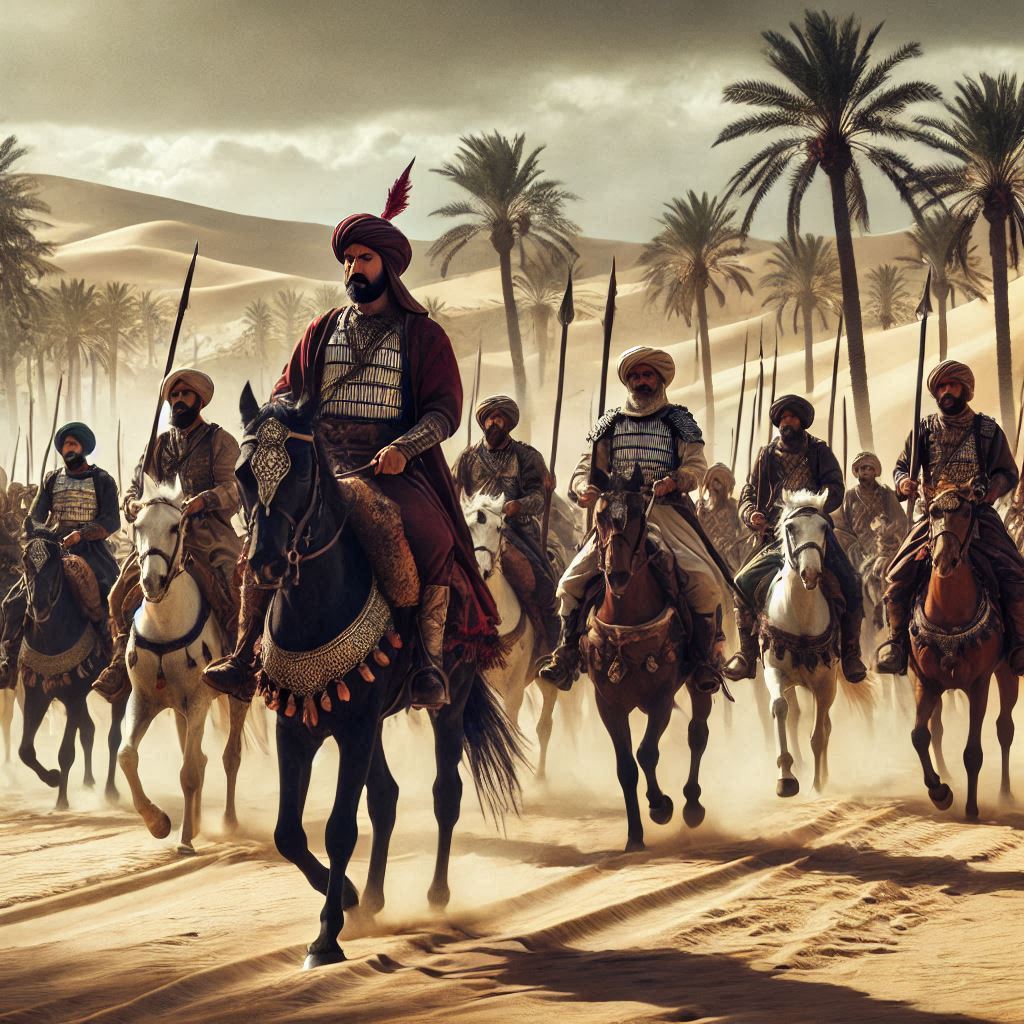
Under the unusual but effective Janissary system, the youths of captured territories were impressed into the service of the sultan, becoming, in effect, his adopted sons. These boys, taken from obscure households when only eight years old, were educated and trained by the sultan, and formed the nucleus of a military force that would inspire awe for centuries. The Janissaries were divided into two classes: one trained to be civil servants, and the other consecrated to the arts of the sword. Over time, the Janissaries evolved into an elite corps, as devoted to their ruler as were the Jesuits to the papacy.
This system may sound strange to modern sensibilities, but it was better than anything that existed at the time, and offered young men the prospect of real advancement, regardless of their religious or ethnic background. It was embraced without question by Ottoman subjects. It is likely that the later Ottoman legal code of Suleiman the Magnificent was originally based on the laws composed by Orhan. Around 1329, Orhan began to coin money, and first ordered his name to be mentioned in public prayers; and it is this date that may be given as the founding of the Ottoman Empire.
The second cause which facilitated the rapid conquests of the Ottomans was the diversity, and associated disunity, of the various peoples of the Balkans and Near East. None of them were able to mount an effective challenge to Ottoman power, and no leader emerged among them who could convince them of the need for collective security. They remained disorganized and addicted to petty squabbles, and so proved to be relatively easy prey.
The third cause of the rapid expansion of Ottoman power was the abject servility and ineptitude of the Byzantine Greeks. Centuries of parasitic corruption and wearisome theological disputes had fatally weakened the fiber of their institutions. The oppressed subjects of Byzantine rule were trapped in a complicated system of feudal servitude that gave them little reason to be enthusiastic about who grasped the orb and scepter in Constantinople; and when the system came under military attack, it found few ardent defenders willing to die for it. In the final century of the Byzantine Empire’s existence, a kind of apathetic torpor descended upon its people. The system had become too rigid and rotten to be reformed, even if a capable reformer was available.
Adding to the demoralization was depopulation: between 1348 and 1418, no less than eight plagues swept across Byzantine territories, which triggered an equal number of famines. Some historians have condemned the West for not coming to the aid of Byzantium in its final years, but the truth is that by 1300, and likely much earlier, there was very little left that could be saved. Byzantium had, during the centuries of its existence, carried the standard of Greek and Roman civilization with distinction, and occasionally with greatness; it could now die a natural death with honor, and inscribe its name among the list of vanquished nations, secure in the knowledge that it had fulfilled its duty.
.
.
Read more essays on historical and biographical topics in the collection Centuries.
 Quintus Curtius
[…] The Causes Of The Rise And Expansion Of The Ottoman Empire […]
LikeLike