
De poena prophetarum falsarum. If a leader cannot base his decisions on verifiable truth, or on the closest approximation of what he believes to be the truth, he will not escape calamity. He must surround himself with advisors who have his, and not their own, interests at heart; and he must seek independent confirmation of advice provided, especially during times of war or crisis.
No one doubts the truth of this. But it often happens that the demands of human vanity weigh more heavily on a leader’s mind than the interests of his people, the necessities of military action, or the exigencies of a crisis. The senses of flatterers and courtiers are acute. They know what leaders want to hear, and are prepared to serve him his desired fare. Rare is the leader or commander who not only rejects self-serving advice, but actively punishes it. It is the leader who selects his advisors; and if he finds himself surrounded by sycophants and lapdogs, he has only himself to blame. The Byzantine emperor Maurice, in his Strategikon (VIII.2.23), said as follows:
For what should be done seek the advice of many; for what you will actually do, take counsel with only a few trustworthy people; then off by yourself alone, decide on the best and most helpful plan to follow, and stick to it. [Trans. by G.T. Dennis]
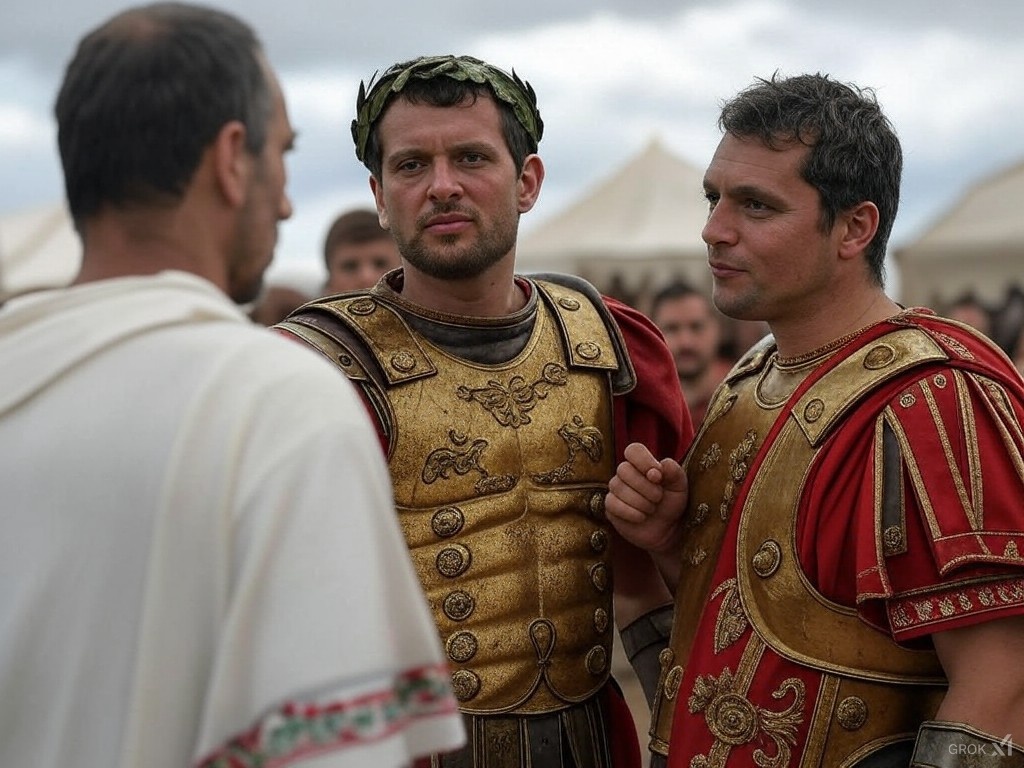
We will consider one example from Livy (X.40) that may be illustrative of these principles. In 293 B.C. the consul Lucius Papirius was campaigning against the Samnites. In those times the belief in prophecies and auguries was strong, and Papirius consulted some religious aides known as pullarii, or keepers of the sacred chickens. In that era birds were seen as a kind of mouthpiece of divine Providence, and those who could read their signs served a special function in Roman religion. On the eve of battle, Papirius ordered the keepers to examine their birds and take the auspicies. The soldiers in camp, who would soon be risking their lives in battle, eagerly awaited a pronouncement. The chickens refused to feed on the grain they were given. But one of the keepers, says Livy, “dared to lie about the auspices (auspicium mentiri ausus)” to the consul. This keeper had the temerity to inform Papirius that he had observed something called a tripudium, which we may define as a favorable omen when chickens eat hungrily.

Papirius took this report at face value, and was of course very pleased; the gods, he was assured, would be with him when he confronted the enemy. Yet as the commander made his final preparations for battle, an internal quarrel broke out among the pullarii. Whether because of guilt or fear, one or more of the bird-readers began to have doubts about the veracity of the prophecy given to the consul. As no disputes are so acrimonious as those involving points of faith or religion, the volume of the argument between the pullarii grew steadily in intensity. The details were overhead by some cavalrymen in camp, who passed on the information about the dubious auspices to the consul’s nephew. The nephew reported all to Papirius.
When the consul was informed of these developments, he was both offended and angry. False prophecies, he said, incur divine wrath, and can result in the destruction of man’s feeble enterprises. Yet he seems to have believed that his battle preparations had advanced too far to be rescinded; he was confident that he had acted in good faith based on what he had been told, and he was willing to put the issue to the test.
But this was not all. Papirius was not willing to let the presumption and insolence of the pullarii go unpunished. He ordered his centurions to collect every one of them, and position them in the front rank of the battle line. As the fight commenced, a Samnite javelin flew through the air and fatally pierced the pullarius who had given Papirius the contrived prophecy. When the consul was told what had happened, he said with satisfaction, “The gods are here in the battle! This odious person has received his punishment.” As Papirius uttered these words, Livy tells us, a raven perched nearby emitted a sharp cry, as if in agreement with the consul’s sapient reflections. He then ordered the trumpets to sound, and cheers issued forth from the ranks of the men.
.
.
Read more on subjects related to character, fate, and struggle in the essay collections Digest and Centuries.
 Quintus Curtius
You must be logged in to post a comment.