
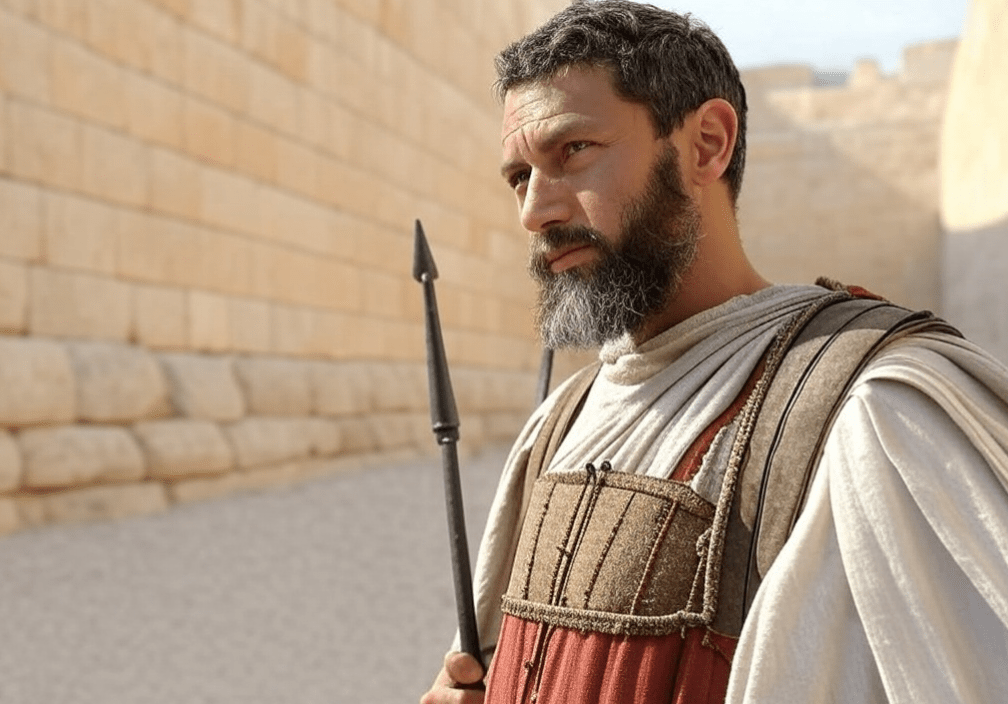
There is an anecdote told about the Athenian commander Iphicrates during the time his forces were defending the city of Corinth from 393 to 391 B.C.
He would make a point of personally inspecting the sentry outposts and guards on duty, in order to verify that they understood their responsibilities and were discharging them correctly. On one occasion, when the enemy was approaching the city walls, he encountered a guard who was asleep at his post. Iphicrates jabbed the man with his lance, wounding him severely or killing him. We do not know precisely the unfortunate man’s fate, as our source for this tale does not elaborate beyond the basic details; but he certainly would have sustained a grievous injury. Some of Iphicrates’s attendants chastised him for undue severity in this punishment, but he waved them off. He responded with one sentence: “The condition in which I found him is the way in which I left him.” As Frontinus relates this quote,
Qualem inveni, talem reliqui. [Strat. III.12.2]
I think it is clear what Iphicrates meant by this laconic response. He was reminding his subordinates that, in severely wounding the sentry, he had not done anything that was not already destined to happen to the man once the fighting started. A guard asleep at the approach of an enemy is a guard already dead. Iphicrates was a careful and deliberate leader; we know this from the comment made about him by Cornelius Nepos in his collection of biographical lives: “He led his army at Corinth with such vigor that no forces were better trained or more responsive to command instruction [Iphicrates 2].”
The admonitions of Iphicrates are just as true today as they were in 392 B.C. He who falls asleep when the security of his country is at risk, places his nation in great peril. I remember hearing of the case of William Scott (the “Sleeping Sentinel”), a soldier from Vermont in the American Civil War, who was sentenced to death for falling asleep on duty in September 1861. The sentence would have been carried out had not President Lincoln pardoned the man on the eve of his execution. Perhaps there was more wisdom in Lincoln’s mercy than in the ruling handed down by the judge in Scott’s court-martial, but the fact remains that a lack of readiness in times of war is a deadly serious matter. Scott’s dereliction of duty had imperiled not just himself, but his entire unit.
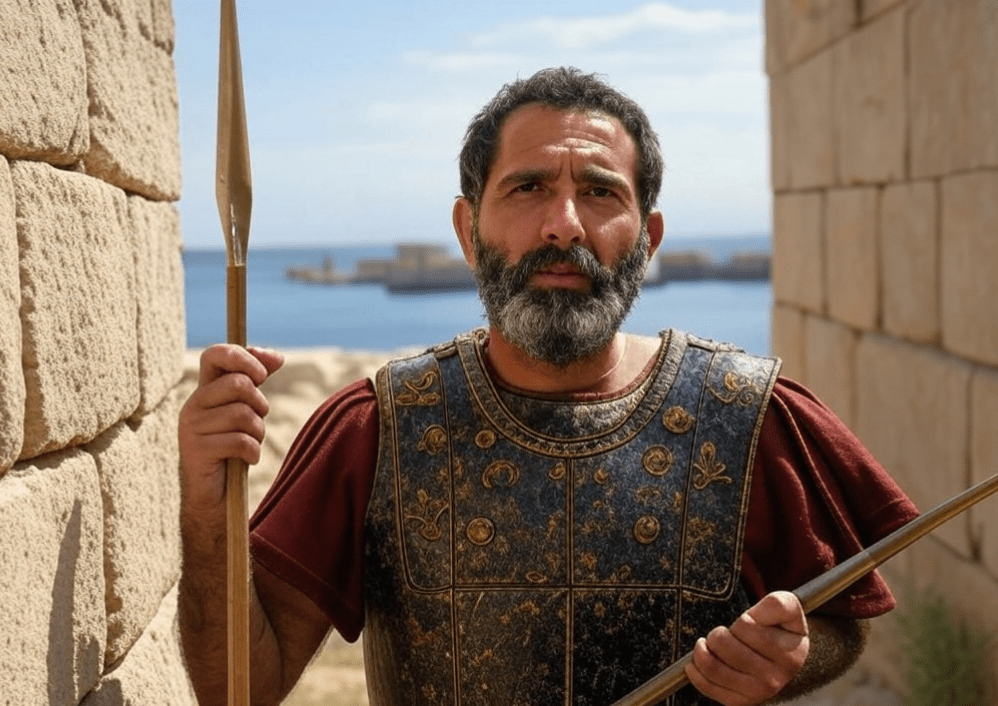
But one need not be literally asleep to be remiss in one’s duties. There are plenty of wide-awake men who are just as negligent as the snoring sentry jabbed by Iphicrates. Carelessness regarding readiness can take diverse forms. We do not need to have an enemy at the gates; threats to our security can come just as easily—perhaps far more easily—from within our walls. Leaders who fail to secure their country’s interests, or who neglect those interests, are just as derelict as a guard who dozes off at his post. To permit and encourage massive, destabilizing concentrations of wealth among society’s richest; to allow the plundering of the nation’s resources by a self-serving, avaricious plutocracy; to serve the interests of scheming foreign nations and lobbying-groups over the interests of one’s own nation; to view the national heritage and institutions not as sacred trusts to be preserved, but as tools for personal enrichment: are these not also examples of criminal negligence?
Readiness is a chord twisted with many component strands. It begins with a certain attitude, a posture, that recognizes the fragility of security, and the ease with which a nation can be subverted by malefactors from within, and conquered by enemies from without. Decisive and sustained action must accompany this realization. In a 1918 editorial in the Kansas City Star, former president Theodore Roosevelt wrote: “The vital military need of this country as regards its future international relations is the immediate adoption of the policy of permanent preparedness based on universal training. This is its prime duty from the standpoint of American nationalism and patriotism.”
Readiness and vigilance are lifelong responsibilities, and old age cannot dim the virtuous luster of a mind dedicated to serving the public good. Valerius Maximus tells us that the jurist Livius Drusus was untiring in his devotion to the republic. Although advanced in age, with eyesight and energies inevitably diminished, Drusus continued to serve the public by interpreting the civil law and composing written works of superlative quality. “Fortune,” Valerius writes [VIII.7.4], “could impose old age on him, and deprive him of his sight, but neither of these developments could hinder his mind from seeing and flourishing.”
.
.
Read more essays on various subjects in history and moral philosophy in the collections Digest and Centuries.
 Quintus Curtius
You must be logged in to post a comment.