
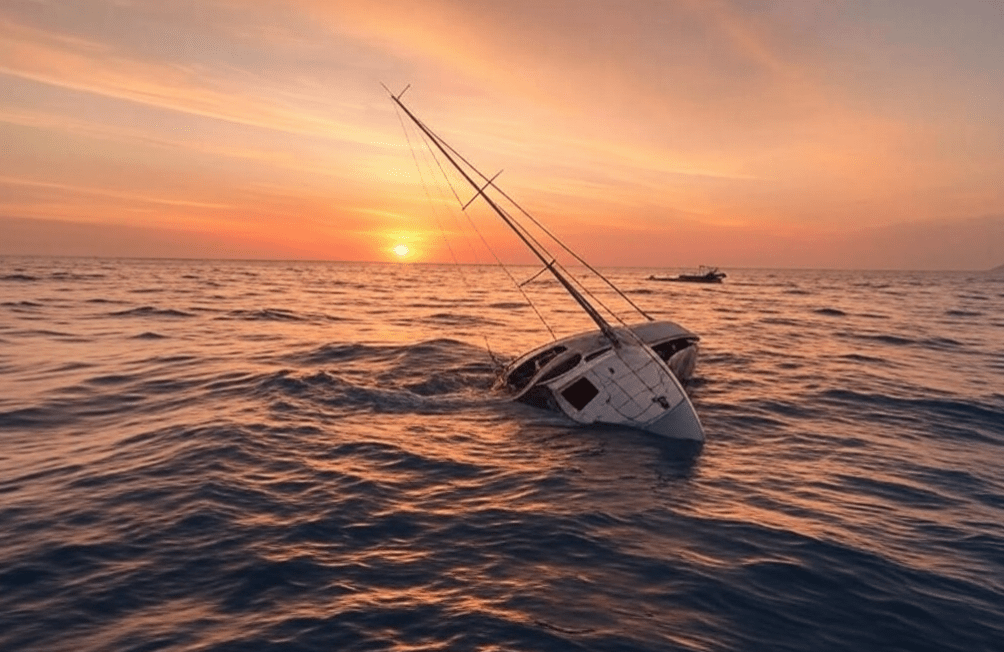
Enthusiasts of sea tales and true crime stories will find much to ponder in the horrific account of the ordeal of Terry Jo Duperrault aboard the Bluebelle. The story is a relatively recent one, and has been told before. But since many readers may be unfamiliar with the episode, I believe it is worth recounting here again. In the annals of maritime crime, few incidents can equal it in sheer depravity and cold-blooded calculation.
A forty-nine-year-old Wisconsin optometrist named Dr. Arthur Duperrault had long planned on taking his family on a boating excursion. Duperrault and his thirty-eight-year-old wife Jean had three children, whose names and ages were as follows: Brian (14); Terry Jo (11); and Renee (7). The doctor’s plan called for the family to fly to Fort Lauderdale in November 1961 and from there to charter a yacht to the Bahamas. In Florida, Duperrault leased a 60-foot yacht named Bluebelle, which was captained by an experienced skipper named Julian Harvey. Harvey, a military veteran, agreed to pilot the vessel for Dr. Duperrault for a hundred dollars per day, as long as the doctor and his family agreed to serve as crewmembers. Harvey had been married only three months before, and his wife Mary would also be aboard the yacht. The bargain was struck, and the ship was launched.
By November 12, the ship had reached the Bahamas, and was on course for an island named Great Stirrup Cay. The events that happened next are drawn from the story Harvey told the authorities several days later. According to Harvey, the weather suddenly turned violent after November 12. Violent winds caused the rigging to collapse, and the yacht began to take on water. As he was trying to save the ship, Harvey claimed, the cabin caught fire. Unable to coordinate his efforts with the other people aboard, and endangered by the sheets of flame engulfing the doomed vessel, Harvey finally gave up and escaped into the open ocean in a ten-foot life boat.
Havey claimed to have watched the burning ship sink slowly beneath the waves. But in the confusion of the disaster he was able, he said, to pull seven-year-old Renee into the life raft with him. Renee unfortunately never regained consciousness and perished shortly thereafter. The next day brought Harvey incredibly good fortune. His life raft was spotted by a passing tanker, which rescued him and brought him to Nassau; from there he flew back to Miami on November 15, and gave a statement about the tragedy to the U.S. Coast Guard. All five members of the Duperrault family were dead, Harvey tearfully asserted, as well as his dear wife Mary.
Yet the schemes of the wicked rarely unfold as originally planned: for the goddess Fortune unmasks, in her own time and in her own way, the evil ruses of mortal man, and with predictable constancy punishes malefactors who consider themselves immune to her judgments. The unfolding of events would expose Harvey’s story as a lie, and himself as a mass-murdering fraud. After hearing Harvey’s story, the Coast Guard alerted ships in the vicinity where the Bluebelle had sunk to be alert for any possible survivors.
A freighter passing through the area named the Captain Theo miraculously spotted a tiny cork float drifting in the ocean. The float carried one devastated occupant: the eleven-year-old Terry Jo. She had drifted for three and a half days under the blazing sun without food or water; she was dehydrated and horribly sunburned; and she was in a state of shock. The young girl was flown to Mercy Hospital in Miami and slowly nursed back to health, and she survived. Julian Harvey soon learned of the girl’s rescue and survival, and he began to panic.
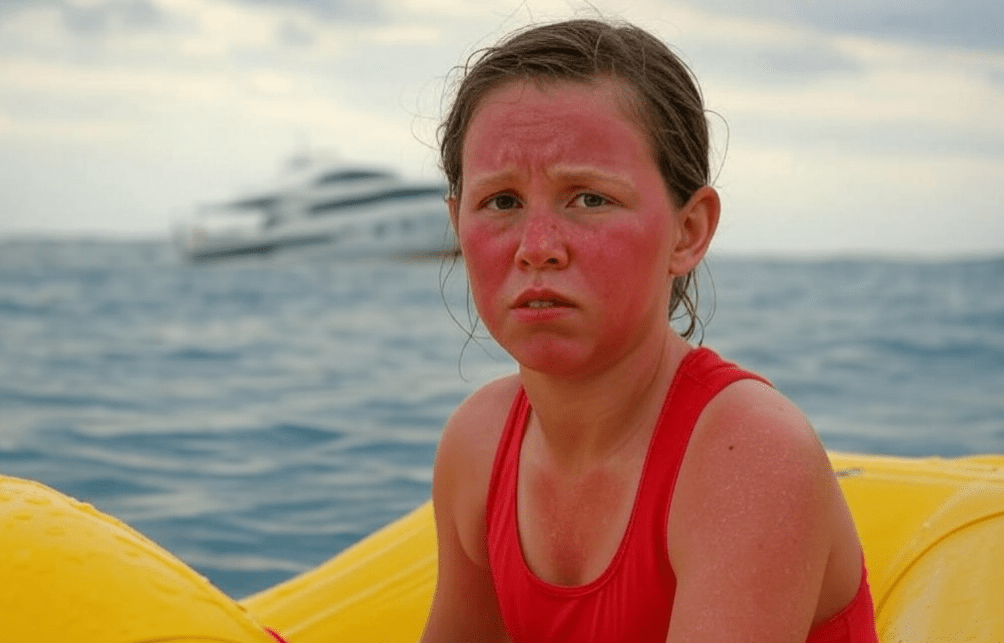
After hearing Terry Jo’s account of the Bluebelle tragedy, investigators realized that something was very wrong with Harvey’s version of events. As authorities probed deeper, they became more alarmed. Harvey, it appeared, had a long history of being associated with fatal “accidents” and “tragedies.” In 1949, he was driving an automobile that had crashed, killing his wife and mother-in-law. In 1955, he was piloting a boat that sank; in this incident, the survivors were rescued, and there were no deaths. In 1959, a boat he was piloting sank off the coast of Texas. He was even involved in an aviation accident that left him seriously injured, and prompted his medical discharge from military service. It was difficult to believe that any one man could be involved in so many accidents—unless the events were in fact not accidents. It was also discovered that Harvey had taken out a $40,000 insurance policy on his new bride Mary, which had a double indemnity clause if she were to die in an accident.
Upon learning of Terry Jo’s survival, Harvey checked into a Miami hotel under a false name. After penning a pathetic suicide note, full of self-pitying lamentations but displaying not the slightest remorse for his despicable murders, Harvey slashed his arteries with a razor and bled to death. So are evil men brought to ruin by the stench of their morally corrupt deeds.
What really happened aboard the Bluebelle? We will never know the exact sequence of events, or precisely how Harvey murdered his wife and the Duperrault family. But it seems clear that he overpowered them with a combination of violence and surprise, and then dumped their bodies in the sea. Terry Jo told the authorities she was sleeping below deck when she was suddenly awakened by sounds of violence and cries for help. Harvey seems to have bludgeoned or shot his victims, and then escaped on the yacht’s dinghy. He apparently never bothered to kill young Terry Jo, thinking she would perish as the Bluebelle sank. After Harvey abandoned the Bluebelle, Terry Jo found a small cork float lashed to the sinking ship’s deck, and managed to free it. This tiny float would preserve her life for the next three days upon the water.
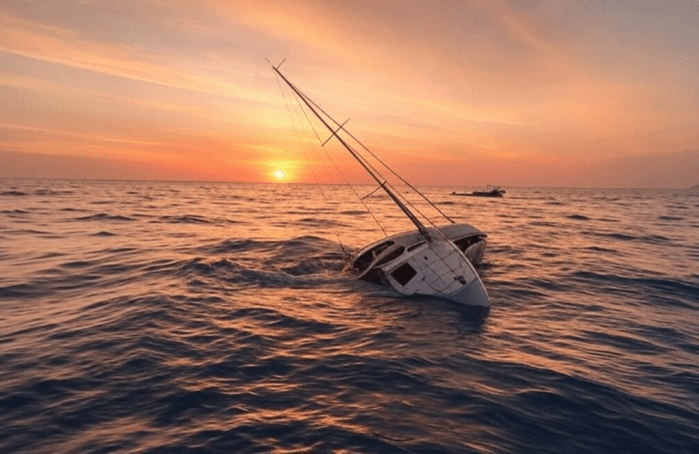
Our story is a dark one, but is in some way relieved by the miraculous confluence of events that enabled Terry Jo Duperrault not only to survive, but to assist in exposing the crimes of a remorseless maritime killer. Fortune intervened several times to save the young girl’s life: the killer failed to murder her outright, as he had the others; as the yacht sank beneath the Caribbean waves, Terry Jo had the presence of mind to find and launch her own float; she was kept alive at sea for three days, with no food or water; and a passing ship fortuitously managed to see and rescue her. How the fates of mortal men hinge on the unlikeliest chain of occurrences! And who, knowing all this, can say that the hand of Adrastia, the goddess of Fortune and Retribution, did not intervene in this sequence of events?
.
.
Take a look at the new, annotated translation of Cicero’s On the Nature of the Gods, available in audiobook, paperback, ebook, and hardcover.
 Quintus Curtius
You must be logged in to post a comment.