

A touching example of battlefield chivalry is found in the august pages of Alexander Garden’s Anecdotes of the Revolutionary War in America. This forgotten work, through interviews with veterans and knowledgeable parties, was published in 1822, and compiles a great number of stories connected with the war and its combatants. One of them we will present here.
In June of 1779 the Battle of Stono Ferry was fought near Charleston, South Carolina. The engagement itself was of little consequence, but it did provide the setting for one of those rare incidents of battlefield courtesy and mutual respect that perhaps redeems, to some degree, the ugliness and cruelty of armed conflict. A Lieutenant Parham, an adjutant of infantry, was stationed to the rear of the Continental force; his task was to ensure that skulkers and shirkers did not desert their units. At the conclusion of the engagement, Lt. Parham walked methodically through the wreckage of bodies and equipment on the battlefield, checking for survivors.
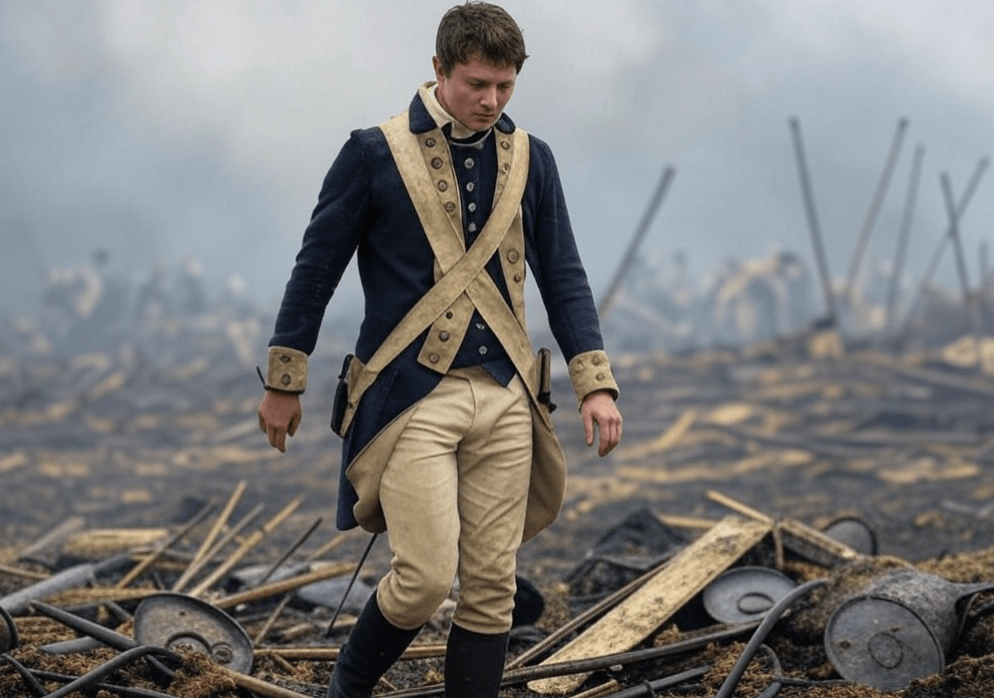
To his shock, Parham suddenly came upon a grievously wounded British officer. When the fallen foe saw the young American lieutenant, he gestured to him, and motioned for Parham to come closer. He pleaded with Parham for a drink of water, as he had been lying there for hours and was in desperate need of relief. Parham complied with the request, and the wounded man whispered hoarsely to him the following words:
Take it, Sir, it is yours by conquest; your generous procedure, too, gives you still greater title to it.
With this the wounded man reached into his pocket and pressed a beautiful timepiece into Lt. Parham’s hands. The shocked Parham responded as follows:
I came into the field to fight, and not to plunder, Sir. It gives me pleasure to have rendered you service; I ask no other recompense.
The Englishman replied,
Keep it for me then in trust, until we meet again. For if left in my hands, it may be wrested from me by some marauder who, to secure silence, may upon me inflict death.
Parham then said,
I will do as you wish, Sir, and take charge of it. But as soon as opportunity affords, I consider it a duty to return it to you.
Parham then left the man, and apparently made provision for the treatment of his wounds. Both men soon moved on to other duties. Several years later, Parham made extensive efforts to locate the British officer who had entrusted him with his watch. He finally succeeded, although we are not informed of the precise circumstances of their reunion. It is only recorded by Alexander Garden that, “[I]n strict conformity to his honorable feeling, and voluntary promise, Parham no sooner found himself within reach of the man to whom he had pledged the restitution of his property, than he waited upon him, presented the watch, and was greeted with an expression of grateful commendation, that amply rewarded his correct and liberal conduct.” In such ways may the beneficent actions of men of virtue expunge or redeem the miseries and cruelties inflicted by Fortune, and supply posterity with resonant examples of noble character.
.
.
Read more about character and virtue in historic contexts in the essay collection Centuries.
 Quintus Curtius
You must be logged in to post a comment.