
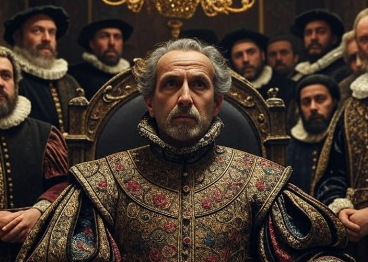
Around 1440, the Italian humanist Poggio Bracciolini composed an interesting dialogue entitled On the Unhappiness of Leaders (De Infelicitate Principum). It is styled on the classical model, in which notable figures debate the relative merits of different propositions.
The scholar Niccolò Niccoli emerges as the primary interlocutor, so much so that the work seems more like a series of his monologues than a true dialogue. Even Poggio himself is relegated to the sidelines; several other names make appearances, but on the whole Niccolò occupies center stage. The central thesis is that leaders of great authority have miserable lives. Moral corruption is their only true companion. Their minds are weighed down with the oppressive demands of office. They can never enjoy a moment’s rest, and must be constantly alert to betrayal, the schemes of others, and threats to their authority. Their offices become, in the end, little more than sumptuously furnished prisons. Sycophants are among the most odious creatures to congregate around the throne. Here Niccolò says [3]:
As bluebottles fly toward honey, so these people flock to the courts of kings and leaders to fulfill their various desires. Few are those who follow the man, but very many who follow his fortune [Rari hominem, plurimi fortunam sequuntur].
[Trans. by H. Schadee & K. Sidwell]
But bad leaders themselves, Niccolò notes, create the conditions in which flunkies and toadies may thrive. They push away good men, knowingly or unknowingly, by refusing to hear anything that might contradict their own vanities and predilections. Their innate abhorrence of virtue and truth compel them to seek the soothing anodynes administered by duplicitous connivers and mendacious parasites. Niccolò identifies four types of men that are for bad leaders “most satisfactory and amicable” (maxime acceptum ac familiare).
The first type is of course the sycophant and bootlicker. Niccolò sees them as barely human; they are in fact monsters who fill the minds of stupid leaders with lies, and hypnotize them with unrelenting adulation. In the end, the leader becomes unable to distinguish truth from falsehood. He sees no need to exert any effort at discovering the truth of things, because the sycophant whispering in his ear has convinced the bad leader that he is already wise. The sycophant inverts the truth with expert precision, calling virtue vice and vice virtue.

The second category are those who encourage a leader’s voluptuary pleasures: that is, his consumption of good food, his carnal lusts, and his love of fine clothing. The third category are the “architects of pursuing and compiling money” (perquirendae comparandaeque pecuniae architecti). These are the people who use their proximity to power to amass huge fortunes and the expense of their fellow-citizens. The fourth and final category are the “accusers” or “informers” (delatores), who enjoy spending their time destroying innocent people. They hover about the leader, whispering in his ears false rumors of plots and conspiracies. Such informers can portray even the state’s most loyal servants as its most treacherous enemies. The accuser panders to the evil leader’s deepest fear: the fear that he may one day be overthrown and called to account for his conduct.
These, then, are the four type of men that are the most satisfactory to the bad leader. From association with such individuals, how can anything good, anything beneficial to the state, anything decent or virtuous, ever result?
.
.
Be sure to take a look at the new, annotated translation of the Stratagems of Frontinus.
 Quintus Curtius
You must be logged in to post a comment.