
In 2000, the U.S. Congress proposed a detailed joint-service war game that came to be called “Millenium Challenge 2002,” or, in military parlance, MC02. The idea was a sound one. Rapid technological and doctrinal changes in the preceding decades had generated uncertainty about the U.S. military’s ability to respond to a sudden crisis.
Never before had so much money been spent on war games. The scenario called for a mixture of live exercises and computer simulations. It required two years of planning. Thirteen thousand personnel were involved. The budget for the games was an astounding $250 million dollars. The combatants were designated blandly as “Blue” and “Red.” Blue was understood to be the United States, and Red was designated as an unnamed Persian Gulf nation, which everyone understood to be Iran.
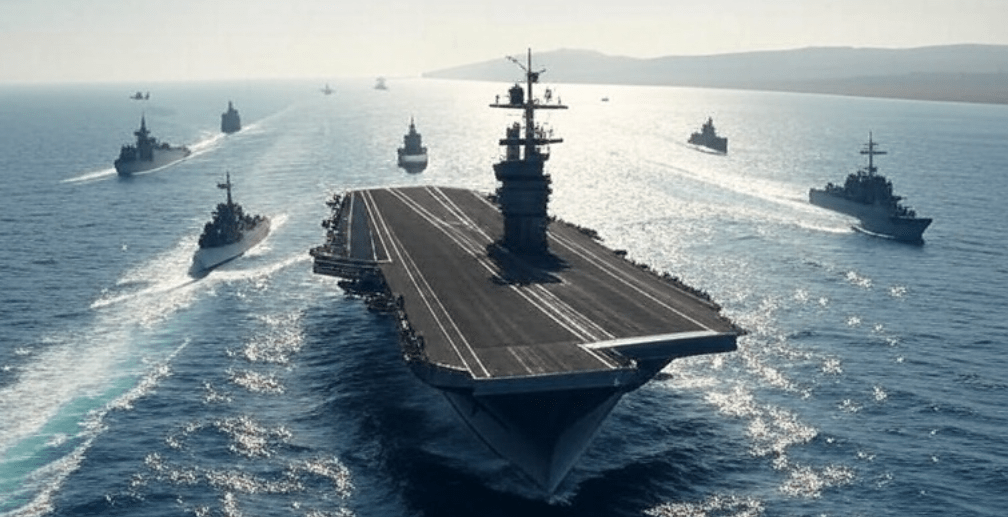
The details of the scenario were rather more inventive. In the aftermath of a severe earthquake, Red experienced civil unrest and a breakdown in governmental authority. A nationalistic military commander named CJTF-South exploited the opportunity to gain control over Red. He took possession of some islands in the Persian Gulf, and began to extract fees from ships in transit through international sea lanes. Blue (the United States), alarmed by these developments, sent a large naval task force to the region to enforce a World Court ruling requiring Red to evacuate the islands. Thus the stage was set for an armed confrontation. Red wanted to expel the foreign military presence. Blue wished to “restore stability” and prevent the emergence of a hostile military power in the region.
The chosen commander of the Red force was an aggressive, imaginative Marine lieutenant general named Paul Van Riper. General Van Riper had twice been awarded the Silver Star for bravery in action during the Vietnam War. Although he had retired in 1997, his reputation as a no-nonsense warfighter made him the ideal choice to command the Red side. In theory, the war games were meant to be an objective test of operational capabilities and responses. It was meant to be a learning experience. In practice, however, too much unorthodox creativity and initiative were not attributes that the bureaucracy appreciated. A great deal of money had been invested in the project, and there was an unspoken understanding that the games should showcase Blue’s military superiority and power. Initiative was allowed within certain boundaries, but no further.
But General Van Riper hadn’t gotten this memo, and he intended to give the military bureaucrats a lesson they would not forget. When Blue’s naval armada in the Gulf began to threaten troop landings and issue ultimatums, the general refused to sit still and wait for Red to be attacked. Using “asymmetrical” tactics, he launched his own lightning assault on Blue’s carrier battle group. To neutralize Blue’s superior electronic surveillance abilities, Van Riper relied on untraceable motorcycle messengers and old-fashioned light signals to relay information. Against the carrier fleet, Van Riper unleashed waves of cruise missiles which completely overwhelmed the ships’ defences. Small motorized boats were also used to carry out suicide and hit-and-run attacks against the Blue navy. Blue’s large, modern carrier battle group was unprepared for these tactics, and unable to defend adequately against them.
Within the first two days, a startling number of Blue ships had been sunk, including an aircraft carrier, ten cruisers, and five amphibious landing craft. In a real engagement, these losses would have entailed the deaths of tens of thousands of troops. Although the Blue force claimed that these shocking losses could be attributed in part to the limitations of computer modeling and response time inefficiencies, it was clear that Gen. Van Riper had delivered the U.S. military some powerful messages. What were these messages? An overreliance on technology can be fatal. You are not as strong as you think you are. Do not underestimate your opponent. In war, speed of decision and speed of action can matter more than the latest technology.
Blue’s humiliation could not be concealed, but it could be managed. After Van Riper had essentially destroyed the carrier battle group, the rules of the exercise were rewritten. The games were stopped. The sunken ships were brought back into action. In various other ways, the rules of the game were altered to ensure an ultimate Blue victory. Red was ordered not to fight back against certain attacks, and was hamstrung by not being able to deploy its own tactics in its own time. The military justified this decision on budget and training grounds, and we may suppose that some argument could be made for this. It would be politically difficult to report to Congress that war games costing $250 million had been essentially concluded in two days with a total U.S. defeat.
General Van Riper, of course, did not see things this way. He was extremely displeased. In his view, a unique chance for the military to learn painful lessons had been shamelessly wasted. By stacking the deck in favor of Blue, military planners had perpetuated bad habits, hubris, and complacency that in a real war would cost many lives. In a later interview conducted for the television program Nova, the general provided more insight:
Nova: How has technology changed the nature of war?
Van Riper: When I look at any of the modern technology—whether it’s precision-guided munitions, some of the automated command and control, the use of space, the overhead surveillance systems, and so on—I appreciate that technology. But I try to take a long view. Look back over the course of history. There are many moments that could have been called break points because of technology. People at the time thought the world would be fundamentally different because of that technology…In reality, the fundamental nature of war hasn’t changed, won’t change, and, in fact, can’t change…What is changing—in fact, is always changing—is the character and form of war, and the technology is what influences that character and form. We need to understand that and be careful of it, but it’s not what should drive us.
Nova: Isn’t the current revolution—transformation, network-centric warfare—supposed to change how war is fought?
Van Riper: We hear many terms, whether it’s “transformation,” “military technical revolution,” “revolution of military affairs,” all indicating something revolutionary has happened that’s going to change warfare. Nothing has happened that’s going to change the fundamental elements of war. The nature of war is immutable, though the character and form will change. The difficulty is that those who put forth this argument believe that something fundamentally has changed, and you can change very quickly without thinking your way through it. They want to apply the technology without the brainpower…War is about adapting. Any potential enemy as well as we, the United States, if we didn’t adapt, learn, and evolve from our past experiences, we would be a species or a nation that would not survive. And any enemy that wants to survive against the United States can’t fight like some of our recent enemies have, or they won’t survive…
But just because the United States has overwhelming forces (or at least we Americans perceive that it does) and will for the foreseeable future, shouldn’t make us believe that we’re always going to dominate on that future battlefield. Many enemies are not frightened by that overwhelming force…
Nova: So do you think Millennium Challenge 2002 was a waste?
Van Riper: I’m angered that, in a sense, $250 million was wasted. But I’m even more angry that an idea that has never been truly validated, that never really went through the crucible of a real experiment, is being exported to our operational forces to use.
What I saw in this particular exercise and the results from it were very similar to what I saw as a young second lieutenant back in the 1960s, when we were taught the systems engineering techniques that Mr. [Robert] McNamara [Secretary of Defense under Presidents John F. Kennedy and Lyndon Johnson] had implemented in the American military. We took those systems, which had good if not great utility in the acquisition of weapon systems, to the battlefield, where they were totally inappropriate. The computers in Saigon said we were winning the war, while out there in the rice paddies we knew damn well we weren’t winning the war. That’s where we went astray, and I see these new concepts potentially being equally as ill-informed and equally dangerous.
Nova: Part of your victory in Millennium Challenge was based on your knowledge that the U.S. had a preemptive doctrine. How did you take advantage of that?
Van Riper: My belief at the outset of Millennium Challenge was that Blue believed it had a monopoly on preemption, and it would strike first. And, of course, in any war game I was familiar with up to that point, that had never been the case. The U.S. had only gone to war as a result of some aggression by an enemy, and so always had to react. Now that it was announced policy that we reserved the right to do that, the Blue force was going to take full advantage of it and plan to strike first.
So I simply stepped back and said, “What advantage is there for Red to wait for Blue to strike?” There was none. And that lead to the natural conclusion that if they’re coming, and we can’t persuade them not to diplomatically, then we will strike.
As I looked at an ultimatum that gave me less than 24 hours to respond to what literally was a surrender document, it was clear to me that there was no advantage in any of this diplomacy. I was very surprised that the Joint Forces Command personnel who had argued for using all of the elements of national power—the economic, the diplomatic, the political information—in some sort of coherent fashion, really came at Red with a blunt military instrument. So it was clear to me that this was not going to be negotiated, this was going to be a fight. And if it was going to be a fight, I was going to get in the first blow.
The enemy will rarely do what an opposing commander wants him to do. An enemy’s lack of technological sophistication does not necessarily indicate his operational incompetence. Innovative thinking and bold action win wars. Hubris, arrogance, and complacency can be fatal. The rules of conflict are, as they always have been, based on human nature.
.
.
Read more about strategy and tactics in the new, annotated translation of Frontinus’s Stratagems.
 Quintus Curtius
You must be logged in to post a comment.