
The Defense Of The “General Armstrong”

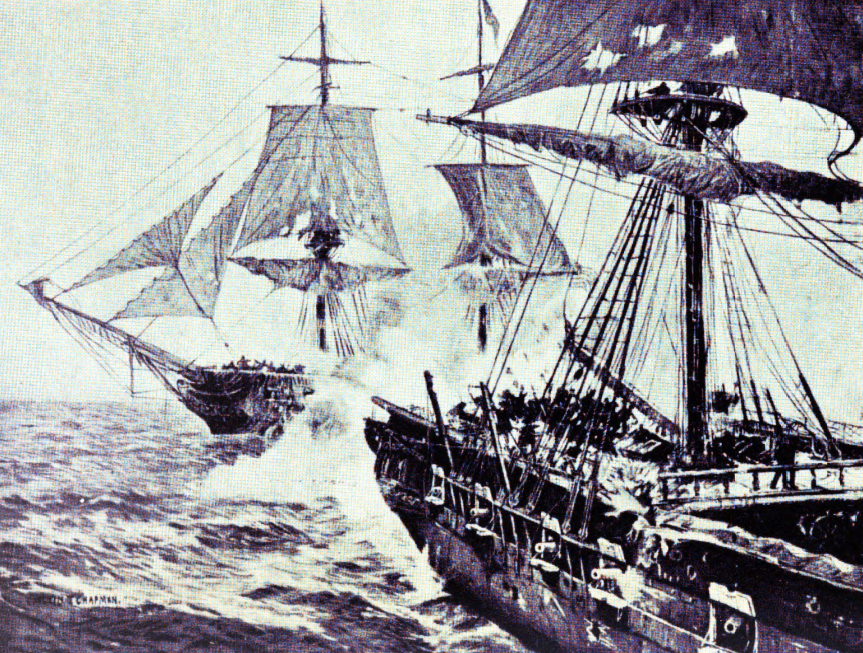
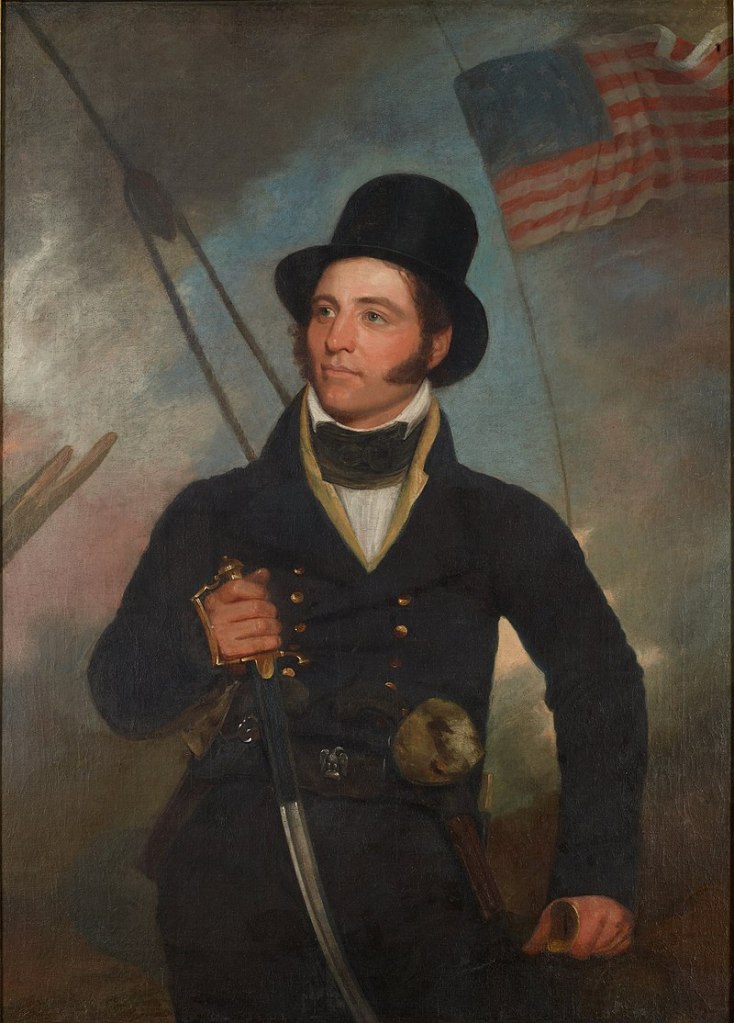
Samuel Chester Reid was born in 1783 and first went to sea at the age of eleven.  Various adventures, including time as a captured prisoner of the French at Basse-terre in the Carribbean, honed his resourceful instincts; and privateering seemed a logical choice of career.  Upon the outbreak of the War of 1812, Reid assumed command of the brig General Armstrong.  She sailed from New York with a crew of about ninety men, composed of the expected assortment of adventurers, rogues, and merchant sailors. 

Continue reading

A Well-Timed Ruse: The “Peacock” Captures The “Epervier”

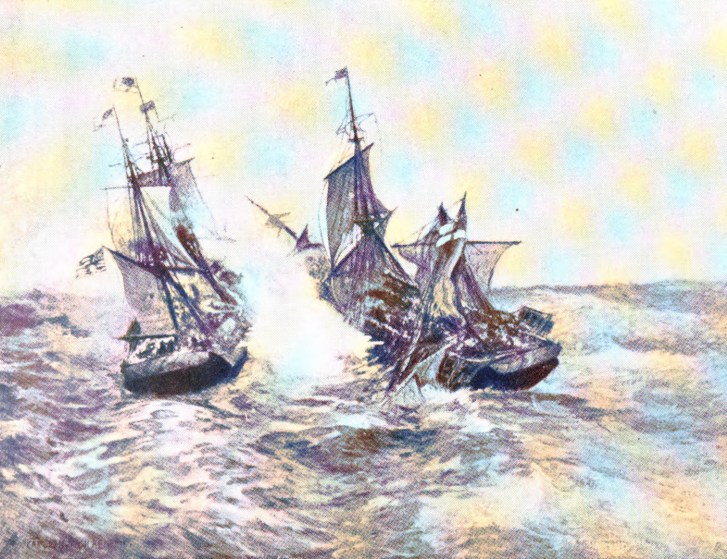
The naval actions of the War of 1812 are instructive for several reasons.  These derive from the particular circumstances of the war, and from the nature of armed conflict in general.  In the War of 1812, the United States was at a significant disadvantage to her British adversary; the British navy was the best in the world, able to project power across the world in a way that the US Navy could not.  British officers were in general better trained and equipped, and often could rely on numerical superiority in engagements at sea. 

Continue reading

The Almond, The Virtues, And Liberty Of Conscience

The philosopher Philo of Alexandria relates the following anecdote in his short treatise On the Life of Moses (II.23.178).  The prophet Moses, we are told, had appointed his brother to the office of high priest.  His decision had been based on his brother’s merits, but there was inevitably some grumbling by people who believed that the appointment was the result of familial favoritism. 

Continue reading

The Strength Of Organized And Cumulative Effort

When studying the history of the exploration of the African continent, one is struck by the relative recentness of our acquisition of its geographic details.  Ancient man undoubtedly mounted expeditions here and there, but none of them has left a lasting modern mark.  Egyptians, Carthaginians, Greeks, and Romans eventually contented themselves with an awareness of the continent’s general contours.  Its interior they count not penetrate; deserts, mountains, rain forests, disease, heat, and hostile native peoples proved too forbidding.    

Continue reading

Thomas Boyle Attacks Four Opponents At Once, And Beats Them All

Privateers were used extensively by the United States during the War of 1812.  The young American Navy did not have the money, resources, or manpower to conduct naval operations along the entirety of its vast coastline; it found it expedient to commission private parties to carry out some of its objectives. 

Continue reading

Tusculan Disputations: What It Is About, And Why It Is Important (Podcast)

In this podcast I discuss my new translation of Cicero’s Tusculan Disputations. The work deals with five critical problems that face all of us: the fear of death, how to endure pain, how to alleviate mental distress, the various disorders of the mind, and why virtue is important for living a happy life. (A review of the book can be found in the October 2021 issue of The New Criterion). What questions could be more essential and fundamental than these?

Continue reading

Bertha’s Grave

The following tale appeared in an old volume of forgotten maritime lore.  Its author, the indefatigable historian Edward R. Snow, relates that he first heard in as a young man in Bristol, England.  He frankly notes the difficulty of substantiating its details, but suggests that, like many sea-yarns, it may contain the seeds of actual events.  The story remains, in any case, a powerful allegory of love, loss, and commitment.  The setting is the Isle of Wight.  The time is the end of the seventeenth century.

Continue reading

“I’m Thinking Of Publishing A Memoir” (Podcast)

A veteran of Afghanistan has a memoir he is trying to put together. He’s asking for some tips on how to publish it. We offer some suggestions and comments.

Continue reading

Charlemagne Instructs On The Moral Requirements Of Leadership

We do not know the precise location of Charlemagne’s birthplace.  He donned the crown at the ripe age of twenty-nine in 771 A.D. upon the death of Carloman II.  From that moment he became embroiled in an almost ceaseless series of military campaigns designed both to expand his frontiers and safeguard them; in this turbulent age, kings needed to fight as well as administrate.  Historians tell us that he undertook around fifty-three campaigns, and personally commanded most of them. 

Continue reading

“Tusculan Disputations” Is Now Available

After nearly two years of preparation, my annotated, illustrated translation of Cicero’s Tusculan Disputations is now available in hardcover , paperback, Kindle , and audiobook.

Continue reading