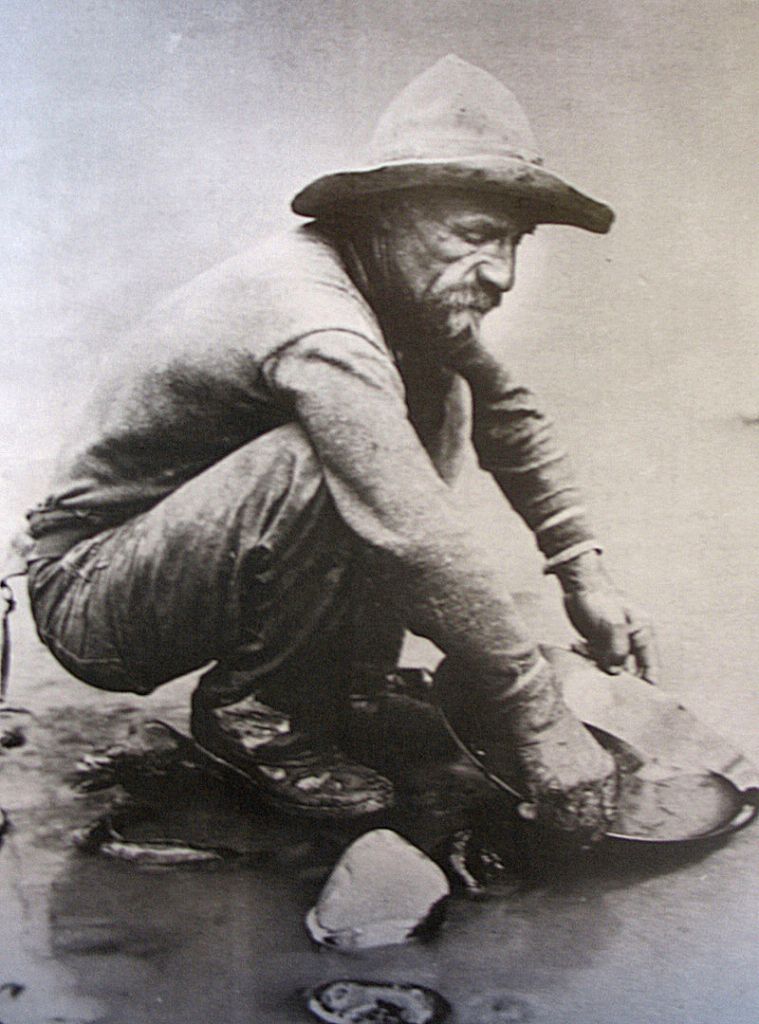

In this podcast we discuss Vladimir Alexandrov’s book The Black Russian, and what lessons we may conclude from it. Frederick Bruce Thomas was a black American businessman who made a fortune in czarist Russia in the early 1900s. His life is a fascinating one, and one that has much to teach us today.
Continue readingAuthor: Quintus Curtius
Mind, Body, And Estate

The historian Edward Gibbon’s autobiography, entitled Memoirs of my Life and Writings (1796), contains the following passage:
Continue readingThe Attack On Firebase Mary Ann

Max Hastings’s excellent history, Vietnam: An Epic Tragedy, discusses one revealing engagement that took place between American and North Vietnamese forces in late March of 1971. This action—a ferocious assault on a remote firebase named Mary Ann—merits further reflection, I think, and we will give it its due here.
Continue readingThe Strange Case Of Dr. Winslow’s Heart

The New England regional author Edward Rowe Snow (1902—1982) related a strange and fascinating piece of Nantucket lore in his 1979 book Tales of Terror and Tragedy. Since the volume is long out of print, I will retell it here.
Continue readingSmall Twitter Account Gold: Tweet Reading 1

In this podcast, I read some of the recent great tweets I’ve noticed from small accounts on Twitter. Small Twitter accounts are a refreshing break from the contrived foolery of the mainstream blue-check accounts. They are an underappreciated gold mine of honesty, passion, and tortured grapplings with truth. Let’s give some credit where it is due, and hear what they have to say.
Continue readingThe Leadership Principles Of St. Benedict

If we are to understand the mind of early medieval man, we must attempt to place ourselves in his situation and circumstances. It is difficult for us, having been reared in an age of relative peace and prosperity, to grasp the degree to which Western Europe had succumbed to chaos, warfare, and barbarism after Roman civil authority collapsed in the fourth and fifth centuries.
Continue readingEverything Is Fine, Until It Is Not

In 1917 there was published in Germany a book entitled Deductions from the World War (Folgerungen aus dem Weltkriege). It was an analysis of lessons learned from the previous four years of intense fighting, and its author was a man named Baron Hugo Von Freytag-Loringhoven. At the time he was a lieutenant-general, and he was working as the deputy chief of the German Imperial Staff. An English translation of his book appeared in 1918.
Continue readingExploring Small Twitter Accounts (Podcast)

I’ve been exploring small Twitter accounts lately. And when I say “small,” I generally mean accounts that have less than 50 followers. You’d be surprised how much gold can be found hidden away in these accounts: they tend to be raw, honest, and unconcerned with saying the “right” thing. In this podcast, I discuss how I started doing this, what I’ve learned, and how I go about it.
Continue readingHere Be Thy Grave

The Swiss orientalist and explorer Johann Ludwig Burckhardt crossed the cataracts of the Nile in 1813 and was intending to penetrate into the heart of unknown Nubia. Near a place called Jebel Lamoule, his Arab guide dismounted from his camel and approached the intrepid European; his intention was to practice on him a time-honored extortion ritual much observed in that region when escorting foreigners. The ritual was called “preparing the grave for the traveler.”
Continue readingAlive Today, Dead Tomorrow, Then Alive Again

The ancient Greek statesman and general Alcibiades once likened his career to the lives of the mythical half-brothers Castor and Pollux.[1] These two figures are together called the Dioscuri, and they are attended by many stories and fables, some of which are contradictory or ambiguous. According to myth, the Dioscuri are alive and dead on alternate days. Homer says:
Continue reading
You must be logged in to post a comment.