The grave of William Shakespeare is located in the Church of the Holy Trinity at Stratford-upon-Avon. Its epitaph contains this dire warning against those who would disturb his remains:
Continue reading
The grave of William Shakespeare is located in the Church of the Holy Trinity at Stratford-upon-Avon. Its epitaph contains this dire warning against those who would disturb his remains:
Continue reading
A glance at a map of Lake Erie quickly reveals its strategic importance to the belligerents of the War of 1812. The lake sits atop what was then the western boundary of the United States. The British were in control of Canada; with the waters of Lake Erie at their disposal, they would be able to ferry armies into positions allowing them to launch attacks on western Pennsylvania and New York, and proceed from there to America’s east coast cities.
Continue reading
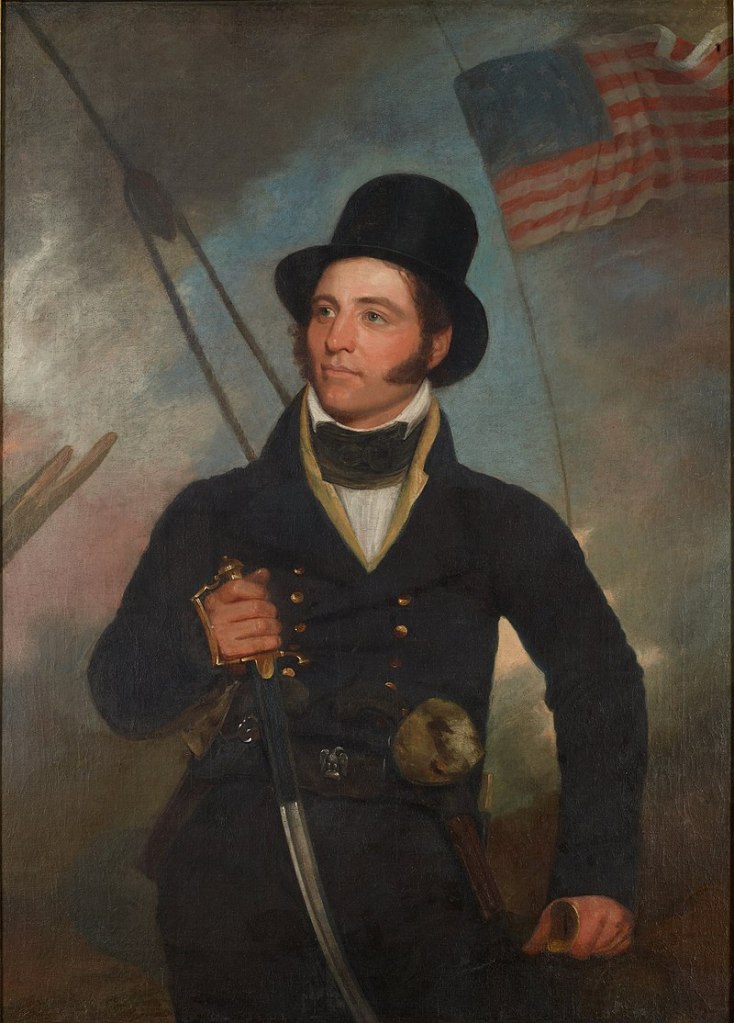
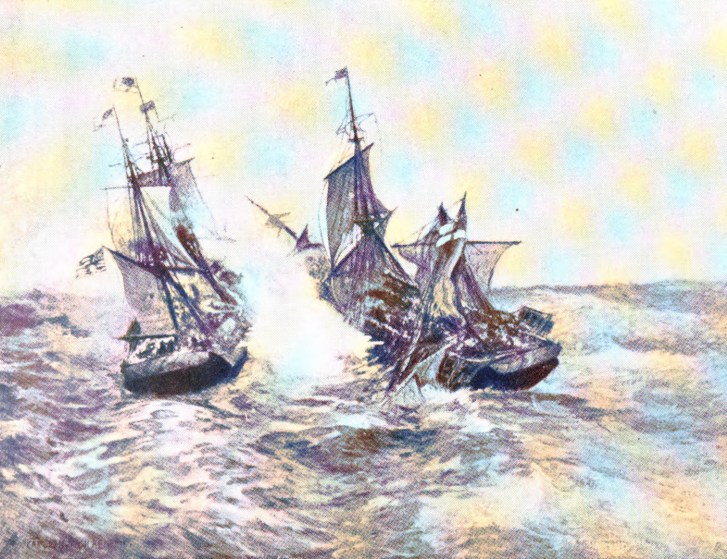
Samuel Chester Reid was born in 1783 and first went to sea at the age of eleven. Various adventures, including time as a captured prisoner of the French at Basse-terre in the Carribbean, honed his resourceful instincts; and privateering seemed a logical choice of career. Upon the outbreak of the War of 1812, Reid assumed command of the brig General Armstrong. She sailed from New York with a crew of about ninety men, composed of the expected assortment of adventurers, rogues, and merchant sailors.
Continue reading
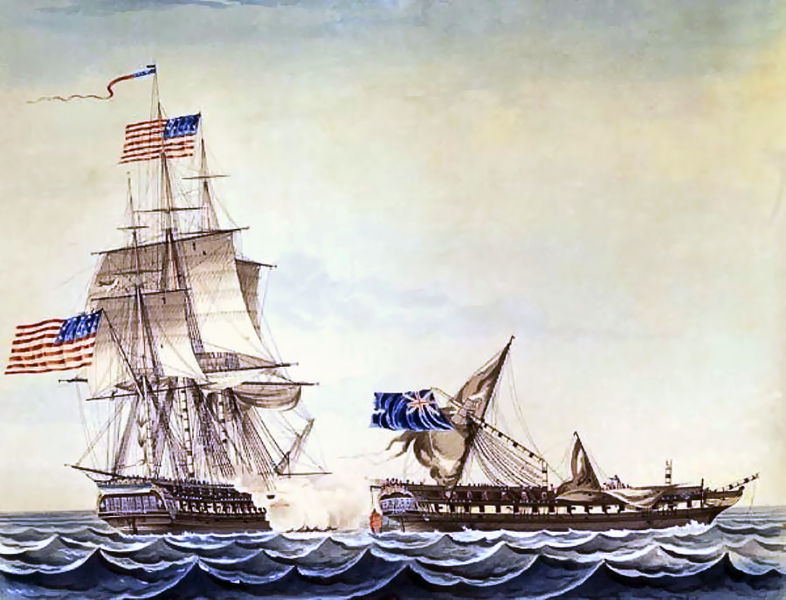
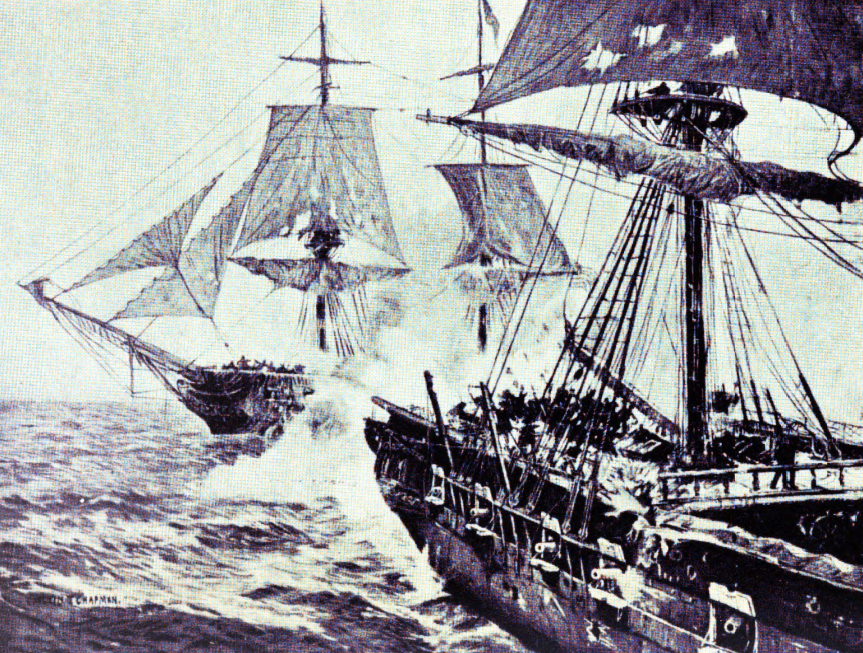
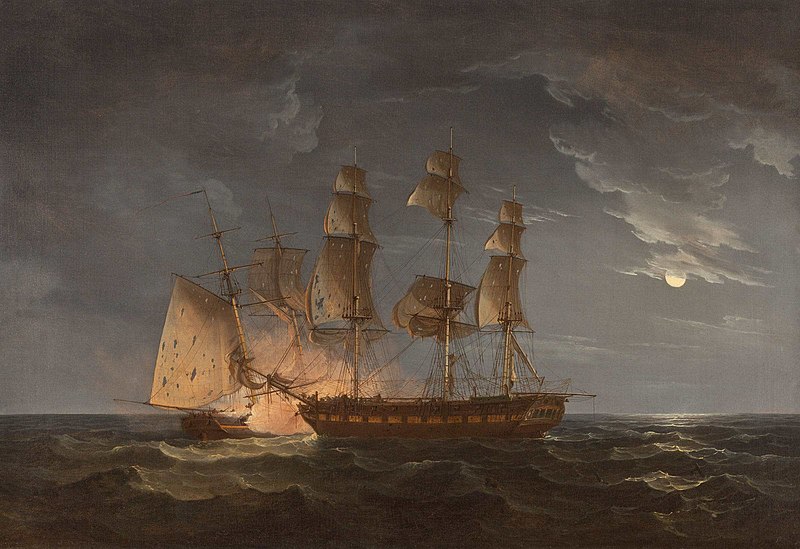
The naval actions of the War of 1812 are instructive for several reasons. These derive from the particular circumstances of the war, and from the nature of armed conflict in general. In the War of 1812, the United States was at a significant disadvantage to her British adversary; the British navy was the best in the world, able to project power across the world in a way that the US Navy could not. British officers were in general better trained and equipped, and often could rely on numerical superiority in engagements at sea.
Continue reading
When studying the history of the exploration of the African continent, one is struck by the relative recentness of our acquisition of its geographic details. Ancient man undoubtedly mounted expeditions here and there, but none of them has left a lasting modern mark. Egyptians, Carthaginians, Greeks, and Romans eventually contented themselves with an awareness of the continent’s general contours. Its interior they count not penetrate; deserts, mountains, rain forests, disease, heat, and hostile native peoples proved too forbidding.
Continue reading
Privateers were used extensively by the United States during the War of 1812. The young American Navy did not have the money, resources, or manpower to conduct naval operations along the entirety of its vast coastline; it found it expedient to commission private parties to carry out some of its objectives.
Continue reading
We do not know the precise location of Charlemagne’s birthplace. He donned the crown at the ripe age of twenty-nine in 771 A.D. upon the death of Carloman II. From that moment he became embroiled in an almost ceaseless series of military campaigns designed both to expand his frontiers and safeguard them; in this turbulent age, kings needed to fight as well as administrate. Historians tell us that he undertook around fifty-three campaigns, and personally commanded most of them.
Continue reading
The chronicler known to posterity as Notker the Stammerer (“Notker Balbulus”) was born in what is now Switzerland around A.D. 840. He seems to have come from a family that had the means to provide him with the best education his era could offer. We find him in adulthood as a monk at the monastery at St. Gall, where he was able to exercise his considerable musical talents in composing verses and hymns.
Continue reading
I first learned of the following story in a long-forgotten book of maritime lore entitled Unsolved Mysteries of Sea and Shore. Authored by Edward Snow, it was published in only one edition in 1963. As it is a difficult volume to procure, it will be useful for me to retell the tale here in abbreviated form, so that readers can form their own conclusions on the purposes of an elusive and sinister figure named William Kellogg Thompson.
Continue reading
Gunther Plüschow, Germany’s legendary escape artist of the First World War, was born to a well-traveled family in Munich on February 8, 1886. He was taken by his family to Rome at an early age, and was fortunate to have grown up amid the Eternal City’s bustle, ruins, and excitement; it was there that he acquired his facility with languages and adroitness in maneuvering his way out of trouble.
Continue reading
You must be logged in to post a comment.