Deep Memories Yield No Epitaphs

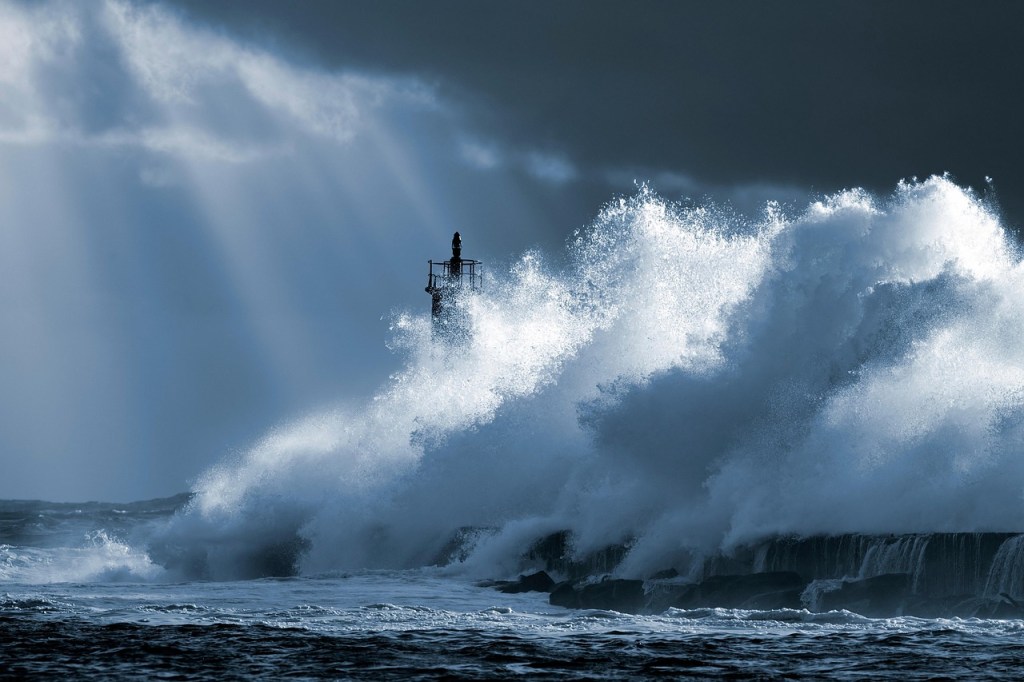
Chapter 23 of Moby-Dick is entitled “The Lee Shore.”  It offers some philosophical commentary on the need for travel and direct experience.  Melville reflects on the restless, roaming nature of a sailor named Bulkington: 

Continue reading

When The Sleeper Wakes

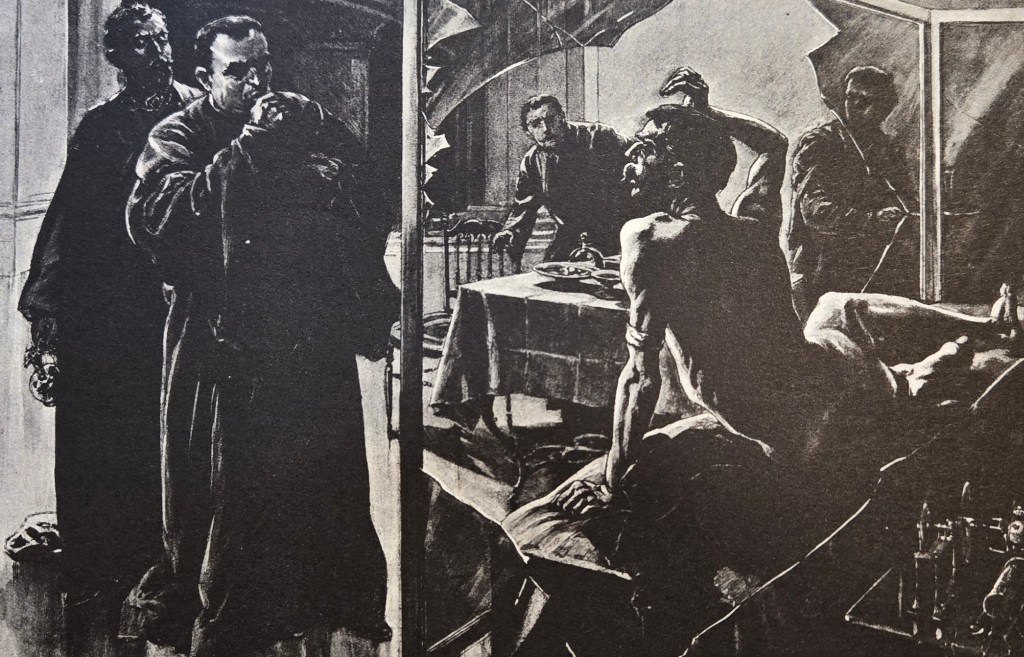
We are told that the word dystopia first entered the lexicon in 1868, when John Stuart Mill used it in a parliamentary speech.  The first dystopian novel is somewhat open to debate, but many consider H.G. Wells’s The Time Machine, first published in 1895, to be a strong candidate.

Continue reading

Baklushin’s Story

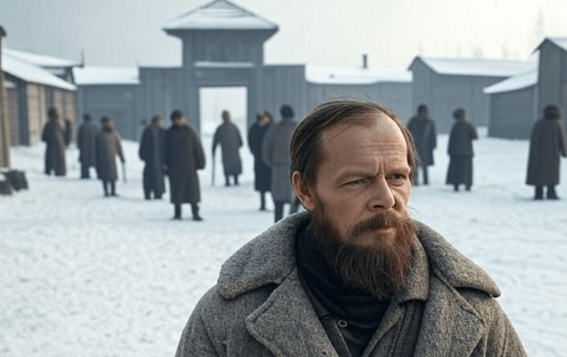
In 1849, the young Fyodor Dostoyevsky was arrested for anti-tsarist activities and sentenced to death.  His sentence was commuted by the tsar at the last instant, and he was instead given a four-year term in a prison camp in Siberia.  From this shattering experience came his semi-autobiographical novel The House of the Dead, which was published in 1860. 

Continue reading

Do Not Buy At Such A Price, Only To Regret It

What may at first consideration be an enticing course of action, may take on a much more negative hue after further scrutiny.  This was the point of an anecdote related by the Roman writer Aulus Gellius in his Attic Nights (I.8).  Although the story is essentially a humorous one, the idea it conveys is one that carries the utmost seriousness with regard to the fates of men and nations.

Continue reading

The Enmity Of Poets Is The Worst Of Acquisitions

Buried in the learned and fecund pages of Ibn Khallikan (IV.43) is an amusing tale of an impoverished poet of medieval Sicily.  Who will object to its retelling? 

Continue reading

The Ghosts Of St. Paul Island

St. Paul Island is one of those innumerable specks of land in the northeast Atlantic that are perpetually lashed by frigid wind and wave.  It is located about fifteen miles northeast of Cape North on Cape Breton Island; it is near the Cabot Strait between the Gulf of St. Lawrence and the Atlantic Ocean.  In centuries past it hosted residents, but is now uninhabited.

Continue reading

The Object Of Unceasing Pursuit

One of Poe’s lesser-known stories, The Domain of Arnheim, seems to offer his theory of aesthetics.  I say “seems to,” because the dream-like quality of the story leaves the reader with more than a residue of ambiguity.

Continue reading

The Past Never Leaves Us

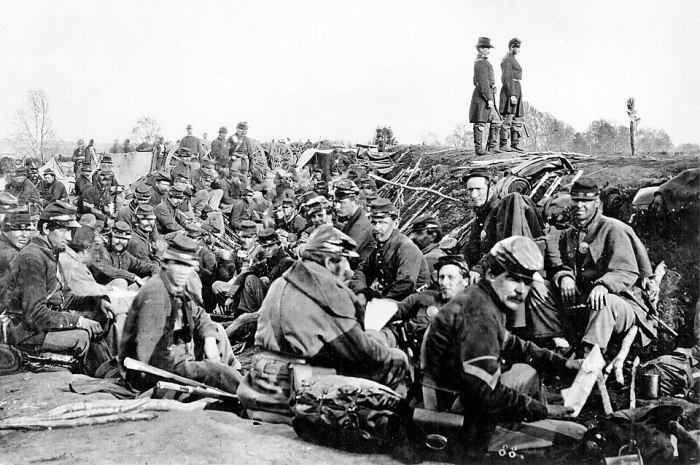
Ambrose Bierce remains the only major writer who actually experienced, and survived, combat in the American Civil War.  Henry James and Mark Twain chose to sit out the war.  Twain’s actions in particular look very much like the behavior of a deserter.  Walt Whitman served as a nurse, but he did not fight.  

Continue reading

Better Exile Than Submission: The Passion Of Dante Alighieri

Dante Alighieri was born in 1265 to Bella and Alighiero Alighieri.  His mother died in Dante’s infancy, and his father passed away when the poet had barely reached fifteen.  It was not a wealthy family by any measure; although Dante’s Florentine lineage was distinguished, his family was unable to convert pedigree to lucre.

Continue reading

The Testimony Of Language

The words and syntax of a speaker are as revelatory of identity as a fingerprint, a ballistics test, and a DNA sample are to a criminologist.  The critical inquiries of the scholar, or the practiced eye of the native speaker, will as readily deduce the origin of a written text from an examination of its lexicon and constructions, as might a forensics scientist derive a wealth of information from a study of a fragment of bone, a scrap of tissue, or a tuft of hair.  While this truth has not often been appreciated, it remains one that has been consistently demonstrated.  We will discuss three examples that illustrate our proposition.

Continue reading