
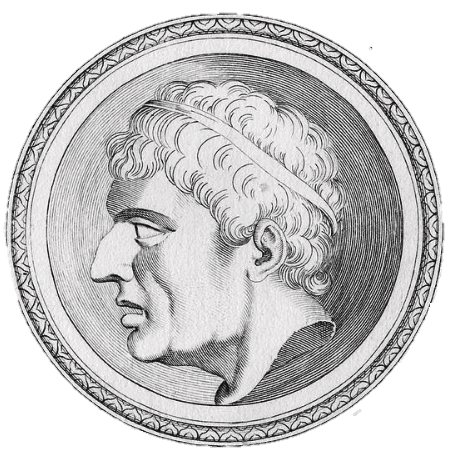
Aratus of Sicyon was a Greek politician and military commander who lived from 271 to 213 B.C. He was forced to flee his native city of Sicyon at seven years of age when his father, a prominent politician, was murdered by a rival. Raised in Argos, he distinguished himself as an athlete and a leader; and his determination to liberate Sicyon led him to train intensively in the arts of war and command.
We cannot follow here his many early adventures and instances of valor. But he clearly was a charismatic commander, since the Achaean League (a confederation of city states in northern Greece) elected him general a total of seventeen times. Plutarch makes the following comments on his essentially cautious and calculating nature:
Aratus was by natural bent a statesman, high-minded, more exact in his public than in his private relations, a bitter hater of tyrants, and ever making a regard for the public weal determine his enmity or his friendship…It was manifest that he resorted to open warfare and strife without courage and with little confidence, but that in stealing advantages and secretly managing cities and tyrants he was most proficient. Therefore, though he won many unexpected successes where he showed courage, he seems to have lost no fewer favorable opportunities through overcaution. For not only in the case of certain wild beasts, as it would seem, is the vision strong by night but wholly blinded in the day-time (since the humor in their eyes is too dry and delicate to bear contact with the light), but there is also in some men a cleverness and sagacity which is prone to be confounded in transactions that are carried out under the open sky and proclaimed abroad by public criers, but when confronting hidden and secret enterprises recovers its courage. Such unevenness a lack of philosophy may cause in men of good natural parts; they produce virtue without scientific knowledge, and it is like spontaneous and uncultivated fruit. [Trans. by J.W. Cohoon]
The incident we will relate here is Aratus’s daring capture of a fortress called the Acrocorinthus. It was thought to be impregnable; but like so many such epithets in military history, this label proved to be chimerical. The fall of the fortress is described in Plutarch’s Life of Aratus, and in Polyaenus’s Stratagems (IV.5). It is an instructive and dramatic tale, as it illustrates what determination and initiative can accomplish under the right commander.
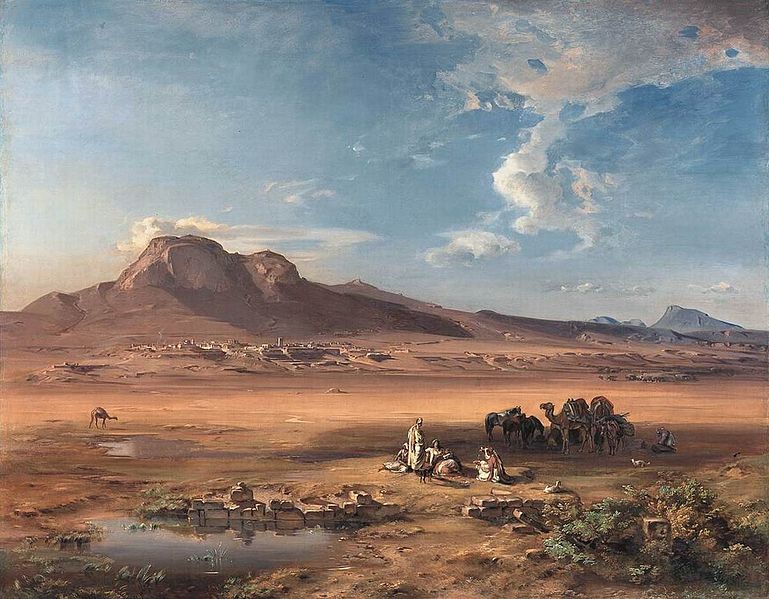
To the southwest of the ancient city of Corinth there arose a steep rock formation topped by a fortress. This massive fortress was called the Acrocorinthus. It rose, we are told, about 1800 feet above the surrounding plain, and its walls were nearly 6500 feet in length. Aratus was first elected military commander of the Achaean League in 245 B.C., and one of his early objectives as was the capture of this supposedly uncapturable fortress. The Acrocorinthus was garrisoned at the time by the Macedonian king Antigonus II Gonatas. Antigonus appointed a philosopher named Perseus lead the garrison, with the advice and assistance of the general Archelaus.
The chain of events that ended with the fall of the Acrocorinthus began in this way. At the city of Corinth were four Syrian brothers. One of these, named Diocles, served with the garrison that defended the Acrocorinthus. The other three brothers seem to have been career criminals. They stole some gold from Corinth and brought it to a banker in Sicyon named Aegias. It happened that Aratus knew this banker, and had done business with him in the past; for money, as well as weapons, lubricate the movement of military campaigns.
Erginus, one of the three Syrian brothers, became friendly with the banker Aegias. Erginus eventually disclosed to Aegias that his brother Diocles served at the garrison at Acrocorinthus. He also told the banker that there was a hidden cleft in the rock leading to the fortress walls, and that this fissure led to a point where the Acrocorinthus’s walls were lowest. Of course, all this precious information was conveyed to Aratus, who saw an opportunity to take the fortress by stealth.
Negotiations and wrangling followed between Aegias and Erginus. Eventually, a deal was struck in which Erginus and his brother Diocles would betray the fortress’s secret vulnerability to Aratus in exchange for a large sum of money (Polyaenus reckons at seven talents, but Plutarch at sixty). Thus was Acrocorinthus’s secret defect betrayed to an enemy force for financial gain. The plan was almost exposed when one of Aratus’s men, Technon, mistakenly disclosed it to the third Syrian brother, Dionysius, believing that he was speaking to Diocles. Dionysius was not involved in the plan and nearly gave away the entire design.
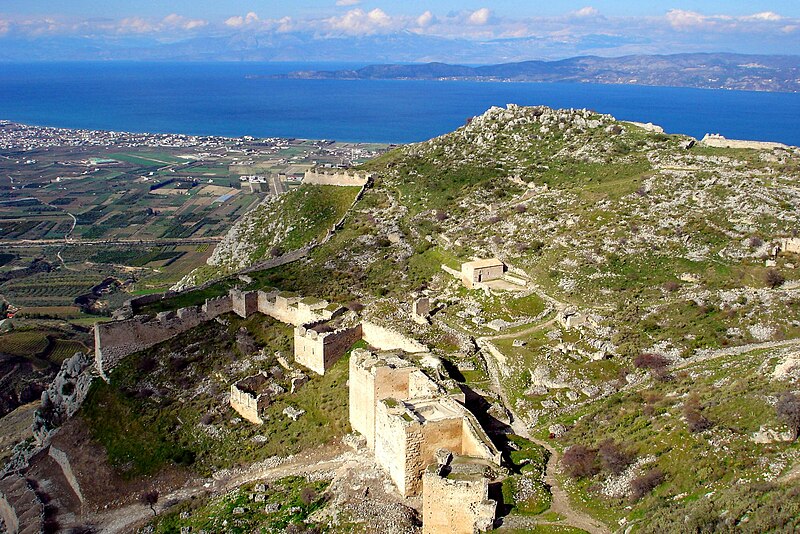
Soon Aratus made his preparations to attack the fortress. He chose to launch the assault at night, during summer, under a full moon. He used four hundred handpicked men; secrecy was so great that none of them knew where they were going. To reduce ambient noise, he had his men proceed without shoes. Long ladders, carried by small teams, would be used to scale the fortress walls. Sentries encountered along the walls of the Acrocorinthus were slain by stealth. Clouds then enshrouded the moon, reducing its luminescence and preventing the gleam of weapons from reaching the watchful eyes of pickets inside the fortress.
The ladders were pressed against the walls of the fortress, and Aratus was able to insert a hundred men without the alarm yet having been raised. But the presence of an assault party was quickly discovered, and furious fighting commenced between defenders and attackers. By dawn, Aratus’s men were able to open the fortress gates and let in the rest of the assault party. The general Archelaus was taken prisoner; the philosopher Perseus managed to escape to his Macedonian master Antigonus.
So did the fortress of Acrocorinthus fall. The greed and treachery of the Syrian brothers Diocles and Erginus provided Aratus the critical intelligence needed to carry out the daring assault. We do not know their fate. The commander of the garrison at Acrocorinthus (Perseus) and his general (Archelaus) did not take reasonable steps to screen their men for reliability. The fall of Acrocorinthus is a stark reminder that traitors and spies from within can directly cause the destruction of even the strongest fortresses from without. All that is required is one or two Judases on the inside. It is a fact of military and political affairs that is as true today as it was in 245 B.C.
.
.
Read more about the lives and campaigns of great commanders of ancient Greece in the new translation of Cornelius Nepos’s Lives of the Great Commanders, now available for the first time in a modern edition:


.
 Quintus Curtius
You must be logged in to post a comment.