
The story that follows is buried in the nautical volume Tales of Shipwrecks and Adventures at Sea, published in London in 1846. Despite its remarkable nature, I do not recall previously having read the tale in any other volume.
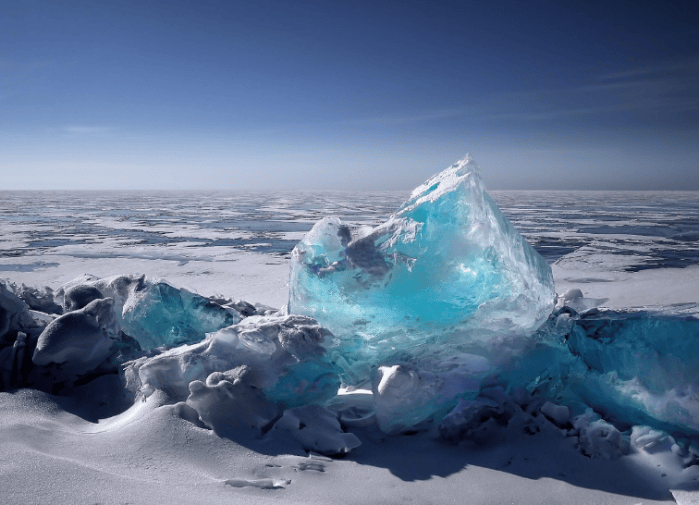
The ship Wear sailed from London on March 12, 1822. Commanded by Thomas Thompson, her crew numbered twelve men, and her objective was to collect natural ice in the northern seas. The commercial ice-harvesting trade may seem odd today, when ice’s plentifulness is taken for granted, but this was not the case in the 1820s. There was a powerful demand for fresh ice in London; the commodity was essential for food preparation and preservation, for hotels, and for the medical profession. Nothing of significance happened on the voyage until March 28, when the Wear struck a jagged edge of concealed ice and ruptured its hull. Efforts to pump out the inflowing water proved to be useless. To stabilize the ship, the crew deployed a device called an ice-anchor, which affixes a vessel to a floating patch of ice or iceberg.
As the ship began to sink, the men sought to remove as much provisions as possible. They were able to rescue four bags of bread, each bag containing about a hundred pounds; about a hundred pounds of dried beef and pork; a large box of candles; thirty-six square yards of canvass; and a large supply of nails. They also had a sextant and nine blankets. The ship’s carpenter, John Williams, kept most of his tools. When the Wear finally sank, six crewmen were on the ice, while five remained on board the ship; but those on board were able, with great difficulty, to escape a watery grave and join their comrades on the ice. The men made an impromptu tent from the canvass and the oars, but suffered greatly from the severe nocturnal cold and unrelenting wind.
On March 29, some of the men made an effort to salvage additional stores that might be floating or visible in the vicinity where the Wear had sunk. These efforts yielded a boat-hook, some hatches, and coils of rope. The men now found themselves imprisoned on the ice. They could move no more than fifty yards in any one direction. To create a signal device for passing ships, they arranged oars in a tripod and tied handkerchiefs to the apex. Their plans next centered on building some kind of boat: this seemed the only reasonable way of making their escape from the fate of starvation and exposure which now loomed ominously. Their chief materials were some booms and hatches they had salvaged.
The men placed two booms parallel to each other, at a distance of a little over two feet. Other pieces of wood were used to complete the hull (I have since learned that the word carlings means structural timber used in wooden ship construction). A split oar became a makeshift gunwale. Large pieces of canvas were wrapped around the boat and secured with nails. Disaster nearly struck on April 8, when the men awakened to learn that the ice on which they were marooned had floated into the open ocean. Most of their provisions and food were lost, but they did manage to save a few items.
The boat was nearly complete by April 10. On that day the men used flint and steel to start a fire with rope as fuel; their objective was to melt the candles and smear the wax over the hull as a waterproofing layer. The vessel’s final dimensions were twelve feet in length, and two feet four inches in width. It was not much, but it at least offered some hope of rescue; to remain on the ice was a death sentence. The plan was to row to Iceland, which was a distance of about one hundred leagues away (a league is about 3.45 statute miles). The men made fairly good progress; surprisingly, their little boat held up well, although they were obliged to make frequent stops on ice sheets due to severe weather. For food the men killed and consumed seals as they found them. By April 14, they believed they were on course to reach the Faroe Islands, which are located about midway between Iceland and Norway.
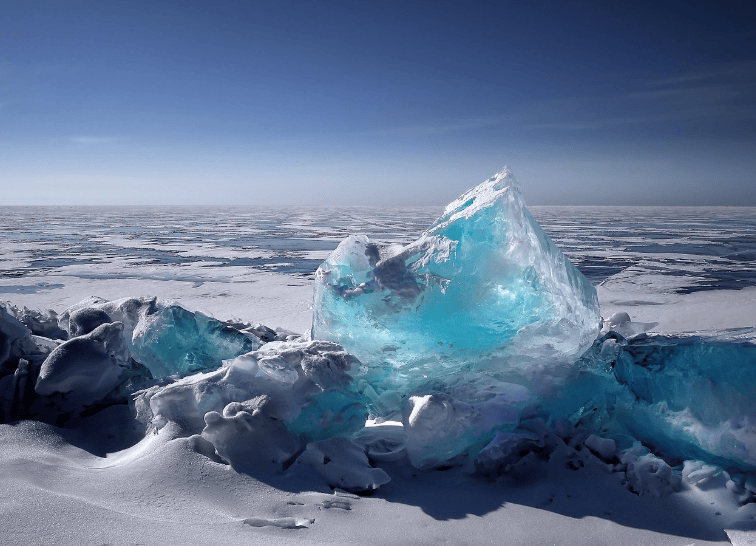
Stopping frequently to hunt seals and melt ice for water, the men steadily made their way to the Islands. On April 22 they were obliged to change course and head for Iceland itself, due to the fact that changing winds now made Iceland an easier destination to reach. But conditions by now had become grim; on April 29, three men died of thirst. That same day they landed in Iceland. The intrepid survivors of the Wear could not walk upright; extreme cold, exposure, malnutrition, and the cramped conditions of the boat had deprived them of the use of their legs. They could only crawl on hand and knee.
Yet salvation was now within sight. The pathetic survivors were spotted by observant Icelandic villagers, who nursed the men back to health. They remained there, in a recuperative state, until June, when they embarked for Portrush, a coastal town in Northern Ireland. What had saved the men was their years of nautical experience; had they not been able to build a seaworthy boat to carry them through the north Atlantic, they would have perished on the ice. This fact, combined with their resourcefulness and tenacity, had kept them out of destruction’s jaws.
There are many instances in which our accumulated learning and experience can save us from ruin. We are rescued by our olden knowledge. And this is a shade of meaning we might be able to read in Virgil’s line,
Antiquam exquirite matrem.
[Aen. III.96]
Which means, “Go in search of your ancient mother.” Seek thy roots, hopeful friend, for in thy roots lieth salvation.
.
.
.
Read inspiring tales about the lives and leadership lessons of ancient leaders in the new, annotated translation of Cornelius Nepos’s Lives of the Great Commanders.

