

I had a great conversation recently with Thorin (Twitter: @Thorin). This is a must-listen podcast.
Continue readingI had a great conversation recently with Thorin (Twitter: @Thorin). This is a must-listen podcast.
Continue reading
Service to others is what gives life meaning. We were put on this Earth to contribute, to share, and to pass on what we know for the benefit of mankind. Every person has an instinctive, fundamental desire to teach and help others, and we should develop this instinct. Doing this will contribute to the positive energy in the world, and will come back to us in unexpected ways.
Continue reading
We will relate two anecdotes that appear in the historian Polyaenus’s Stratagems (V.14—V.15). There once was a young man named Thrasymedes who fell in love with the daughter of Peisistratus, an ancient tyrant of Athens. One day, as the girl was walking in an official processing through the streets of the city, Thrasymedes boldly approached her and attempted to engage her in conversation.
Continue reading
The Oxford English Dictionary defines the word elasticity in the following way: “Of material substances, whether solid, liquid, or gaseous: that spontaneously resumes (after a longer or shorter interval) its normal bulk or shape after having been contracted, dilated, or distorted by external force.”
Continue reading
Aratus of Sicyon was a Greek politician and military commander who lived from 271 to 213 B.C. He was forced to flee his native city of Sicyon at seven years of age when his father, a prominent politician, was murdered by a rival. Raised in Argos, he distinguished himself as an athlete and a leader; and his determination to liberate Sicyon led him to train intensively in the arts of war and command.
Continue reading
There is a passage in Cicero’s On the Nature of the Gods that is worthy of reflection and discussion. It is found in III.28 of the treatise, and reads as follows:
Continue reading
The practicing attorney must play a variety of roles. The personalities and needs of his clients, and the circumstances of each case, will compel him to hone a specific set of human relations skills. I imagine this holds true for many professions. I want to describe briefly some of the more recurring roles that I have had to play in my twenty-three years of representing clients in the areas of bankruptcy and criminal defense.
Continue reading
By 400 A.D. the Roman state was struggling with severe problems both internal and external. In 395, the Goths, a foreign nation Rome had unwisely permitted to settle within the empire’s borders, initiated an armed revolt, and laid waste to the provinces south of the Danube. “[They] boldly avowed the hostile designs,” says Gibbon, “which they had long cherished in their ferocious minds.” (Ch. XXX).
Continue reading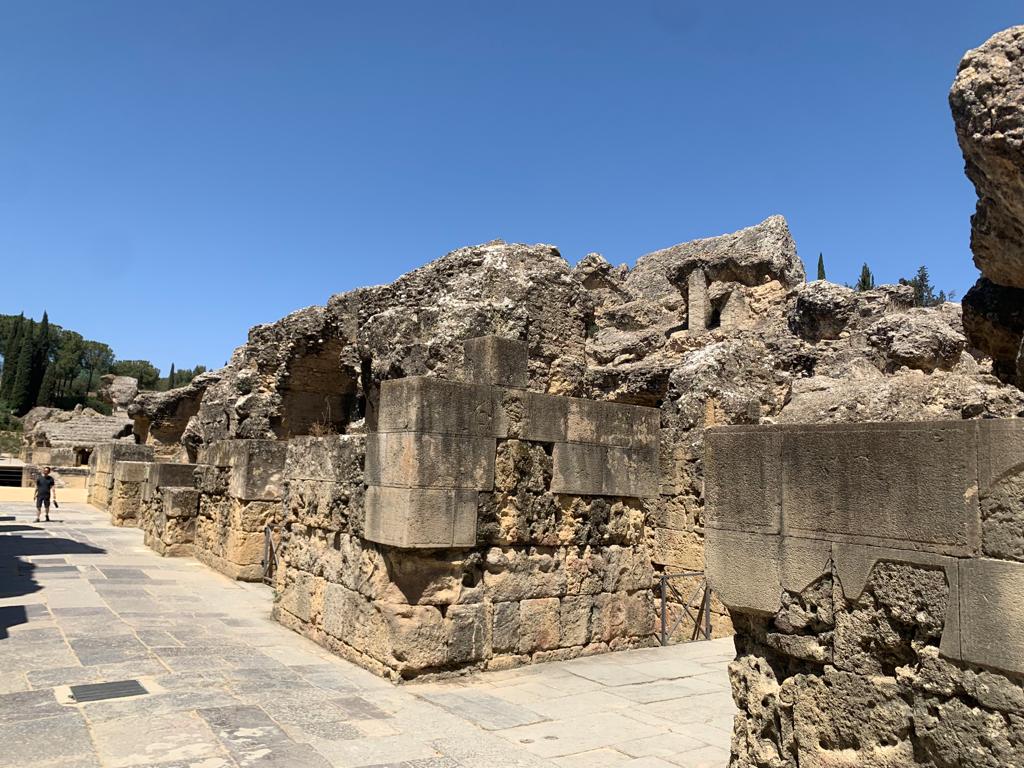
The Battle of Ilipa was fought in Spain in 206 B.C. between a Roman army commanded by P. Cornelius Scipio (Scipio Africanus) and Carthaginian forces under Hasdrubal Gisco and Mago, the brother of the renowned Hannibal.
Continue reading
We know almost nothing of the life and career of the Roman military writer Vegetius. Historical references in his books suggest that he flourished in the late fourth century A.D. His work on Roman military affairs, De Re Militari (On Military Science) is a revealing window on the state of the empire’s military preparedness in its author’s era.
Continue reading Quintus Curtius
You must be logged in to post a comment.