
Memory Of The Fallen: The Work Of Fabian Ware

Continental Europe is dotted with serene and beautiful cemeteries from the First and Second World Wars.  They are also found in the Dardanelles, holding the fallen of the Gallipoli campaign.  They are ordered, serene, well-kept, and dignified with the solemnity that supreme sacrifice confers.  Tourists now visit them frequently, strolling among the chiseled headstones that sprout like white flowers amid seas of green.  

Continue reading

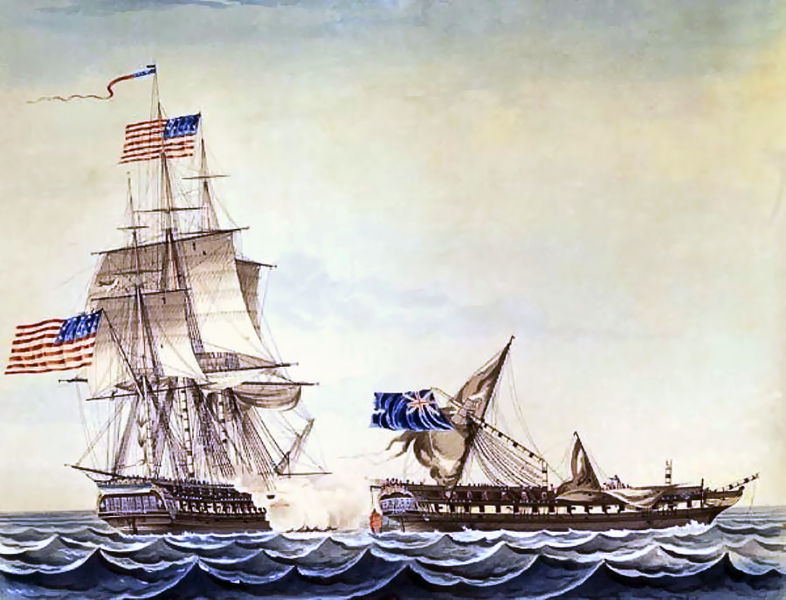
A Chivalric Duel Transcending Death: The “Constitution” Clashes With The “Java”

William Bainbridge ranks among the very greatest of the early American naval commanders.  Born in Princeton, New Jersey in 1774 to a father who was a prominent physician, he was apprenticed to the sea at the ripe age of fifteen.  Even as a teenager, his actions and deportment marked him as fated for great things. 

Continue reading

Maneuvering Is Not A Substitute For Direct Action

Winston Churchill, like most statesmen, was known to have little patience for pettifoggery and pirouetting around a problem.  His mind instinctively sought the core of a problem, and was able to slash through brambles and thickets to find it.  His biographer William Manchester wrote, “[He] cared little for obtuse political or social theories; he was a man of action:  state the problem, find a solution, and solve the problem.” 

Continue reading

The “Tusculan Disputations” Audiobook Is Now Available

The audiobook of my translation of Cicero’s Tusculan Disputations is now available. Narrated smoothly and beautifully by Saethon Williams (the same narrator of my other translations), this audiobook is a complete and unabridged version of the print edition published in August 2021. Mr. Williams has brought his own authority, sparkle and polish to the dialogues, and I am confident that readers and listeners will find the audiobook to be a source of both enjoyment and understanding.

Continue reading

Increased Opportunities, Increased Temptations (Podcast)

When it comes to learning, were things better back in the 1980s and 1990s, or are they better now? How has the internet contributed to the “instant gratification” mentality? What are the parameters of the tension between the availability of resources, and the ease of gratifying our baser desires? We discuss.

Continue reading

The “Constitution” Escapes Certain Capture

The fabled USS Constitution is still the oldest commissioned vessel in the US Navy.  Just the sight of her in Charlestown drydock is enough to quicken the pulse of any man entranced by feats of heroism and valor.  A relic from an era when warships circled each other at sea like snarling dogs, she tallied an extraordinary list of accomplishments during her active service life.  We will here relate the tale of her escape from almost certain capture by a squadron of British ships during the War of 1812.    

Continue reading

All Opportunity For The Good, Yet None For The Unworthy

Philo of Alexandria wrote a relatively obscure essay entitled On the Prayers And Curses Uttered by Noah When He Became Sober.  His translator has fortunately shortened this unwieldy title to the compact De Sobrietate, or On Sobriety.  It contains the following passage of importance:

Continue reading

The New York City Doctors’ Riot

The grave of William Shakespeare is located in the Church of the Holy Trinity at Stratford-upon-Avon.  Its epitaph contains this dire warning against those who would disturb his remains:

Continue reading

Never Mind What Others Think…What Do YOU Think? (Podcast)

Far too often, we base our opinions on what we absorb from others. But if you have done the homework, if you have done the heavy lifting, and if you know the material, you should have the confidence to form your own thoughts. People read your writings because they want to know what YOU think, not what some other nibbler thinks. A critical step in intellectual independence is having the courage to state your own opinion on some learned topic, once you have earned the rights to do so.

Continue reading

Perry Captures The British Fleet At Lake Erie

A glance at a map of Lake Erie quickly reveals its strategic importance to the belligerents of the War of 1812.  The lake sits atop what was then the western boundary of the United States.  The British were in control of Canada; with the waters of Lake Erie at their disposal, they would be able to ferry armies into positions allowing them to launch attacks on western Pennsylvania and New York, and proceed from there to America’s east coast cities. 

Continue reading