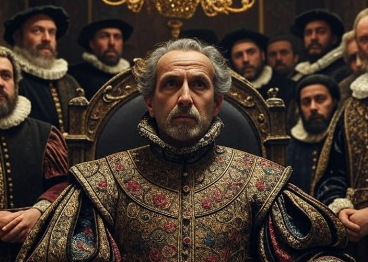
The Story Of Akulka’s Husband (Podcast)

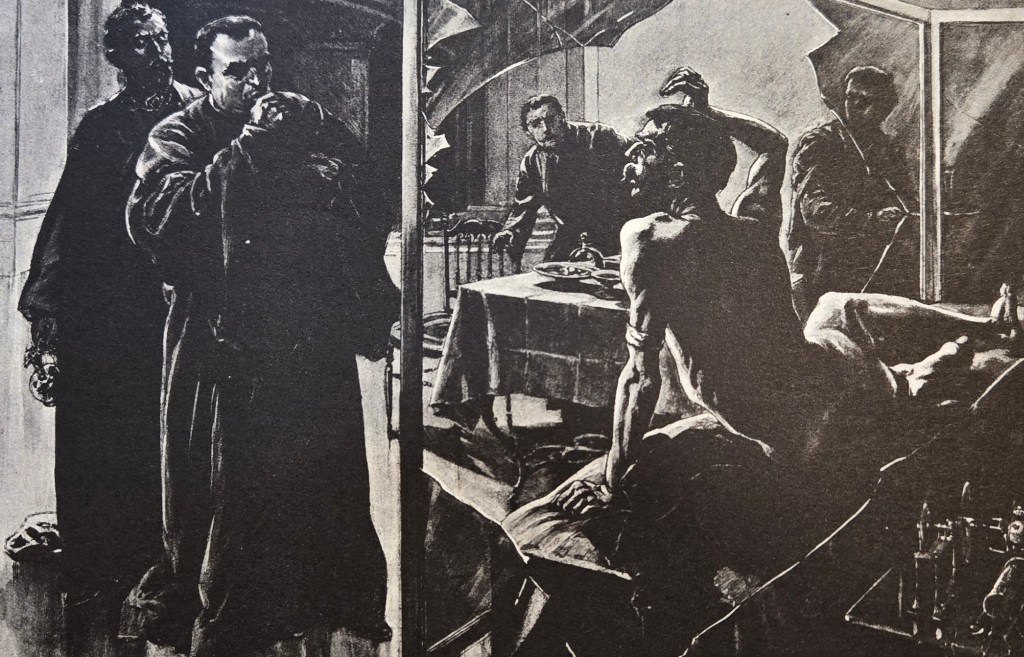
In this podcast we discuss the story of “Akulka’s Husband,” which is found in Fyodor Dostoyevsky’s novel The House of the Dead. What does the story mean, and what conclusions can be drawn from it?

Continue reading

When Someone Else Has Control Of Your Work, Problems Inevitably Arise (Podcast)

When you give control of your work to third parties, you must take care that they do not alter, corrupt, or destroy what you have created. We use the story of the development and issuance of the M16 rifle in the U.S. military in the early 1960s as a tragic example.

Continue reading

Baklushin’s Story

In 1849, the young Fyodor Dostoyevsky was arrested for anti-tsarist activities and sentenced to death.  His sentence was commuted by the tsar at the last instant, and he was instead given a four-year term in a prison camp in Siberia.  From this shattering experience came his semi-autobiographical novel The House of the Dead, which was published in 1860. 

Continue reading

When A Neighbor’s House Burns, Neglected Fires Tend To Gain Strength (Podcast)

In this podcast, we discuss the real meaning of a few verses from the poet Horace (Epistles I.18.84-85). The quote is: “When a neighbor’s house burns, neglected fires are in the habit of gaining in strength.” These lines are important, and merit comment. We are all connected, and the evil that happens to one man in one place, can easily be experienced by another man somewhere else.

Continue reading

How To Have Willpower (Book Review)

August of 2025 will see the publication of Michael Fontaine’s How to Have Willpower:  An Ancient Guide To Not Giving In.  The volume is a modern translation and interpretation of two classical texts:  Plutarch’s essay On Dysopia and Prudentius’s poem Psychomachia.  Very roughly speaking, these works discuss how to manage our emotional states and overcome the challenges posed by shame and vices.

Continue reading

The Tyranny Of Time

The dystopian science fiction film In Time (2011) offers a fascinating and morbid premise.  In the future, we are told, time is the ultimate commodity.  Everyone is genetically engineered so that the aging process stops at the twenty-fifth year; after this, each person has only one more year of life.  A numeric counter is visible on the forearm to show exactly how many years, months, weeks, days, hours, minutes, and seconds each person has remaining on his balance of life.

Continue reading

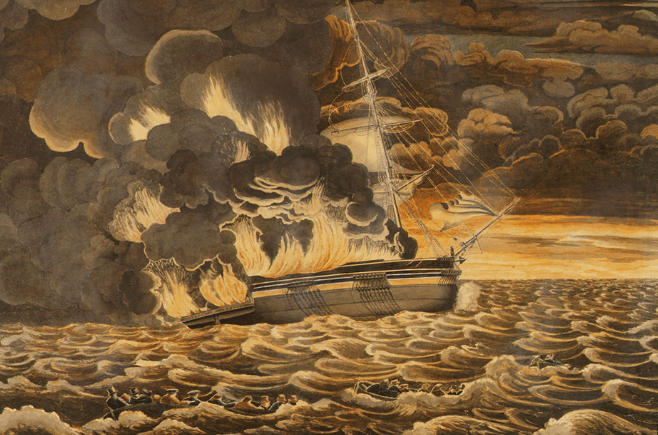
The Role Of Chance In Human Affairs: The Loss Of The “Kent”

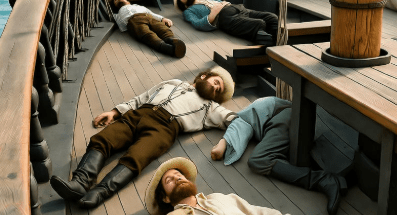
We will relate the terrible loss of the ship Kent, which sailed from the Downs on February 19, 1825.  As a so-called East Indiaman (a merchant vessel trading with the East Indies), the Kent was bound for Bengal in India, and then China.  She was a ship of 1,350 tons, and aboard her were 344 soldiers, 20 officers, 43 women, 66 children, 20 civilian passengers, and a crew of 148 men.  The sum of these numbers comes to a total of 641.

Continue reading

The Life Of This One, Is As The Death Of That One

The pages of the medieval biographer Ibn Khallikan (II.301) contain the following moral anecdotes related to an obscure poet named Abu Al-Hasan Ibn Bassam (?–A.D. 914), who was known by the surname Al-Bassami.

Continue reading

Do Not Buy At Such A Price, Only To Regret It

What may at first consideration be an enticing course of action, may take on a much more negative hue after further scrutiny.  This was the point of an anecdote related by the Roman writer Aulus Gellius in his Attic Nights (I.8).  Although the story is essentially a humorous one, the idea it conveys is one that carries the utmost seriousness with regard to the fates of men and nations.

Continue reading

The Colt Night Cobra (Video)

In this video we discuss the Colt Night Cobra. Those of you who are revolver enthusiasts may enjoy it.

Continue reading