The Roman Gestures Of The Clenched Thumb, And The Turned Down Thumb

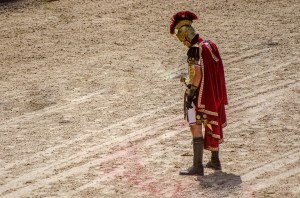
The meaning of hand gestures may vary widely from culture to culture.  In the modern West, approval is popularly expressed by the “thumbs up” sign, and disapproval by the downward turn of the thumb.  These hand gestures even seem to be universal, at least in the modern era.  But perhaps it was not always so.  The humanist Angelo Poliziano’s Miscellanies contains a passage in chapter 42 of his book that raises some doubts, at least to my mind.  Philology may shed some light on the subject.

Continue reading

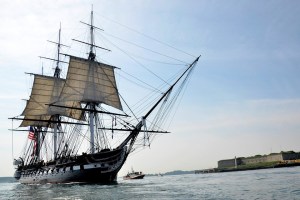
A Dog’s Heroism During The Wreck Of HMS “Harpooner”

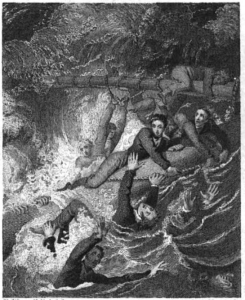
Whether our canine friends risk themselves out of a conscious sense of duty, or whether they act out of blind instinct, is a question that dog lovers and animal behaviorists will endlessly debate.  It is not an unimportant question.  For if it is true that dogs may, under some circumstances, feel the pull of obligation, then it must follow that they are capable of the noblest emotions, and the stirrings of dutiful love.  This was the question that the following sea-story raised.  Buried in a volume of forgotten nautical lore, it describes the heroics of a service dog named King during the wreck of the British transport Harpooner in Newfoundland in 1816.

Continue reading

Some Observations On Responses To Disease Epidemics In The United States In The Eighteenth And Nineteenth Centuries

Disease epidemics are not new to the American scene.  In fact, of all the historic threats to national and local security, they are the type with which we probably have the most experience.  During the eighteenth, nineteenth, and early twentieth centuries, the United States faced and dealt with outbreaks of scarlet fever, yellow fever, cholera, smallpox, tuberculosis, malaria, and influenza.  And while the innovations of medical science were often insufficient to banish these plagues, the people handled such infections with the tools available at their disposal.  National economic life did not grind to a halt; communities were not paralyzed by fear; the press did not consciously stoke the flames of hysteria; and the political system did not descend into bickering, factionalism and recrimination.  Diseases were understood to be part of the natural order of things, to be confronted with resolution and grim determination while the rhythms of life continued to strum.

Continue reading

The Tomb Of The Scipios

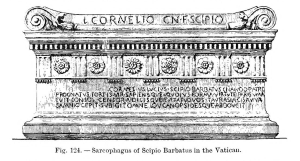
When one considers the veneration that the ancient Romans had for their ancestors, it seems incredible that the tomb of the Scipios—one of the city’s most illustrious families—should be shrouded in such neglect and mystery.  And yet this is precisely the case.  One senses that the family and the city endured a bitter divorce, from which each emerged with an implacable hostility to the other; Rome never forgave the family’s recalcitrance, and punished it with a sullen historical silence.

Continue reading

A Terrible Storm Destroys Octavian’s Fleet

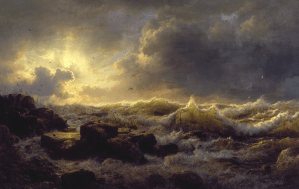
In the modern era we tend to minimize or downplay the influence of weather and geography on human activity.  In earlier periods of history, armies and fleets had a much more intimate relation with the inconstancy of the natural world.  Ancient man could not insulate himself from the ocean’s surges, the sky’s furies, or the impediments of geography; and perhaps for this reason our ancestors had a healthier respect for Nature’s capabilities.

Continue reading

On Obedience And Disobedience

We spend most of lives in obedience to one form of authority or another.  Rarely, if ever, is it counted as a virtue worthy of discussion by us moderns.  On the contrary:  we are expected to applaud disobedience, disorder, and challenges to authority, as if such disobedience were automatically exempt from scrutiny.

Continue reading

The Positivism Of Benjamin Constant

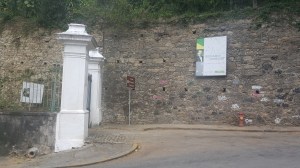
I made an effort today to visit the house and museum of Benjamin Constant in the Santa Teresa neighborhood in Rio de Janeiro.  I had visited it some years ago and thought it would be a good idea to see it again to gain some perspective.  The site was closed for renovations, unfortunately, so I had to content myself with a few photographs of the surrounding area.  These can be found below.

Continue reading

Selection And Supervision Are Critical In Any Great Enterprise

I have lately been rereading Candace Millard’s excellent River of Doubt, a narrative of Theodore Roosevelt’s ill-fated sojourn through the Amazon in 1914.  As is well known, the expedition was plagued by a lack of adequate food supplies and equipment.   This fact nearly caused the entire project to unravel once it was deep in the Amazon.

Continue reading

Three Embalming Techniques Used In Ancient Egypt

Herodotus spends more time discussing Egypt than any other nation in his Histories.  One gets the feeling that he very much enjoyed himself there.  The amiable and curious Greek had a talent for getting along with nearly everyone; he seems to have fallen into conversation with priests and merchants in every country he visited.

Continue reading

Angelo Poliziano’s 1484 Description Of A Planetary Clock

In studying the writings of scholars of ages past, one often begins to suspect that they were aware of more things than we generally give them credit for.  We begin to understand that the progress of knowledge is not always “upwards” in a steadily sloping straight line; there are periods of setbacks, stagnation, and decay.  And very often we perceive that men of great ability can be trapped in environments that are hostile to the development of their talents.

Continue reading