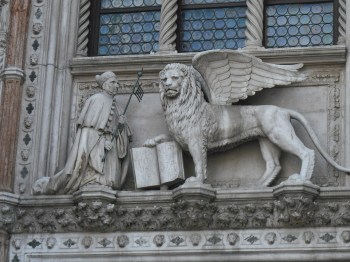

Separate Your Opponent From His Source Of Strength

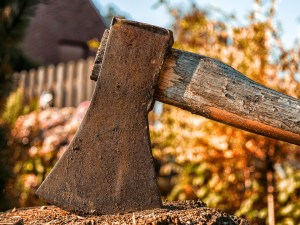
When we are dealing with an opponent of substantial power, we should try to cut him off from his source of strength.  If he can be made incapable of drawing on his strengths, he will be weakened; and so weakened, isolated; and if isolated, destroyed.  Everything has a source of strength, whether we are talking about a person, an animal, a machine, a group, a nation.  So the first step will be to identify this power source.

Continue reading

The “Voyager” Program: Mankind’s Most Distant And Awesome Explorations

We have in these pages chronicled the feats of great explorers of previous eras.  Yet our own era has witnessed what is perhaps the greatest, most awe-inspiring feat of exploration in the history of the man on earth:  the Voyager program that made its way through the outer solar system.  This was to be an exploration much different in kind from the great expeditions of old.  There were no pack mules, native guides, or recalcitrant companions; but there were the same incredible risks of environment and circumstance that have accompanied exploration from the time the Phoenicians first circumnavigated Africa.  The Voyager probes were man’s first tentative steps to walk beyond the confines of his own planet.  Perhaps when the long perspective is finally taken by our remote descendants, the Voyager program will rank among the most the most significant event in the history of our species.

Continue reading

Polydore Vergil’s Comments On Death And Burial Customs

The charm of old books often lies in their inaccuracies, errors, and absurdities.  It is not a requirement of entertainment that everything must be factual.  It is a pleasant thing to be reminded every now and then of our humanity; and nothing is more human than error.  Only by seeing how far knowledge has advanced through the centuries can we appreciate the achievements of those who came before us.

Continue reading

Dixon Denham: Pioneering British Explorer Of Central Africa

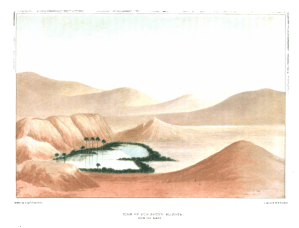
We have previously described in these pages the exploits of Heinrich Barth, one of the titans of African exploration.  Before him was Dixon Denham, a British explorer whose name is also hardly known today.  He covered some of the same ground as did Barth, but he had a different style; where Barth was a scientist and ethnographer at heart, Denham was a soldier with an eye for people, relationships, terrain, and–it must be said–trouble.

Continue reading

Edward King: Sacrificing Fortune And Life For Scholarship

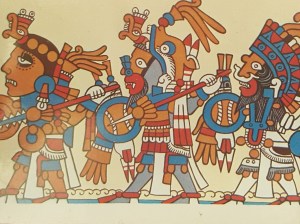
Of some scholars, or patrons of the arts, it can be said that they sacrificed everything for their work.  Of others, this cannot be said.  Edward King, Viscount of Kingsborough, belongs to the former category.  His name is almost entirely unknown today, but he occupies a significant place in the pantheon of heroes who helped bring the treasures of Mexican antiquity to the attention of modern scholarship.  The least we can do here is honor his name.

Continue reading

Rise Of The Ironclads: A Revolution In Naval Warfare

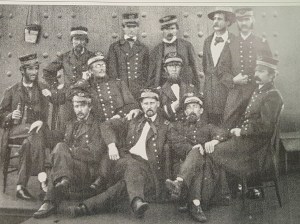
One of the most famous naval engagements in American history was the duel fought at Hampton Roads, Virginia, on March 9, 1862 between the ironclad warships USS Monitor and CSS Merrimack (more precisely named the CSS Virginia).  I have recently been learning much more about the details of the battle, in Richard Snow’s wonderfully entertaining Iron Dawn:  The Monitor, the Merrimack, and the Civil War Sea Battle That Changed History.  I listened to the audiobook, and wanted to convey some basic outlines of the story here.

Continue reading

A Phone Call With Stalin

Stalin biographer Steven Kotkin relates this ominous anecdote in the second volume of his monumental three-volume study of the Soviet dictator’s life and times.  It shows–perhaps more clearly than any other anecdote–just how a man’s fate can hinge on a few critical moments in his life.

Continue reading

Great Deeds Of Valor From The Fourth Crusade

Geoffrey of Villehardouin (1160–1212?) is known as one of the first important names in French historiography.  Unlike his predecessors, he was not a dry chronicler; he was a historian who participated directly in the events he described, and was reasonably objective by the standards of his day.  His book, The Conquest of Constantinople, is a moving and pious account of his involvement in the Fourth Crusade.  He was not born a nobleman; he earned his spurs as a knight through loyal service as a soldier and organizer of military campaigns.  After his withdrawal from public life, he set out to record the great events he had been a part of, much in the same way that Bernal Diaz (one of Hernando Cortes’s soldiers) and Usama Ibn Munqidh (an Arab knight of the Crusades) would do.  Great deeds of valor are rightly celebrated in every culture and in every age, because (as Sallust tells us):

Continue reading

The Remarkable Memoirs Of Madame Roland

When a writer composes his or her memoirs while in prison awaiting execution, we owe it to ourselves to consider what they have to say.  It may be a cliché that the prospect of death focuses the memory and concentration, but it is a cliché that is powerfully true.  In Chapter 5 of Thirty-Seven, I discussed the fate of Boethius, who wrote his Consolation of Philosophy while languishing in a dungeon (and awaiting execution) for a crime he did not commit.  I recently heard of another last testament written during captivity:  the poignant memoirs of Jeanne Manon Roland (1754–1793), known to history simply as Madame Roland.

Continue reading

The Fragility Of Historical Knowledge: The Case Of Lorenzo Boturini In Mexico

In the modern era we like to think of knowledge as something indelibly fixed and permanent.  We take it for granted that it will always be here, like the Great Pyramid, and are apt to overlook the bitter struggles that our ancestors may have endured to acquire such knowledge.  Information has not always been as easy to obtain as it is now.  As we read about the adventures of scholars of the past, we get the distinct impression that the learned men who came before us had a hardiness and tenacity that is lacking in the modern era.  I will let the reader judge for himself.

Continue reading