How Al Fadl Al-Barmaki Learned Bluntness And Generosity

Al Fadl Ibn Yahya al-Barmaki (A.D. 766—808) was a government official who served the most famous of all the Abbasid caliphs, the great but mercurial Harun al-Rashid.  Besides serving in several administrative posts (such as governor of Khurasan), he was also trusted enough to tutor Harun’s young son and heir al-Amin.  Although he later fell out of favor with the caliph, many stories are told of his generosity and kindness.

Continue reading

The Dangers Arising From One’s Subordinates: The Case Of Eumenes

No matter how much ability a commander may have, his purposes will ultimately come to nothing if he is surrounded by discontented or disloyal associates.  It was for this reason that, as the historian Sallust relates, the Roman general Metellus decided to send his disloyal subordinate Marius back to Rome.  A further example of this is provided by the career of the Greek general Eumenes of Cardia (362–316 B.C.).

Continue reading

The Great New York City Blackout Of 1977

I saw a program the other day about an event I previously had known little about:  the great New York blackout of 1977.  Something about the story left me with a distinct feeling of unease.  I don’t imagine many readers here are familiar with it, either.  Let me describe some of the details.

Continue reading

The Curious Customs Of The Franks: How One Arab Knight Saw The Crusaders

We have recently discussed a story from the life of the learned Ali Ibn Munqidh.  His grandson Usama Ibn Munqidh (1095–1188) was a very famous poet, warrior and literary figure in medieval Islam and his memoirs are an almost unique portal of insight on how one culture saw the other.  The scholar Philip Hitti describes Usama this way:

Continue reading

C. Licinius Macer’s Advice To His People

I recently came across a passage from a speech appearing in Sallust’s Historiae (III.48).  The oration is put in the mouth of the popular tribune Caius Licinius Macer, who was battling the influence of the Roman patricians.  It purportedly was delivered in 73 B.C.; Macer’s intention was to rouse the common people to action against the venality and greed of the elites who controlled Rome and who refused to listen to the will of the people.  A continuous theme in the era of the late republic was the constant attempt by the elites to prevent economic reforms that might benefit the state as a whole, rather than just them.  We this same motif, of course, played out again in our own day.

Continue reading

Joseph Persico’s “Infamy On Trial” (Book Review)

We live in an age of power without responsibility, an age where ambition and hubris are too often permitted to run roughshod over institutional controls and the dictates of common decency.  We are too often made to feel helpless in the face of power exercised so far beyond the reach of accountability that many of us have simply given up, and abandoned hope of calling to account those who abuse the trust of the people they were tasked with serving.

[To read the rest of the article, click here].

The Maritime Adventures Of Philip Ashton

In June 1722 a seaman from Marblehead, Massachusetts named Philip Ashton was aboard a vessel that entered the waters around Shelburne, Nova Scotia.  Ashton was a fisherman and had no experience with trouble on the high seas.  But this was to change very quickly.  As his shallop entered the waters of the harbor, it was spotted and boarded by pirates under the command of the notorious Edward Low.  The crew and its cargo were now under the control of Low and his men.

Continue reading

Fixed Fortifications Are Useless

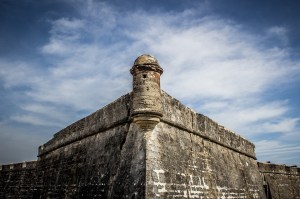
Armies and states throughout history have sought to provide security by constructing fixed fortifications like fortresses, citadels, and walls.  These projects inevitably end as dismal failures.  Not only do they not provide security, but they do something even worse:  they provide an illusion of security that encourages a defender to be overconfident and careless.  And when this happens, disaster is only a matter of time.  Walls and forts do not provide security; at most they can help channel avenues of approach for advancing enemies.  For states are not protected by fortresses, but by the valor of their citizens.  When the latter is lacking, the former are of no use.

Continue reading

The Life Of Father António Vieira

One of the most compelling figures of Portuguese history–and surely one of the greatest practitioners of its prose–was Father António Vieira, a Jesuit missionary, orator, statesman, writer, and mystic.  His career illustrates that stimulating mixture of conservative and progressive thinking that would come to characterize the Jesuit order throughout much of its history.  He was born in Lisbon in 1608 and moved to Brazil (what is now the state of Bahia) in 1614 when his father received an appointment for a government post there.

Continue reading

The Wisdom Of Mercy From Ibn Hazm Al-Zahiri

mercy3

We turn now to those founts of wisdom who have lessons to teach us.  Abu Muhammad Ali Ibn Ahmad Ibn Sa’id Ibn Hazm (أبو محمد علي بن احمد بن سعيد بن حزم) is known to history as Ibn Hazm Al-Zahiri.  Born in Cordoba, Andalusia (Spain) in 994, he achieved enduring fame for his incredible intellectual achievements in a number of disciplines, including jurisprudence, theology, philosophy, and poetry.  He even composed a manual on love known as The Ring of the Dove (طوق الحمامة).  Here was a man of substance, a man who could appreciate the virtues of the passions as well as those of the mind.

Continue reading