Hercules On Oeta: Immortality Through Virtue

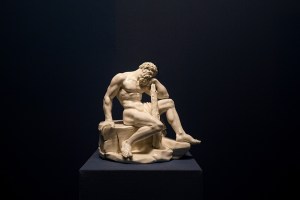
As I have gotten older I find that reading plays brings more enjoyment than it did in earlier years.  Tragedies especially:  the unformed mind has not yet been sufficiently battered by the winds and waves of fortune against the rocks, and is equipped with a merciful immunity to the pathos of existence.  And yet, as the years roll on, beards and barnacles begin to replace the smooth, supple surfaces of youth; scars and aches accumulate; and the omnipresence of tragedy dawns on the maturing mind with a startling rapidity.  The mind then calls for a tonic:  it requires the writer to make sense of all this chaos, all this pain, and all this suffering.  The struggle must be dignified with a sense of universal justice, and an ethic of enduring goodness.  So the tragedian steps forward, and with his stylus attempts to perform this task.

Continue reading

The Life, Travels, And Literary Works Of Yakut Al-Hamawi

In some recent researches I have discovered one of the more interesting travelers and scholars of the medieval Islamic world.  I have been encouraged to review what sources are available; and the more we learn, the more impressive his story becomes.  His name is Yakut Al-Hamawi, and his career and achievements tell us much about the geographical and social mobility of the age in which he lived.  His career also confirms the truth of the adage that a man of ability will always find a way to rise to the top, regardless of the obstacles placed in his path.

Continue reading

Generosity Should Be Bestowed With Care

There is a scene in the movie The Wild Bunch (1969) where Ernest Borgnine and William Holden are discussing the making of promises.  Holden says, “We gave our word.”  Borgnine angrily responds, “That ain’t what counts.  It’s who you give it to!”

Continue reading

The Eloquence of Ali Ibn Al-Athir

Ali Ibn Al-Athir (علي عز الدین بن الاثیر الجزري) was an Arabic historian, poet, and scholar who served for a time under Saladin.  Born in 1160 in the city of Jazeera Ibn Omar (the modern Turkish town of Cizre), he received his education there and in Mosul, Iraq.  From an early age, he showed an uncanny aptitude for literary work, composing verses and prose with fluent ease; he was soon able to master the essentials of grammar, philology, rhetoric, and law.

Continue reading

Friedrich Schlegel, The Sanskrit Language, And The Beginnings Of Comparative Philology

The great antiquity and depth of Indian civilization had been known to Europe and the Middle East for many centuries; yet the precise contours of Indian advances in mathematics, literature, and philosophy were hidden behind the veils of preconception and confusion.  We know that the caliph Harun Al-Rashid, in Baghdad in the 9th century A.D., commissioned translations of some prominent works of Indian literature, but such knowledge remained in the hands of scholars and was not widely diffused.  Things began to change gradually with the advancement in geographic, scientific, and commercial knowledge in the 17th and 18th centuries.

Continue reading

Treachery Ensnares Some, But Is Defeated By Others

Every man who goes about his business must be attuned to the realities of his surroundings.  He should not close his eyes to what lies within his field of vision; and he must not delude himself by rationalizing the treacherous intentions of others.  The prudent man will not see plots and conspiracies everywhere, for this is the mentality of a craven fool; but he will still maintain a healthy alertness and awareness of his environment.  Such a policy might have saved the life of the camel in the tale that follows, as we will see.

Continue reading

Ibn Qalaqis On The Importance Of Travel

The poet Nasrallah Ibn Abdallah Al-Qalaqis (نصر اللّه بن عبد اللّه القاضي الأعزّ ابن قلاقس) was born near Alexandria, Egypt in 1137.  He was a master of language and a composer of many exquisite verses, and was also an intrepid traveler.  The name by which he is generally known (Ibn Qalaqis) is derived from the Arabic word for colocasia, a plant cultivated in his day for its medicinal qualities.  His biographer tells us (with a twinkle in his eye) that “He had so little beard that his face was quite bare and, for that reason, verses were composed against him, which I abstain from mentioning on account of their indelicacy.”  One wishes that these lampoons might have been preserved, if only to see how little insults have changed over the centuries.

Continue reading

The Pride Of Mihyar Al Daylami

The poet Mihyar Al Daylami (?–1037) came from that region of Persia which bordered the southern shores of the Caspian Sea.  He wrote in Arabic, and his works were so copious that his biographer says they filled four volumes.  He was originally a Zoroastrian, but converted to Islam around the year 1003 under the influence of one of his professors.

Continue reading

The Man In The Well, And The Path Of Wisdom

In his allegorical work Kalila and Dimna, writer Ibn Muqaffa describes the journey to wisdom of one of his characters, a man named Barzouyeh.  Barzouyeh was the man sent by the king of Persia to India for the purpose of acquiring the precious text of Kalila and Dimna, which was reputed to contain a treasure-trove of worldly wisdom.  Ibn Muqaffa spends a good deal of time discussing Barzouyeh’s education and path to worldly wisdom; and it will be instructive for us to relate it here.

Continue reading

The Eight Qualities Of The Man Of Understanding

One of the first and greatest classics of Arabic prose is the Book of Kalila and Dimna.  It is a collection of fables told with an allegorical purpose, but it is presented with such wisdom, poetic eloquence, and engaging humor as to make it one of the treasures of world literature.  Its pedigree verifies its merit.  The stories it contains were originally derived from a Sanskrit classic called the Panchatantra, but a Persian scholar and translator named Ibn Muqaffa’ (ابن المقفع‎‎), writing around 740 A.D., reworked the stories into something that was entirely original.

Continue reading