John Ireland: Captured By Cannibals In The South Seas

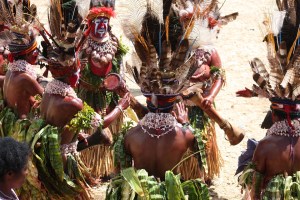
We have here related incredible tales of suffering, adventure, and endurance.  The little-known account of the adventures of John Ireland ranks high on the list of harrowing stories of nineteenth century explorations.  The world was a larger place then, vastly less explored than now, and some places in the remoter regions of the globe were as isolated as they had been for thousands of years.  Just how isolated and remote, the reader here will soon discover.
Continue reading

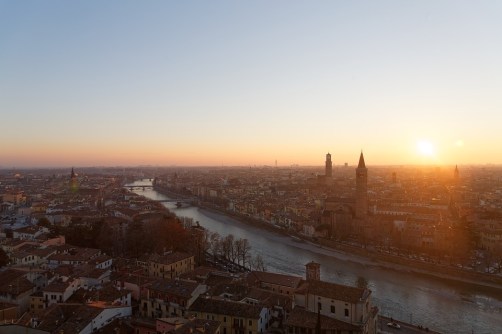
The Special Fruitfulness Of Verona In Northern Italy

The humanist and historian Biondo Flavio (1392–1463) conducted a historical survey of all of Italy, going through the country region by region.  The result of his labors was the massive Italia Illustrata, probably the first topographical survey since ancient times.  We have recorded elsewhere his description of bird-hunting in Anzio.  We will now linger over his description of the rich agricultural regions near Verona and the River Adige.

Continue reading

Charles Étienne Brasseur de Bourbourg: An Early Pioneer In Mesoamerican Studies

We have previously discussed the career and work of Fray Bernardino de Sahagún.  Another major pioneer in the study of early Mexican antiquities was the intense French abbé Charles Étienne Brasseur de Bourbourg (1814–1874).  He remains another name nearly lost to history, but a good case can be made that without his work, we would know far less than we do about the culture of old Mexico and Guatemala.

Continue reading

Fray Bernardino de Sahagún: The New World’s First Ethnographer

Little known today is the courageous Catholic friar, linguist, and ethnographer Fray Bernardino de Sahagún.  He was born in Sahagún, Spain, in 1499 and drank deeply from the well of Renaissance humanism that had been washing over Europe for several decades.  Mastering Latin at an early age, he startled his instructors with the intensity and depth of his observational powers.  He arrived in Mexico (New Spain) in 1529 with a group of Church prelates whose job it would be to convert the natives to Catholicism.

Continue reading

Even When Glory Departs, Something Always Remains

The Italian humanist Ciriaco de’ Pizzicolli lived from 1391 to 1452.  He is more commonly known as Cyriac of Ancona.  While most humanists of his era were content to labor at their desks, he was unusual in that he sought to observe ancient monuments and inscriptions in person.  He was, in fact, one of the very first to undertake a systematic survey of the surviving monuments of Greek antiquity in the Eastern Mediterranean; his work is of great value to the modern antiquarian, since many of the inscriptions and temples he sketched now no longer exist, ravaged by the cruelties of time and man.

Continue reading

Catching Birds In Anzio, Italy

The Italian humanist Biondo Flavio of Forli (1392-1463) was one of the great names of Renaissance humanism.  His extensive Description of Italy (Italia Illustrata) collected anecdota and geographical information about every region of the country from ancient times until his own day.  It was first published in 1451, but saw frequent additions and revisions until Flavio’s death.  Book II, section 7 of his treatise provides some details on how the natives of Nettuno (a town in the region of Lazio, south of Rome) go about netting birds.  The passage attracted my attention for some reason, and I thought it might be worth relating; it may even be of interest to modern hunters.  Flavio himself can provide the specific details:

Continue reading

A Few Traditional Irish Recipes

I recently picked up an interesting cookbook at a used book sale:  George L. Thomson’s Traditional Irish Recipes.  Thomson apparently traveled all over the country to select the most traditional representations of the nation’s cuisine.  Hearty and relatively straightforward in preparation, many of these recipes make great additions to your kitchen arsenal.  I’ve decided to present a few of them here.  The average person may find it difficult to obtain traditional Irish ingredients like eel, cockles, nettle tops, and carragheen moss, so I’ve made an effort to pick recipes that are likely to be more practical.  I’ve prepared each of these dishes and can tell you that they are very good.

Continue reading

Seeking One’s Fortune, And Meeting George Washington

vista

François-René de Chateaubriand (1768-1848) was a French writer, diplomat and historian famous for his posthumous autobiography Memoirs from Beyond the Tomb.  The book is appealing for its admixture of blunt honesty and romantic reflection that capture the spirit of the times in a way that enables the reader to feel he is a participant himself.

Continue reading

Some Impressions On Travel In Central America (Podcast)

antigua

This podcast was recorded several days ago but I was only now able to upload it.  In it we talk about some impressions gained from brief visits to Panama, Costa Rica, Colombia, Nicaragua, Guatemala, and Mexico.

Continue reading

Some Requirements For Political Stability

river3

In recent weeks I have had a chance to visit for a short time a few of the republics in Central America:  Costa Rica, Nicaragua, Panama, Colombia (South America, but close enough), Guatemala, and Mexico.  I have been trying to upload a podcast I recorded on the subject, but internet connections are so slow that I will have to wait a bit more on that; the upload times are just too long.  I’ve been posting photos on my Instagram account for those who are interested in seeing them. Continue reading