The Roman Preparation Of Salt Pork

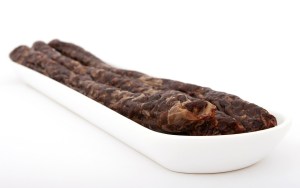
pork1

My most recent articles here have focused on a different type of subject matter than that which I normally write about.  Change is refreshing.  In recent weeks, I’ve had a lot of enjoyment going through the primary Latin works on agriculture and farming:  these are Columella’s Res rustica, Cato’s De agricultura, and Varro’s De re rustica.

I had not imagined that I would like reading about this sort of thing, but it’s been a very eye-opening experience.  Organic farming is an interesting subject.  Judging by the responses to these articles, there are other who feel the same way.

Why?  For one thing, we have begun to appreciate just how important it is for our food and drink to come from good origins.  If we want to think and act in healthy ways, we must ensure that we are literally composed of good ingredients.

We moderns pump our meats with hormones and antibiotics, and drench our fruits and vegetables with chemicals.  Is this a net good?  There are trade-offs in life with everything, and the achievements of modern science should not be minimized.  The modern food distribution system, with its conveniences and modest prices, is something that our remote ancestors could only have dreamed of.

At the same time, it is a mistake to think that we have not paid a price for all this.  In Roman times and for many centuries afterwards, animal husbandry and the cultivation of produce was done “naturally” using human and animal labor.  The Romans did not have to try to be “organic” farmers; they just were.  Reading the food preparation recipes in the three authors named above (Columella, Cato, and Varro) in the original language made me imagine just how good foods must have tasted in those days.

Everything was raised and produced naturally.  We have paid a price for our modern food system.  On balance, it was probably worth it, but I know that I’m going to make more of an effort to cut out of my diet any foods that are too tainted with chemicals, hormones, and antibiotics.

I will describe here Columella’s preparation of salt pork.  This preparation caught my eye, since salt pork plays a major role in an important dish that I grew up with:  New England cod and clam chowders.  Salt pork has many other uses, of course.  It can be found in a number of Spanish and Portuguese dishes, and figures in the cuisines of other nations as well.

We will now find out how the Romans prepared it.  My source here is Columella (XII.55).

Columella’s Preparation of Salt Pork

1.  Columella begins by warning us of the necessity of removing all moisture from the meat during the treatment process.  A good way to begin, then, is to prevent the pigs from drinking the day before they are to be slaughtered.  This rule applies to all animals, and especially to the pig.  (Omne pecus et praecipue suem pridie quam occidatur, potione prohiberi oportet, quo sit caro siccior).

2.  The pig should be dispatched quickly and humanely.  Then the carcass should be boned (bene exossato).  The boning (i.e., removing the bones) makes the flesh preserve better (magis durabilem salsuram facit).

3.  The flesh should then be thoroughly salted with rough, coarse salt that has been “toasted” or smoked (cocto sale).   The salt should be liberally stuffed into the cavities where there still may be bones remaining.

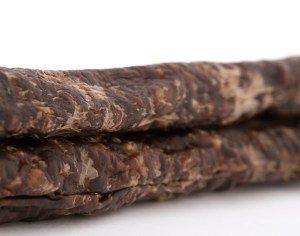
4.  The carcass (presumably cut in half here) should be stretched out on wooded planks.  Covering them with another board, place heavy weights on top of this.  This will act to press out any remaining blood and moisture from the flesh.  Let this sit for three days.
pork2

5.  After the third day, you should change the salt by rubbing off the old salt and rubbing on new handfuls of salt.  The goal is to replace the old salt with fresh salt, so that the pork continues the drying process.

6.  If the weather is mild and not wet, you can leave the carcass to cure in this way for nine days.  If the weather is wet or rainy, you should let it cure for about ten days.

7.  Take the pork to a fresh water source like a pond or river and wash out the salt as thoroughly as possible.

8.  The carcass should then be hung up in a larder (in carnario), where it can receive a small amount of smoke.  Besides adding flavor, the smoke will also serve to dry up any remaining moisture (In carnario suspendi, quo modicus fumus perveniat qui, siquid humoris adhuc continetur, siccare eum possit).

9.  Columella advises us to carry out the salting process at a time when “the moon is waning” (luna descrescente), especially during the middle of winter, especially February.  We note this advice with an amused smile, and can safely say that the phases of the moon have no relation to one’s success in salting pork.


Read More:  Ancient Methods Of Preserving Olives
 

Making Mead The Roman Way

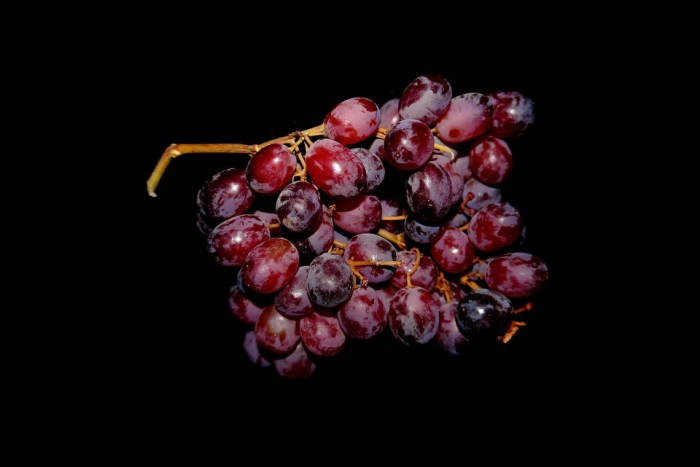
grapes2

This is Columella’s recipe for the alcoholic drink called mead; it is found in his Res rustica, XII.41.

Mead is a fermented drink made from honey, to which may be added spices and other aromatics.  Wines of various types as well as mead were the principal alcoholic drinks in the days of ancient Rome.  Beer, although a staple drink in the ancient Near East, Egypt, and among the Gauls and Germans, was known to the Romans but not favored.

Mustum optimum sic facies, says Columella:  Here is how you make good mead.  Let us follow his prescription, and hope for the best.  I am simply summarizing Columella’s recipe here, and have not prepared it myself.

It is interesting from a historical perspective, but I would like to hear if anyone actually tries to make mead this way.

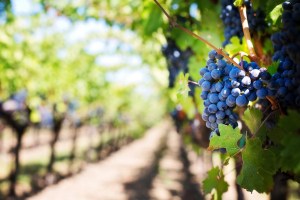
1.  Remove from the “wine vat” a quantity of must (He calls it mustum lixivum, which is simply the juice of crushed grapes).  Must is grape juice that been partially fermented, or not fermented at all.  Since the average person does not have a wine-vat, we assume that any must will do here.

2.  Columella advises us to use the juice of grapes that have been picked on “a dry day.”

3.  Put ten pounds (X pondo) of honey into a large urn (urna) of must, and carefully mix them together.  We assume here that one can reduce the volumes proportionally, if a smaller batch of mead is to be made.  How much must should be mixed with the honey?  Here we must use some detective work.  The text of Columella only uses the word “urn” (urna).

grape1

An urn was both a generic word for large storage vessel, and also a unit of liquid measure.  I am assuming here that Columella meant it to indicate unit of liquid measure.  According to the Oxford Latin Dictionary, the term urna signified half of an amphora.  So one urna was about 13 liters, or nearly “3 imperial gallons.”

4.  Pour the must and honey mixture in a large vessel and “seal it up with plaster.”  (I am assuming here that we can safely omit the plaster, and use any reliable form of sealing that permits the gases of fermentation to escape.  I include it only to show how things were done in Columella’s day).

The sealed vessel should be placed in a cool, dry loft, for fermentation.

5.  The vessel should be retrieved after thirty-one days, opened, and strained.

6.  It should then be placed into another vessel, sealed with plaster, and then put where “the smoke will reach it” (in aliud vas mustum eliquatum oblinire, atque in fumum reponere).  Notice how plaster sealing is used again here, as an efficient way to permit gases to escape from the jar.

It is not clear why Columella thinks smoke is a good thing for the mead.  Perhaps it was a way to give it some flavor.  The mead could be drunk at any point after this time.


Read More:  How The Romans Collected Beehives

Ancient Methods Of Preserving Olives
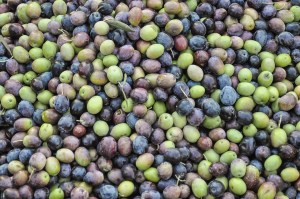
olives2

We continue our perusal of Roman organic and agricultural practices.  Columella (XII.49) give the following instructions for the preparation of olives.

Basic Method

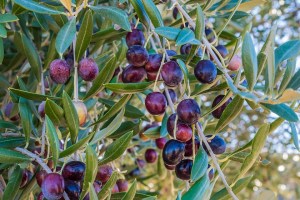
1.  During September and October, while the olive harvest is ongoing, the bitter Pausean olive (acerba Pausea) can be harvested.

2.  The olive should be crushed and soaked for a short time in warm water, then drained.

3.  Olives should then be mixed with fennel and mastic seeds, together with rough salt that has been “toasted.”   (cum cocto sale modice permixtam).  The smoky salt will impart a nice flavor to the whole.

4.  This entire affair is then put into a jar.  Over the jar of olives, salt, and spices, pour enough “must” to cover them.  Must (mustum) is unfermented or only partially fermented grape juice.  Then pack in additional fennel on the top, and seal the jar.

5.  After three days of immersion, the olives can be eaten.

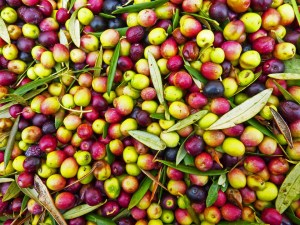
olives1

Another Method

This method of olive preservation is good for the Pausean, orchite, shuttle, or royal olive.  It’s very similar to the method given above.

1.  Soak the olives in cold brine for some time.

2.  Line the bottom of a large jar with fennel.  In a separate pot, place fennel and mastic.

3.  Take the olives out of the brine and squeeze them dry.  Then mix them with the fennel and mastic.

4.  Put the olives and spices in the large jar with the fennel at the bottom.  Then fill the container with an equal mixture of brine and must.

5.  Cut up finely some leeks, rue, mint, and Italian parsley, and add these herbs to the jar of olives.  Their flavor will infuse the whole.  You can also add a little peppered vinegar, honey, olive oil, or mead if you desire.

5.  Olives so treated will keep for a whole year.

Variations

There are some good variations on these preparations:

1.  When olives have been treated with brine, you can pour out the liquid and replace it with two parts of boiled must and one part of vinegar.  This also works well.

2.  Columella tells us that (XII.49.10) he has crushed good olives in a press, mixed them with toasted salt, fennel, mastic, and rue.  The berries are then left alone for three hours, so that they absorb some of the salt.  All of this is then stored in jars, and covered in good olive oil.  Then dried fennel is pressed on top, and then the jars are sealed.

Black Olives

1.  Dark olives should be picked in good weather and placed in baskets.  To every modius of olives you should add three heminae of salt.

olives3

(The modius and hemina were Roman units of measure.  The modius contained 16 sextarii or 1/6 of a medimmus, a “peck”.  A hemina was one-half of a sextarius).

2.  The olives should be then left for thirty days to allow the “lees” to drip out.

3.  Then dump the olives in a tub and sponge off as much salt as you can.  The olives can then be packed in jars, using must and fennel as preservatives as described above.

Another Black Olive Preparation

1.  The black olives are picked, sifted, and cleaned.

2.  The olives are then put into a mill and crushed.  When made into a pulp, toasted salt is added for flavor.

3.  Then other dry spices are added:  caraway, cumin, fennel, and anise seed.

4.  The olives and spices are then jarred, and oil poured on top of them to fill the jars.

These, then, are Columella’s basic olive preservation recipes.

Read More:  How The Romans Collected Beehives

Ancient Roman Advice On Dog Grooming And Care

We will continue our excursions into Columella’s Res rustica with a summary of his advice on the buying, care, and grooming of dogs.  In his day, as in ours, the dog was an essential animal to have on the farm.  Besides companionship, it provided security and assisted in the management of other domesticated animals, such as sheep and goats.

Continue reading

The Country Of The Mind

He who inhabits the Country of the Mind takes ideas as his stock-in-trade. The inhabitant of this Country likes to read new works, to mull them over, to wrestle with their implications, and to gnaw on them in the same way that an eager puppy scrapes its growing teeth on a steakbone.

And, after a period of digestion, he is ready to test the efficacy of his knowledge in the sandy arena of mental combat. He bravely submits his findings to pubic review.

The active and inquisitive intellect does not overly concern itself with whether something is true or false, because it values ideas for their own sake, and draws creative inspiration from the stimulus that new ideas provide. It also knows that “truth” and “falsity” are relative concepts, and can shift position with startling speed. What was once true, may not be true tomorrow; and what was once false, can appear self-evident in another setting.

More important is it for us to swing our mental machetes through the tangle of vines and brambles of unchallenged knowledge.  We cut our way through, and enjoy the excursion.

Scientific paradigms are like flowers, and young girls: they last while they last. And when they expire, they are replaced by other paradigms that are better suited to the times. Certainty in science is a dangerous thing, as it is in religion.

It has been said that hell hath no fury like an angry theologian; but the same could be said for a piqued scientist whose sacred cow has been gored.

So let us enjoy the process of argumentation and discussion, and not retreat into our dogmatic igloos. I have enjoyed watching a creative mind wrestle with new ideas, and wander new savannahs of the Country of the Mind.

And this is what really matters here. We wish to be privy to the thought of an active intellect. Who among us can find fault with this?

The Launch

And now we begin the great journey.

I had resisted getting a website at first.

But I soon came to realize that for me, as a writer, having my own platform was the best way to amplify my voice.

This site is the result.  The launch of this ship is a beginning, but will have no end.

“Choice is not an end,” the Renaissance scholar Francesco Filelfo tells us, “but chooses things related to an end.”  [De Exilio, III.148]

I will try to keep posts here to an enlightened minimum, being aware that brevity is the soul of mercy, as well as wit.  Selection of fresh material and allotment of space will be primary concerns.

The pervading themes here will be the topics covered in my books, and others, as the opportunity arises.

And as we relate our stories, we relate ourselves:  de nobis fabula narratur.  

Thank you, patient reader.