The Three Types Of Travel Writing, And Their Uses

travel1

Travel writing is a popular genre.  We live in an age of travel, where it is easy to plan a sojourn to the most remote of locations.  Most people today hardly give a thought to the fact that their routine international destinations of travel were, until very recently, accessible only by ship or overland travel.  Even as late as the 1860s, the source of the Nile River in Africa was unknown.

Continue reading

Dealing With Grief, And Providing Comfort

Cicero believed that there were four “disorders” of the soul:  delight, lust, distress, and fear (Tusc. Disp. IV.12-15).  He believed that all of these disorders were the products of either some judgment, or some belief.  In other words, we ourselves create the conditions for these disorders, by our own flawed judgments or erroneous beliefs.  And if we can correct these deficiencies, we can cure ourselves of the disorder.  It is a pretty theory.  But I am not convinced of its rectitude.

Are these emotional “disorders” truly the products of personal judgment or belief?  Or are some of them involuntary reflexes to our ingrained personality traits?  It is not easy to say, but Cicero is correct in urging us to take charge of our own emotional states.  If we cannot control ourselves, then no one can.  So it is better to follow Cicero and his Stoic path, even if it be not quite right, since they empower us with more control over our own destinies.

Sense-perception is the starting point of all emotional states.  We should be neither insensible, nor oversensitive.  To be the former is to be an unreasoning brute; the latter, a delicate flower wounded by the wind.  Occupying some middle ground strikes the right balance between these two extremes.  For when the distress of grief hits us, it is the middle ground that proves itself to be the most stable, and the most able to withstand the emotional tremors rocking us like a ship in the waves.


One of the reasons for excessive displays of grief is guilt.  We believe that, if we torment ourselves in overwrought expressions of grief, we can somehow repay a secret debt.  Displaying the intensity of our grief will placate the gods.  The flagellant who punishes himself seeks to drive out some inner demon; and the wailing mourner with hands to the sky believes that her shrieks will find heavenly satisfaction in direct proportion to their intensity.

And how may grief be assuaged?  In what manner may one give relief from the misery of anguish, whether it be in ourselves or in others?  Dolor can be dealt with in these ways:

1.  Removing it completely

2.  Softening it

3.  Stopping it from extending

4.  Diverting it with replacement emotions

Of these four options, the first seems the most unrealistic.  Emotions are not completely voluntary; they cannot normally be turned on and shut off like a valve in a pipe.  The second option, that of softening, is a better option; and this consists of speaking comforting words to the grief-stricken, whether it be ourselves or another.

Words of softening provide solace to the bereaved, and should always be forward-looking and positive.  For those afflicted by grief, an excursion into the past affords no relief.  The past is the repository of sorrows, the store-house of pain.  This is because grief and memory reinforce each other, and agitate each others’ glowing coals into new intensities.  Also to be avoided are attempts to make rational arguments to the bereaved.  It is a mistake to try to argue with the grief-stricken, and to try to show by one proof or another that it is folly to be overwhelmed by lamentation.  The heart is not a mechanical contrivance, to be wound up or unplugged on command.

The third option, that of preventing the extension of grief, follows from the softening of grief.  Grief’s waves, properly endured with time, will diminish in frequency and amplitude.

The fourth option, that of diversion, seems to be the best and most practical.  For it is not enough to tell ourselves or someone else “do not grieve.”  The more we try not to think about something, the more we think of it.  The mind is like a dog with a bone in its jaws:  try to pull the bone out of its mouth, and he clamps down that much harder.

Alleviation from grief comes with productive diversion.  The fixation on sadness must be replaced by another activity.  In this way the mind finds itself another “bone” to clamp down on.  The old bone of grief is released, and replaced with the new, positive, forward-looking activity.  And this is why the focus of a new hobby, a new job, or a new activity is so beneficial for those who are waylaid by dejection.

One interesting observation Cicero makes is that grief is a form of envy.  That is, we resent the sudden void left by the departure of something precious, and envy those who have what we now suddenly lack.  Perhaps this is true.  But I have also heard grief described elsewhere as rage turned inward.  We feel rage at our loss and deflect this rage back upon ourselves.  Either way, grief is linked to envy or rage; perhaps both of these emotions play a part.  Envy and rage are burning fires, which will consume the bearer unless properly quenched.

No matter how the cure is effected, grief must be controlled and contained.  There is nothing so loathsome as one who refuses to release himself from the grip of sorrow.  The sympathy of others quickly can evolve into contempt.  As Cicero says,

Quid autem est non miserius solum, sed foedius etiam et deformius quam aegritudine quis adflictus, debilitatus, iacens? [Tusc. Disp. IV.35]

Which means, “What is not only more miserable, but also more terrible and grotesque, than he who is debilitated and afflicted with distress?”

The quote above I have taken from his book Tusculan Disputations, a dialogue which discusses various Stoic philosophical problems.  You can find the book by clicking here.

Read More:  Cicero’s Four Cardinal Virtues

 

The Need For Adventure

rome1

Adventure activates the imagination, and kindles the fires of creativity.  Experiences intensely lived–even vicariously–have a way of forcing the mind into new patterns; they slash through the tangled undergrowth of our overgrown routines.  The masculine soul has a deep need for adventure, conquest, and the plunge into the unknown.

Continue reading

Good Facts Are Not Enough: The Material Requirements Of Victory

victory

By trade, I am a practicing attorney and a partner in a law firm.  In my fifteen year legal career, I have tried a large number of criminal cases in federal and state courts.  I have also litigated an equally large number of complex business and consumer bankruptcy matters in federal bankruptcy courts.  This background, combined with my previous career as an military officer, has taught me a few things about conflict and its management.

Conflict has a trajectory.  It begins, simmers, crescendos, and then approaches a climax.

It is one thing to read about a subject in a book.  One can read about the theories of Sun Tsu, Jomini, Clausewitz, or any number of military theorists.  And this is a productive use of time, worthy of time and effort.  One can also read about jury trials, or see movies about them, however imaginary or misleading many of them are.

And so many of them are laughably misleading.

But it is quite another matter actually to be in the hot-seat.  To handle a jury trial alone, from start to finish–from voir dire until the final verdict–is not something that can be imparted by the written word.  Writing is incapable of expressing the emotions, the stress, the exhilaration, the anger, and the eruption of intensity that comes with this experience.  There is nothing else like it.

There are law school graduates.  There are people with diplomas on their walls.  There are people who spend their legal careers safely ensconced in some corporate or government office, afraid to get their hands dirty.  There are those with opinions about everything, without having done anything.

And then there are the few who actually fight it out in the real world.  The few who are actually capable of doing what trial attorneys do.  Those who have actual clients, actual businesses, and actual victories.

In an earlier post, I discussed some aspects of conflict.

One aspect in particular deserves additional mention:  the need for material support.  Or, we could call it logistical support.  I was thinking about this today in my office.

This is what I have seen time and time again:  good facts are not enough.  If you wish to be successful in the arena of conflict, you need the tools to do the job.  In the legal world, these tools are generally twofold:  (1) the financial resources to litigate the case successfully; and (2) having a client who is supportive, responsive, and engaged in the battle.

If either of these tools is lacking, victory is in doubt.

Let us discuss the financial issue.  With money, a litigant can hire experts, can fight every motion, and can wear down the other side with discovery.  Money makes a difference.  Money sends a strong message to the opponent.  Money is an asset, just as surely as gasoline and food is an asset to a mechanized army.

Would OJ Simpson ever have been acquitted if he had been indigent, and been forced to use a public defender?

ten1

People don’t like to deal with this reality.  But it is there.  Even if you have a good set of facts, or a good case, you need to get that truth out there.  Financial resources are a great asset.  Anyone who thinks otherwise simply has never been in the playing field.

But you also need a cooperative, engaged, and supportive client.  If you client is “dropping his pack”, not answering your calls, being sullen and uninterested, then your job is measurably more difficult.  You cannot drag an unwilling mule to the fight.  Your client has to want to win.  If it is a bankruptcy litigated matter–say, a Chapter 11 reorganization–your client has to want to reorganize.

He must have the willpower, and the tenacity, to see things through to conclusion.

If you turn around, and no one is following you, then victory is in doubt.

One of the most frustrating things in my career is a situation where you see that a client has great facts, but is either unwilling or unable to carry those facts through to a successful conclusion.

But this is the way things are.  This is part of the moral dimension of conflict.  For a successful outcome to happen in a conflict, many different moving parts must come together in the right way.  And you can only control so many of those moving parts.  We cannot manage all aspects of conflict.

Good facts are the raw material to begin with.  But it’s still a long way from there to the finish line.

Read More:  On Conflict

Cicero’s Four Cardinal Virtues

knocker

According to Cicero, the sources of moral righteousness are four in number (De Officiis I.15):

1.  The perception and intelligent development of truth (In perspicientia veri sollertiaque versatur);

2.  The preservation of civil society, with the faithful rendering to everyone what he is properly owed (In hominum societate tuenda tribuendoque suum cuique et rerum contractarum fide);

3.  The greatness and power of a noble and unconquerable spirit (In animi excelsi atque invicti magnitudine ac robore);

4.  In the order and moderation of things which consist of temperance and self-control (In omnium, quae fiunt quaeque dicuntur, ordine et modo, in quo inest modestia et temperantia).

What is moral and good, according to Cicero, has to spring from one or more of these sources.  They can be connected with each other, depending on the situation.  The first of these sources, as listed above, revolves around the search for truth.  The remaining three relate to our conduct within organized society.

And this is where Cicero makes an important point.  The search for truth is a morally righteous thing.

Truth is not primarily an intellectual pursuit; it is a moral one.  It is an impulse that arises from the deepest core of our moral being.


To learn more about Cicero’s views on conduct, self-improvement, and ethics, check out my translations of his timeless classics On Duties and Stoic Paradoxes.


Why Avoiding Time-Wasters Is Important

fools1

Whether you are in business for yourself, or you are an employee, you will be beset by time-wasters.  Of the many people in the world, a good proportion fall into this category.  Time-wasters drain your energy, contribute no value to your life, and upset your serenity.  They are everywhere.  To get the most out of your life, it’s not enough to take positive action to do good things.  You also need to take action to avoid negative things.  Avoiding something bad is just as productive as doing something good.  We often forget this fact.  We devote a great deal of attention to the one, and hardly any attention to the other.

Continue reading

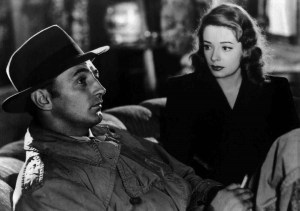
The Dark Themes Of Film Noir, And Why They Matter Today

noir1
Robert Mitchum and Jane Grier in Out of the Past

In the 1940s and 1950s, a new genre of film began to filter out of Hollywood.  It was a hard-bitten, cynical genre, dealing with themes that movies had not dealt with before.  It’s often said that jazz is the only truly unique American art form.  This is not exactly true.  Film noir is a cinematic genre that was created in America, and has been copied elsewhere extensively around the world.

Continue reading

Titans Of Arabian Exploration

(To find the book, click on the image above)

This week I will consider one of the titans of Arabian exploration, Wilfred Thesiger. You can click here to read the article.  Wilfred Thesiger (1910-2003) may be considered the last of the great English adventurer-explorers of the Orient in the tradition of many such characters from that unique island.  Besides his travels in the Arabian desert, Thesiger also lived for many years among the Madan (“marsh Arabs”) of southern Iraq.  He also traveled extensively in the Sudan, Syria, Kenya, and Ethiopia.

Continue reading

Shattering The Old Paradigms

There are times when existing methods of explaining phenomena prove themselves to be inadequate.  What is then required is for some brave soul to step forward, smash the old idols, and propose new ones.  The act is a singular one, requiring courage and an independent will.  These virtues, of course, are not found in abundance among the masses of men, who generally fear what is unfamiliar.  But paradigm-smashing has its place in history.  It cuts through, it clarifies, and it directs the progress of the mind in new directions.

One such example can be found in the career of physicist Max Planck, who is generally acknowledged as the founder of twentieth century quantum theory.  Planck came from a conservative academic family based in the Holstein region of Germany.  Born in 1858, he showed early precocity in music and mathematics, and eventually decided to devote himself to physics.  He was initially advised not to do so, since (as one teacher explained) “nothing more would be discovered in the field [of physics].”  It is a familiar admonition.

He received an appointment as a professor at the University of Kiel in 1885.  Several years later he received a full professorship in Berlin.  And it was here that he made the discoveries that would revolutionize physics.  He was by nature a conservative man, open-minded and tolerant, and every bit a gentleman; there was nothing in his make-up that would lead one to imagine him a careless proposer of radical theories.  Yet he had an unerring faith in himself, and trusted his observations.  He also had the courage to swim against the prevailing currents, when this was deemed necessary.  And this was enough.

Planck in Berlin began to study the problem of “blackbody radiation” in earnest.  Insofar as this writer can understand such physical theories, he will attempt to explain them.  A blackbody, by definition, is a perfect absorber of radiation.  Planck was concerned about the relationship between the intensity of the radiation emitted by such a body, and its other mathematical characteristics (e.g., frequency).

The early twentieth century was a period of great ferment in the world of the physical sciences.  There was a sense that existing theories–many of them dating back centuries–were inadequate to explain the strange new technological world that European society found itself in.  Planck was exposed to such currents, but firmly believed that experimentation should be the basis of any new theoretical construct.  Wild speculation had no place, he believed, in the life of a conscientious scientist.

But this view was about to be radically shattered.

Planck’s study of the blackbody problem produced something that could be called a intellectual crisis.  He had been reared on the classical physics, and assumed that the laws of thermodynamics would be able to explain, or at least contribute to, the issues surrounding the blackbody problem.  But they did not.  No matter how much poor Planck tried to make the data square with his existing “paradigm” (i.e., classical physics), it would not fit.  The energy figures did not make sense using the existing models.

And here is where we see one of those key moments in the history of thought:  that moment, almost born of desperation, where some brave soul ventures on a new theory.  Planck proposed that the energy emitted by a blackbody would square with the data if it were assumed that the energy was not emitted “evenly”, but rather in “packets” or “quanta” of energy.  These “quanta” had to take the form of the multiple hv, where h = a constant and v (the Greek letter nu) = the frequency of the energy.  In other words, E=hv.  The constant “h” soon came to be named after Planck.

It is difficult now to state just how revolutionary this proposal was.  No one had ever contemplated anything like it.  But Planck had faith in his observations, and published them accordingly.  It was 1900.  It was a new century, and it fittingly ushered in the quantum age.

It is a great tragedy that this heroic figure was stricken by an unbroken series of personal tragedies. His first wife died tragically.  One son was taken prisoner in the First World War, and another was killed.  He was forced to stand by helplessly as the German academic establishment was co-opted by an anti-intellectual regime that took power in Germany in the 1930s.  His son was executed by the Gestapo at the end of the Second World War for alleged involvement in an anti-government conspiracy.  Planck himself died in 1947, having seen his beloved homeland in ruins at the end of a catastrophic war.

Yet he remains one of the revolutionary figures of modern thought.  A deeply pious man, he tried to reconcile religion with the science, and satisfied himself that this was possible.  Seeing the old idols perched on wobbling bases, he–after considerate deliberation–gave the final push to overthrow them.  He was a great man, as well as a good one.

Read More:  The Rise And Fall Of Pombal

Horace’s Prophecy

(To find the book, click on the image above)


I came across a startling prophecy in Horace (Odes 16):

Altera iam teritur bellis civilibus aetas,

suis et ipsa Roma viribus ruit

….

Impia perdemus devoti sanguinis aetas,

ferisque rursus occupabitur solum.

Barbarus heu cineres insistet victor et Urbem

eques sonante verberabit ungula…

I render these lines this way:

Now another age is destroyed by civil war,

Rome itself falls by the hand of its own men…

We destroy ourselves, a profane age consecrated in blood,

The ground will once again be occupied by wild beasts.

Lo! A barbarian victor will stand on the ashes,

The hooves of a horseman resounding in the city.

Make of this what you will.  Our own age, profane in its own way, may yet pave the way for a conqueror who will tread on the cinders of our own civilization.

And the the hooves of his horse will clatter amidst the ruins.

Read More:  The Need For Adventure