
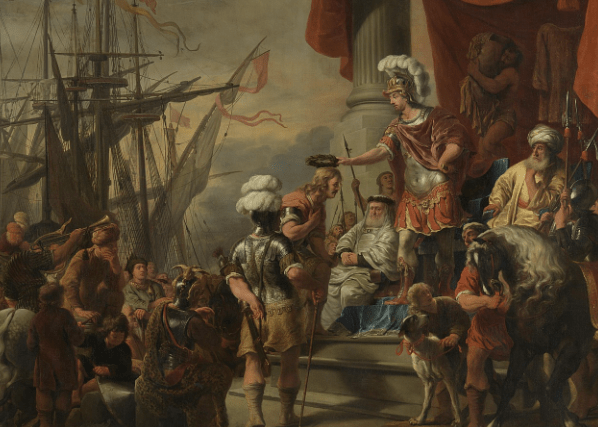
There is a line in Statius’s Thebiad (VIII.320) which reads,
Omne homini natale solum.
This means, “All soil is native to man.” I think it is appropriate to interpret soil in an abstract form, and understand it as signifying land. He does not mean just any land, but terra incognita: the vast expense of the unknown, untamed and hostile. Does this line have any significance, or is it just another poetic garland? To me the poet is trying to communicate the idea that, for the brave man, every piece of ground on this earth may be claimed as his own, and called his own; and that, through his discipline and efforts, the man of virtue may conquer the challenges of his environment, wherever the locale may be.
Continue reading
 Quintus Curtius
You must be logged in to post a comment.