Cicero’s Four Cardinal Virtues

knocker

According to Cicero, the sources of moral righteousness are four in number (De Officiis I.15):

1.  The perception and intelligent development of truth (In perspicientia veri sollertiaque versatur);

2.  The preservation of civil society, with the faithful rendering to everyone what he is properly owed (In hominum societate tuenda tribuendoque suum cuique et rerum contractarum fide);

3.  The greatness and power of a noble and unconquerable spirit (In animi excelsi atque invicti magnitudine ac robore);

4.  In the order and moderation of things which consist of temperance and self-control (In omnium, quae fiunt quaeque dicuntur, ordine et modo, in quo inest modestia et temperantia).

What is moral and good, according to Cicero, has to spring from one or more of these sources.  They can be connected with each other, depending on the situation.  The first of these sources, as listed above, revolves around the search for truth.  The remaining three relate to our conduct within organized society.

And this is where Cicero makes an important point.  The search for truth is a morally righteous thing.

Truth is not primarily an intellectual pursuit; it is a moral one.  It is an impulse that arises from the deepest core of our moral being.


To learn more about Cicero’s views on conduct, self-improvement, and ethics, check out my translations of his timeless classics On Duties and Stoic Paradoxes.


Why Avoiding Time-Wasters Is Important

fools1

Whether you are in business for yourself, or you are an employee, you will be beset by time-wasters.  Of the many people in the world, a good proportion fall into this category.  Time-wasters drain your energy, contribute no value to your life, and upset your serenity.  They are everywhere.  To get the most out of your life, it’s not enough to take positive action to do good things.  You also need to take action to avoid negative things.  Avoiding something bad is just as productive as doing something good.  We often forget this fact.  We devote a great deal of attention to the one, and hardly any attention to the other.

Continue reading

The Dark Themes Of Film Noir, And Why They Matter Today

noir1
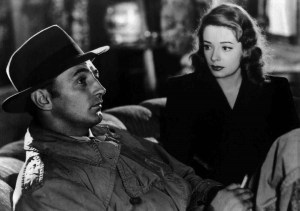
Robert Mitchum and Jane Grier in Out of the Past

In the 1940s and 1950s, a new genre of film began to filter out of Hollywood.  It was a hard-bitten, cynical genre, dealing with themes that movies had not dealt with before.  It’s often said that jazz is the only truly unique American art form.  This is not exactly true.  Film noir is a cinematic genre that was created in America, and has been copied elsewhere extensively around the world.

Continue reading

Titans Of Arabian Exploration

(To find the book, click on the image above)

This week I will consider one of the titans of Arabian exploration, Wilfred Thesiger. You can click here to read the article.  Wilfred Thesiger (1910-2003) may be considered the last of the great English adventurer-explorers of the Orient in the tradition of many such characters from that unique island.  Besides his travels in the Arabian desert, Thesiger also lived for many years among the Madan (“marsh Arabs”) of southern Iraq.  He also traveled extensively in the Sudan, Syria, Kenya, and Ethiopia.

Continue reading

Shattering The Old Paradigms

There are times when existing methods of explaining phenomena prove themselves to be inadequate.  What is then required is for some brave soul to step forward, smash the old idols, and propose new ones.  The act is a singular one, requiring courage and an independent will.  These virtues, of course, are not found in abundance among the masses of men, who generally fear what is unfamiliar.  But paradigm-smashing has its place in history.  It cuts through, it clarifies, and it directs the progress of the mind in new directions.

One such example can be found in the career of physicist Max Planck, who is generally acknowledged as the founder of twentieth century quantum theory.  Planck came from a conservative academic family based in the Holstein region of Germany.  Born in 1858, he showed early precocity in music and mathematics, and eventually decided to devote himself to physics.  He was initially advised not to do so, since (as one teacher explained) “nothing more would be discovered in the field [of physics].”  It is a familiar admonition.

He received an appointment as a professor at the University of Kiel in 1885.  Several years later he received a full professorship in Berlin.  And it was here that he made the discoveries that would revolutionize physics.  He was by nature a conservative man, open-minded and tolerant, and every bit a gentleman; there was nothing in his make-up that would lead one to imagine him a careless proposer of radical theories.  Yet he had an unerring faith in himself, and trusted his observations.  He also had the courage to swim against the prevailing currents, when this was deemed necessary.  And this was enough.

Planck in Berlin began to study the problem of “blackbody radiation” in earnest.  Insofar as this writer can understand such physical theories, he will attempt to explain them.  A blackbody, by definition, is a perfect absorber of radiation.  Planck was concerned about the relationship between the intensity of the radiation emitted by such a body, and its other mathematical characteristics (e.g., frequency).

The early twentieth century was a period of great ferment in the world of the physical sciences.  There was a sense that existing theories–many of them dating back centuries–were inadequate to explain the strange new technological world that European society found itself in.  Planck was exposed to such currents, but firmly believed that experimentation should be the basis of any new theoretical construct.  Wild speculation had no place, he believed, in the life of a conscientious scientist.

But this view was about to be radically shattered.

Planck’s study of the blackbody problem produced something that could be called a intellectual crisis.  He had been reared on the classical physics, and assumed that the laws of thermodynamics would be able to explain, or at least contribute to, the issues surrounding the blackbody problem.  But they did not.  No matter how much poor Planck tried to make the data square with his existing “paradigm” (i.e., classical physics), it would not fit.  The energy figures did not make sense using the existing models.

And here is where we see one of those key moments in the history of thought:  that moment, almost born of desperation, where some brave soul ventures on a new theory.  Planck proposed that the energy emitted by a blackbody would square with the data if it were assumed that the energy was not emitted “evenly”, but rather in “packets” or “quanta” of energy.  These “quanta” had to take the form of the multiple hv, where h = a constant and v (the Greek letter nu) = the frequency of the energy.  In other words, E=hv.  The constant “h” soon came to be named after Planck.

It is difficult now to state just how revolutionary this proposal was.  No one had ever contemplated anything like it.  But Planck had faith in his observations, and published them accordingly.  It was 1900.  It was a new century, and it fittingly ushered in the quantum age.

It is a great tragedy that this heroic figure was stricken by an unbroken series of personal tragedies. His first wife died tragically.  One son was taken prisoner in the First World War, and another was killed.  He was forced to stand by helplessly as the German academic establishment was co-opted by an anti-intellectual regime that took power in Germany in the 1930s.  His son was executed by the Gestapo at the end of the Second World War for alleged involvement in an anti-government conspiracy.  Planck himself died in 1947, having seen his beloved homeland in ruins at the end of a catastrophic war.

Yet he remains one of the revolutionary figures of modern thought.  A deeply pious man, he tried to reconcile religion with the science, and satisfied himself that this was possible.  Seeing the old idols perched on wobbling bases, he–after considerate deliberation–gave the final push to overthrow them.  He was a great man, as well as a good one.

Read More:  The Rise And Fall Of Pombal

Horace’s Prophecy

(To find the book, click on the image above)


I came across a startling prophecy in Horace (Odes 16):

Altera iam teritur bellis civilibus aetas,

suis et ipsa Roma viribus ruit

….

Impia perdemus devoti sanguinis aetas,

ferisque rursus occupabitur solum.

Barbarus heu cineres insistet victor et Urbem

eques sonante verberabit ungula…

I render these lines this way:

Now another age is destroyed by civil war,

Rome itself falls by the hand of its own men…

We destroy ourselves, a profane age consecrated in blood,

The ground will once again be occupied by wild beasts.

Lo! A barbarian victor will stand on the ashes,

The hooves of a horseman resounding in the city.

Make of this what you will.  Our own age, profane in its own way, may yet pave the way for a conqueror who will tread on the cinders of our own civilization.

And the the hooves of his horse will clatter amidst the ruins.

Read More:  The Need For Adventure

On Conflict

conflict

What is the nature and purpose of conflict, and how may it be dealt with?  These are questions that have been considered by many through the centuries.  And rightly so, as conflict–in which I include war as well as any other clash of wills–is at the core of existence.  Whether we speak of Nature or the metaphysical realm, the clash of two opposites is at the heart of the eternal dialectic.  To understand this, and to cope with its implications, is one of our primary duties.

The goal of conflict is for one side to make the other side change its mind:  that is, for one side to impose its will on another.  As two or more opponents clash, what Clausewitz called “friction” is produced.  He defined friction as the force which makes “even the seemingly easy, difficult.”  And this statement captures one of the essential principles of conflict.  In the heat of conflict (whether it be a trial in a courtroom, a contest of wills between people, or warfare), even the simplest things become very difficult.  Conflict feels like trying to run in a dream.  Action becomes slow, plodding, and uncertain.

I have particularly noticed this in two settings.  One setting was in the operation of military forces in the pursuit of some goal.  Military operations never evolve as planned.  Communications will go down.  Radios or signals intelligence will be flawed.  Logistics will be impeded.  Unexpected disasters will happen.

Another setting in which I’ve noticed the operation of friction is in the trial of a legal case in a courtroom.  Small problems become magnified into big problems.  Witnesses will not perform as expected.  Juries or judges will do or say unanticipated things.  Evidence you want to introduce will be denied, or will have a different effect than that desired.

This is the distorting lens of conflict in action.  Conflict magnifies things, making the insignificant, significant. We can try to control some of these elements, but complete control is not possible.  The better way is to learn to use “friction” to our advantage.  We must embrace fluidity, friction, disorder, violence, and uncertainty, knowing that they are inescapable.

The human dimension is found in the operation of moral forces.  Conflict is a human activity, and so we must take account of the behavior of humans.  Wills will fail; exhaustion will set in; passion will cloud judgment; boldness will accelerate the tempo of operations; and frustration will slow down operations.  We must know ourselves, as well as the opposing will.  The purpose of collecting intelligence in conflict is to better manage the moral dimension of conflict.

In conflict, our primary purpose is to know what we wish to accomplish.  Strategy is this knowledge.  You would be surprised how often this matter is overlooked.  Not knowing what one is wanting to do is the beginning of failure.  If you do not know what you are doing, friction will decide for you.

There are two main styles of conflict:  attrition and maneuver.  In attrition conflict, we wish to wear down our opponent by the expenditure of some resource (money, materiel, or lives).  In maneuver conflict, we wish to win by a judicious use of our power, achieving ends in the most efficient way.  Both methods have their uses.  The decision to employ one style over another will depend on the circumstances.

In general, maneuver is useful for parties at a disadvantage in strength.  The Boers in the Boer War, Hannibal in Italy during the Second Punic War, Nathaniel Greene in the American Revolutionary War, Lettow-Vorbeck’s campaign in East Africa in the First World War, the irregular warfare practiced by Michael Collins and the IRA in Ireland in the early 1920s, the North Vietnamese Army during the Vietnam War, the German Army in Italy in 1943-1944, are all examples of employment of maneuver.  Many other historical examples can be found of attrition, such as the US military in the Second World War.

The failure to adapt strategy to means and ends is the beginning of failure.  Trying to do something beyond one’s means is the beginning of failure.  Since conflict is difficult and expensive, we must match means to ends.  Winning by maneuver should be the preferred option, as it involves less time and expense than attrition.

There are many examples in history of leaders trying to do things beyond their means, of allowing their ambition to exceed their ability, or of not matching their strategy with their resources.  This is the beginning of failure.

As stated earlier, conflict magnifies everything.  Small problems become big problems.  The best way to manage the job of leadership and command and control in conflict is not to micro-manage everything.  Over-management slows down the tempo of operations.  We must let subordinates, comrades, or employees use their own initiative to solve problems on their own.

All preparation for conflict must take these things into account.  We must train in an environment of uncertainty, fluidity, and hardship.  Adolf Von Schell’s classic treatise Battle Leadership was written after long experience on Germany’s eastern front in the First World War.  He recommended that training be done at night, in the worst conditions, so that men would get used to the disorder and chaos of real-world operations.  We must imitate this advice.

We can try to “manage” friction.  We can try to “shape the battlefield.”  But these efforts always come up a little bit short.  In the prologue to Sun-Tzu’s treatise Art of War, the author describes how he imposes discipline on a group of concubines that he intends to train as a military unit.  The method used is fear.  This is an example of trying to control friction. It can work, in some small ways.  But not in every way, and not comprehensively.

Micro-management impedes this effort.  When someone has to verify everything before doing anything, the pace of operations slows.  Leaders should tell subordinates what they want done, but necessarily how to do things.  Goals should be specified, not means.  The man on the ground should then employ his own training and initiative to get the job done correctly.  The problem with this, of course, is the fact that in real conflict, people often don’t take the initiative.

The use of “mission orders” also presupposes a high level of training and initiative for subordinates.  In practice, this is not often the case.  It isn’t easy to find people with good training or sufficient initiative.  But this is why training, initiative, and vigorous leadership is so important.  They speed up operations, increasing tempo and fluidity.  By swarming a clumsy opponent with a high tempo of operations, we can induce a general collapse of his will.  This is the essence of maneuver.  The opponent is “outcycled” in that his rate of decision-making is overwhelmed by the rate of decision-making of his adversary.

Successful management of conflict comes from an appreciation of these principles.  We must accept the reality of the “magnifying” effect of conflict.  We must accept uncertainty, friction, and the moral problems of conflict.  They can never be eliminated.  It almost seems that there is a Heisenberg Uncertainty Principle for conflict:  as we try to control one factor, other factors will remain unknown.  We must place our faith in the principle of maneuver conflict:  the use of decentralized “mission orders” that specify ends, and not pedantic micromanagement.

We must focus on training and preparation, in order to minimize the effects of uncertainty and friction.  And we must be responsive to changing facts and conditions immediately.  In this way, a speedy tempo of operations can be produced.  This firestorm of activity can permit us to impose our will, and cause the opposing force to “change its mind.”

For this is the goal of conflict:  to get the other side to change its mind.

 

On Detractors

rome2

The poet Naevius noted that “mortal man is forced to endure many evils.”  (Pati necesse est multa mortalem mala, as quoted in St. Jerome’s Epistulae, LX.14).  Few would dispute this sentence.  One of these evils is the attack of the detractor.  Anyone who has become noted in a field of endeavor will at some point embolden detractors.  Horace tells us:

Such is the condition of kings,

That bolts of lightning strike the mountain tops.[1]

In other words, men of prominence will naturally attract invective from those wishing to cause mischief or spread calumnies.  It cannot be otherwise.  Hearing such attacks can begin to feel like an “itching in the ears” (to use the phrase of St. Jerome) for the man following his own moral purpose.  Jerome warns us that we should resist the temptation to respond to such attacks:

Cave quoque, ne aut linguam aut aures habeas prurientes, id est, ne aut ipse aliis detrahas aut alios audias detrahentes.[2]

This sentence reads:  “beware also, lest you have either an itching tongue or ears; that is, lest you detract from others or you listen to detractors.”  What Jerome means by this is that we should avoid the temptation to respond in a tit-for-tat way to our enemies.  Insults hurled can often come back to wound the hurler.  Jerome’s implication here is that mutual invective inevitably leads to mutual destruction.

fight3

By not responding to invective, we train both our enemies and ourselves:  we train our enemies that they cannot provoke us, and we train our own tongues to be silent as necessary.  Let us practice, then to moderate our words, and control our itch for retribution.

______________________________

[1] Odes II.10.11.

[2]  Epistula LII.14.


Author’s Note For “Pantheon”

[The excerpt below is the foreword to the book Pantheon: Adventures in History, Biography, and the Mind]

An author’s foreword often takes the form of an apologia.  So it is with this one.  We find ourselves compelled to renew our study of the nature of man, and the many dimensions of masculine virtue, which first began with the publication of Thirty-Seven in 2014.  The favorable reception of Thirty-Seven made it clear that new approaches to man’s ancient problems were desperately needed, and would be gratefully welcomed.  The unchanging themes of the life of man had cried out for a new voice, and a new technique, that might give them a contemporary resonance.

For too long, the study of masculine virtues had been cloaked in feeble apologetics that neither dignified nor elevated man’s struggles.  What had been needed was a return to the basic sources in history, biography, and philosophy.  The nature of adversity, the struggle for personal mastery, the vagaries of Fortune, the triumph of visionary effort, and the moral dimensions of character:  these were subjects that demanded a refurbishment, and a modern perspective, that nevertheless paid homage to ancient models.

I have found the essay to be the best vehicle for the presentation and discussion of these themes.  Finding the right balance in each essay between a merciful brevity and a tiresome length is a delicate balancing act; and the author, perched on his quivering tightrope, can only hope that his audience is not offended by his occasional deference to either extreme.  I do not pretend to impartiality.  For this I offer no apology, nor any equivocations.  The current age calls not for a bland neutrality, but for a conviction that will ignite the imagination, and kindle its fires.  My method has been to use the essay as a bacteriologist might use his microscope, or as the astronomer might employ his celestially-directed lenses.

Through the use of historical examples, the study of philosophical questions, and the examination of moral problems, our knowledge of ourselves grows measure by measure.  The scope of these questions intimidates the author as much as it does the reader; and we can only hope that the awareness of our ignorance will serve as a constant stimulus in our quest for wisdom.  Effort in seeking wisdom is never wasted, for our goal is a noble one.  We may respectfully disagree with Seneca when he warns us,

Whether reason or fortune has concealed these things,

Let what has been hidden remain hidden, always awaiting discovery;

As the Truth, unearthed, always brings misfortune to its discoverer.[1]

The essays in this volume have been selected for their treatment of the themes listed in the paragraphs above.  I have decided, in addition, to give extended treatment to the topic of Neoplatonism.  The final chapter of the book contains a detailed summary of all fifty-four treatises of Plotinus’s Enneads.  It is the product of a thorough study of the original texts, and  constitutes nearly a book within a book.  I do not need to be told how rash this effort was; but being rash, I elected to proceed.

Neoplatonism and mystical philosophy is a subject of some interest to me, as I believe that its dedicated study can bring a vastly expanded appreciation of one’s spiritual potential.  Every reader, of course, will have to decide for himself.  We can only strike forward, and make our way as best we can, swinging our machete at the bramble of vines in the inhospitable jungle of the mind.  We recall Virgil’s lines (Aeneid II.494):  Fit via vi.  The road is made with force.  So we force our way through.

With the vast range of topics covered, it is certain that there will be differences of opinion among reasonable men about the finer points of analysis on a given topic.  The translations in the text from Latin and Arabic are my own, and to me alone must be ascribed errors in interpretation, if any may be found.  The writing of a book is a solitary endeavor, and at the same time, something of a collaborative one.  Ideas are plastic:  they need to be worked, shaped, molded, and discussed, before they can take a final form.

I owe several debts of gratitude in the preparation of this book.  My friend Winston Smith devoted much effort in reviewing the final manuscript, and made many welcome suggestions.  I am also appreciative of the many readers of Thirty-Seven who contacted me personally to offer enthusiastic statements of support and encouragement.  They are legion, and are heard.  A special place in this writer’s own pantheon must be reserved for the accommodating kindness of these selfless souls.

[To see purchase details, click on the book cover above, or here]

_____________________________________

[1] Sive ista ratio sive fortuna occulit,

Latere semper patere quod latuit diu;

Saepe eruentis veritas patuit malo.  [Oedipus IV.825]

Pantheon: Adventures In History, Biography, And The Mind

P2820-x-4500px

My next book, Pantheon, is nearing completion.  It is expected to be released in late March or early April 2015.  Like Thirty-Seven, it will also be a collection of essays.  The themes of the book are:  redemption through suffering, the importance of masculine character, victory through perseverance, the finding of a moral purpose, and the glory of struggle.

But this is a more ambitious project than my previous effort.  A conscious effort has been made to examine sources in their original languages.  There are some efforts at historical fiction, as well as philosophical dialogues.  Most differently, I have summarized and condensed the entire text (all fifty-four treatises) of Plotinus’s Enneads.  It almost forms a book-within-a-book.  The Enneads is the foundational text of Western mysticism, and I have long felt that a basic knowledge of this subject is essential for any man seeking to journey inward, as well as outward.  Much has been written on the physical journeys required by man; we must now explore the inner journey.

More will be posted as information becomes available.