We now consider a few of the most recent films I’ve seen. I should have started doing this a while ago.
We now consider a few of the most recent films I’ve seen. I should have started doing this a while ago.

The first modern, comprehensive biography of St. Patrick was written by the scholar J.B. Bury, who was a professor of history at Cambridge University for many years. As usual in a work by this great author, it is thoroughly sourced and documented, and yet retains a readability and freshness that makes it timeless. He relates this fable that supposedly happened during the foundation of Armagh in A.D. 444.
The current political crisis in Brazil sharply divides the opinions of those who are interested in such matters. To some, Dilma is more sinned against than sinning. In this view, she is the victim of a shadowy (possibly US-inspired) desire for “regime change light.” Journalist Pepe Escobar is an insistent exponent of this view.

Those acquainted with modern Chinese literature tell us that Lu Hsun (1881-1936) is one of its most towering figures. His stories are of the most intimate type: he chronicles his thoughts, feelings, and impressions in a free-flowing manner, unrestrained by convention or rule. He did not subscribe to any political affiliation, preferring to remain beholden to no one. It is this streak of stubborn independence that attracts us to his writings.

We deal with two questions in this podcast. A reader asks whether he needs a mentor to find success. In the second part of the podcast, we hear from the writer Jorge Luis Borges on how he triumphed over his blindness by creating a new reality for himself. He tells us how he was able to find the good in the midst of darkness. It’s an inspiring story and a critical lesson.
I watch a lot of movies. You’d be surprised at the ways that movies can generate new ideas in you, or take you in new directions. I haven’t written any film reviews in a while, so I thought this would be a good time to take a break from some of my more serious posts in recent days. Here are my impressions on a handful of recent films.

There used to exist a literary genre called the consolatio, or consolatory essay. It is the type of thing that would be written by one person to another on the event of some terrible personal tragedy, such as the loss of a loved one. Sometimes (e.g., in the case of Boethius) the writer simply wrote it for himself. The ancient authors recognized it as a form of oratory, but it has been out of fashion for a long time now.

I have finally finished the complete translation of Cicero’s On Duties. It has been an exhausting, laborious, maddening, and joyous experience. There still remains a lot of work to do before it is finally ready for publication: revising, editing, adding more textual notes, indices, explanatory essays, and a few other things. But the end is finally in sight.
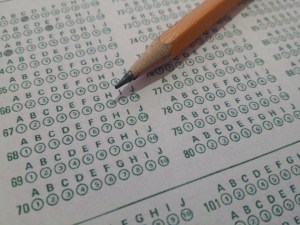
One reader thinks his test scores in school could use some improvement. He sees some mediocre people getting good test results, and wants to know how he can improve this skill set. I offer some suggestions that apply not just to academic tests, but to other fields of life.
Julian (A.D. 331-363) was one of the most fascinating emperors of the later Roman empire. While a full description of him and his reign is beyond our scope here, a few words may be said. He spent a great deal of time and energy trying to revive paganism, only to see his hopes dashed on the rocks of reality. He was an ascetic personality, subsisting on little food and many books; and it is said that he preferred the salons of the philosophers to the intrigues of the palace.


You must be logged in to post a comment.