The Olympieion

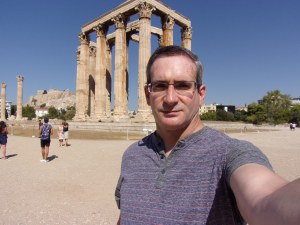
A short distance south-east of the Acropolis are the remains of a colossal temple called the Olympieion, or the Temple of Olympian Zeus.  It was begun around 520 B.C. with the expressed purpose of being the largest and most impressive such structure in the Greek-speaking world, but it fell victim to political fortunes.  Work on the temple was abandoned around 510 B.C. when one of its advocates, Hippias, was removed from power and expelled from Athens.
Continue reading

Kerameikos: The Spirits Of The Dead

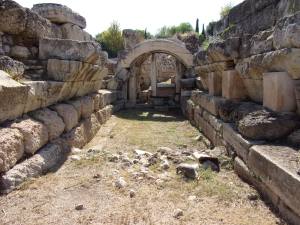
Today I visted a site called Kerameikos in Athens.  It was a cemetery for many centuries, and contains numerous examples of funerary art.  The site was only rediscovered in 1861 during road construction in the neighborhood.  On the site is also located the famous Dipylon Gate, which was the main entrance into Athens during ancient times when the city was surrounded by walls.  The gate itself is said to have been the largest gateway in the ancient world, covering around 1800 square meters.  Constructed around 478 B.C., it had four large covered towers and a courtyard that also served as an official meeting place and a location for commercial activity.  I was excited to see the remains of the Gate, as I had read references to it in classical texts.

Continue reading

Some Observations On Classic Greek Art, And Its Lessons For Today

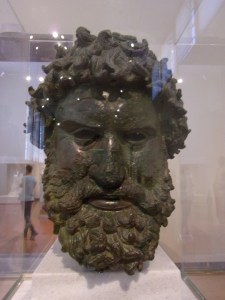
I have spent the past two days in Athens seeking out some of the monuments of classic Greek art.  I have tried to see as many works of art and architecture as was reasonably possible, and thought I would here provide the impressions gained from these observations.

Continue reading

The Lyceum Of Aristotle, And The National Archaeological Museum

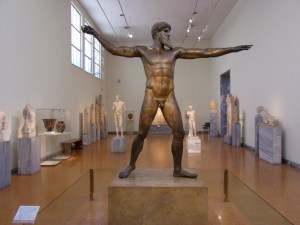
Today I visited the National Archaeological Museum in Athens, as well as the historical site of Aristotle’s Lyceum.  The Lyceum was the place of origin of Aristotle’s Peripatetic school of philosophy, which took shape around 335 B.C.  Like the Platonic Academy, there is not much in the way of physical remains; but this did not matter to me at all.  Just to be able to stand on this ground was to me worth the effort in coming to Greece.  It was only discovered in 1996. How often do we read of Aristotle, and yet no one bothers to link a physical location to his memory?  This is why it was important for me to take these pictures, and show them to readers here.

Continue reading