

In this podcast we discuss two movies: “Never Look Away” (2018), a German coming-of-age drama directed by Florian von Donnersmarck, and “Ad Astra” (2019), the space drama starring Brad Pitt and directed by James Gray.
In this podcast we discuss two movies: “Never Look Away” (2018), a German coming-of-age drama directed by Florian von Donnersmarck, and “Ad Astra” (2019), the space drama starring Brad Pitt and directed by James Gray.

In studying the writings of scholars of ages past, one often begins to suspect that they were aware of more things than we generally give them credit for. We begin to understand that the progress of knowledge is not always “upwards” in a steadily sloping straight line; there are periods of setbacks, stagnation, and decay. And very often we perceive that men of great ability can be trapped in environments that are hostile to the development of their talents.
My fully illustrated and annotated translation of Cornelius Nepos’s Lives of the Great Commanders was published on September 20, 2019. It is available in paperback, hardcover, audiobook, and Kindle editions.

I was recently reading some of Cicero’s letters to Atticus, and came across this sentence in one of them:
Quid enim sumus, aut quid esse possumus? Domis an foris?
[Epistulae XIII.10]
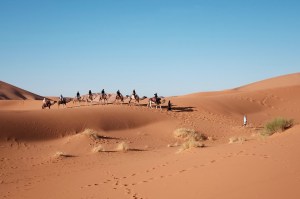
Readers are likely to have heard, in one form or another, the New Testament proverb, “And again I say to you, it is easier for a camel to go through the eye of a needle than for a rich man to enter the kingdom of God” (Matthew 19:24). The saying is an old one, and probably was in common currency centuries before its alleged utterance by Jesus. I find proverbs and adages interesting, as they contain not just worldly wisdom, but information about the culture and period in which they were composed. This point was recently impressed upon me while reading a forgotten bit of nineteenth-century travel literature, the Rev. F.J. Arundell’s 1834 memoir Discoveries in Asia Minor.

In this podcast we deal with two recent emails. One email asks about the military: what lessons did I learn, and how did it change me. Another email is from a man asking about what subjects he should be studying in college, and what sort of career he should pursue. There are no easy answers to these questions, but just talking about them can be of real benefit.

The British invasion of the Dardanelles in 1915 is a text-book example of how wishful thinking and imagination can override sound judgment and careful planning. The idea of knocking Turkey out of the war with an amphibious landing at Gallipoli, followed by a march on Istanbul, was in principle strategically sound; but as a practical matter, the British simply lacked the tools and leadership for the job.
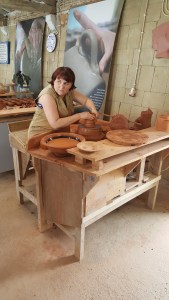
Yesterday saw a lot of travel around São Miguel. We started at a pineapple plantation near Ponta Delgada. Pineapples are here called “ananas” instead of the word they use in Brazil, which is abacaxi. I’m told there is a botanical difference between these two words, depending on who you speak to. Those interested in learning more can find an informative discussion on Quora about it here. The cultivation of the pineapple is very sophisticated, and the fruit here is the best I’ve ever tasted.
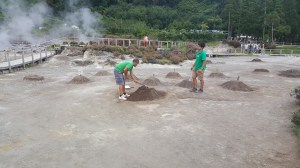
We explored more of the island of San Miguel today. Starting off early in the morning, we drove by van to the volcanic lake known as Lagoa do Fogo. It’s a very scenic drive from the city of Ponta Delgada, and I was impressed with how organized and well-planned the agricultural efforts are here.
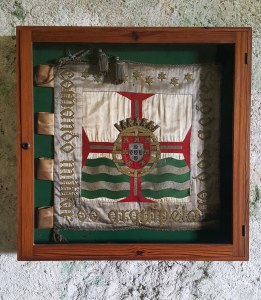
I arrived in Ponta Delgada on the island of San Miguel in the Azores early yesterday morning. I have had a chance to do a bit of exploring of the city, and have some short trips lined up for the coming week. I’m very impressed so far; the climate is temperate and pleasant, and the overall “feel” of the city is very congenial. I was surprised at how different the idiom here is compared to the style of Portuguese spoken in Brazil. It is very different, at least to me.


 Quintus Curtius
You must be logged in to post a comment.