

A reader who was a professional poker player for a number of years is getting restless. He wants to start a business, but has some questions about how he should go about doing it. We offer some ideas.
A reader who was a professional poker player for a number of years is getting restless. He wants to start a business, but has some questions about how he should go about doing it. We offer some ideas.

In his short biography of the poet Alexander Pope, Samuel Johnson makes the following comment:

Samuel Johnson makes the following comment in his Lives of the Poets when discussing the life of the seventeenth-century poet John Gay:

In this podcast we answer two recent questions from readers. One question deals with the virtues, and the other question relates to recommended books.
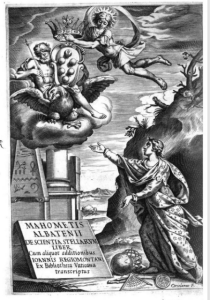
We have here very frequently discussed the necessity of training in character and the virtues as a lifelong activity. This subject is the concern of moral philosophy: that is, the study of conduct and the virtues. It is through moral philosophy that a man’s passions are bridled, directed, and channeled for positive use. Without this discipline, he never learns to sublimate his ego to a higher purpose; he begins to think of himself as an emperor, a man beyond the reach of the rules and obligations that apply to everyone else. Selfishness, arrogance, and close-mindedness creep into the subconscious, eventually to dominate every waking impulse.

The philosopher and naturalist Theophrastus of Eresos succeeded Aristotle as head of the Peripatetic school; and while he may not have had his predecessor’s visionary profundity, he more than compensated for this with a genial manner, relentless curiosity, and a genius for organization. Like the Prussian naturalist Alexander Von Humboldt, there was nothing in the heavens or on the earth that escaped his attention; and his exhaustive botanical treatise, the Historia Plantarum (Study of Plants) remained an authority in the field until well beyond the medieval period.

In this podcast, I answer some recent questions on a variety of subjects: family, relationships, homelessness, and school choices.
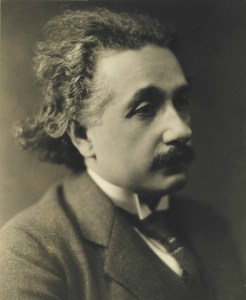
Albert Einstein’s general theory of relativity, first published in 1915, proved to be a revolutionary way of looking at the universe. The three dimensions of space were combined with time to create a unified whole; and this space-time grid, instead of being fixed and static, could be warped in certain circumstances.

Sidonius Apollinaris, who died in 489 A.D., was a diplomat, literary figure, and ecclesiastical official of fifth-century Gaul. He was also a letter-writer of impressive fecundity and erudition; and his powers of memory were so great, we are told, that he was able to recite long liturgies from memory and deliver orations without notes or preparation. One of his letters (II.10), written to a friend named Hesperius, contains the following noteworthy sentence:

George Washington generally preferred a restrained style of leadership. By this I mean he was economical with his words, careful in doling out both praise and recriminations, and mindful that his actions would resound more loudly with subordinates than his statements. He understood the principle that, when leading men, sometimes a leader had to turn his back on them; he did not strive for back-slapping familiarity, but instead the calm and steady application of discipline and objective.
 Quintus Curtius
You must be logged in to post a comment.