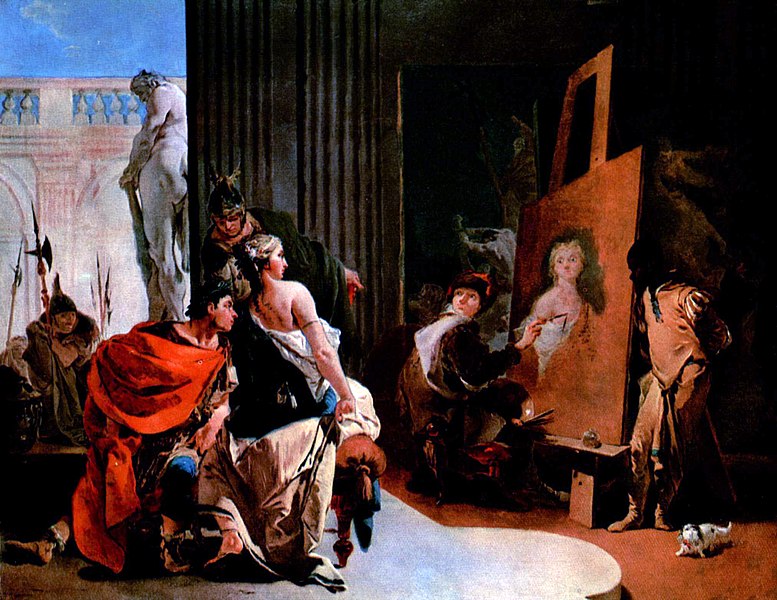
Apelles, The Greatest Painter Of Antiquity

Painting is a perishable art.  Pigment fades and flakes with the centuries; and the passage of millennia leaves us nothing of painting but dust and memories.  From antiquity have survived statues, tombs, mosaics, some murals here and there, artifacts of all kinds, and the sublime monuments of architecture; but of the great Greek and Roman painters, we have no original works.    

Continue reading
Acknowledging The Debts To Our Predecessors

In his treatise On the Nature of the Gods, Cicero points out a shameful personal weakness of the philosopher Epicurus.  What was this character flaw?  It was Epicurus’s congenital inability to admit that he had ever been influenced by the thinkers that preceded him.  Cicero states:

Continue reading

Heaven And Hell Can Change Places Very Quickly (Podcast)

Most people never realize that good fortune can be suddenly and brutally replaced by bad fortune. What once seemed like heaven can quickly be transformed into a hell. The reverse is also true: a man can find himself in terrible straits, but can extricate himself through consistent efforts, and reach a kind of “heaven.”

This observation leads us to make five (5) important conclusions. We list and discuss them.

Continue reading

What Was It That Allowed Odysseus To Return Home?

Oliver Stone’s memoir Chasing the Light, which I began reading two weeks ago, relates an interesting anecdote.  After returning from military service in Vietnam, the future director enrolled in film school at New York University; one of the classes he attended, taught by a professor named Tim Leahy, dealt with classical drama. 

Continue reading

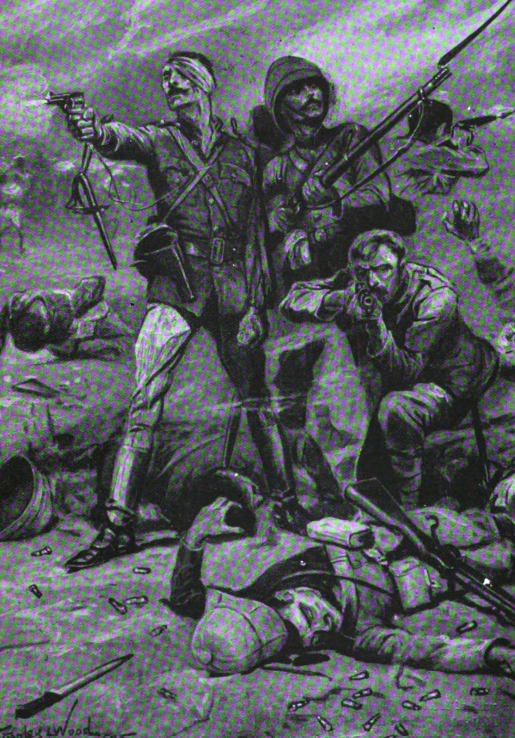
Disaster And Heroism At Maiwand

On July 27, 1880, General George Burrows led just under 2,500 British and Indian troops into the field near Maiwand, Afghanistan, to intercept an Afghan force led by Ayub Khan.  Burrows, however, was not aware that he was confronting a force that numbered around 25,000 Afghan warriors.  The terrible engagement that followed, known to history as the Battle of Maiwand, was one of the major battles of the Second Anglo-Afghan War.     

Continue reading

Clausewitz’s “Coup d’Oeil”: That Special Knack (Podcast)

The military theorist Carl Von Clausewitz used the term coup d’oeil to describe a special, innate ability to grasp the military possibilities presented by a specific situation. We may broaden this idea to describe an instinctive talent in some field of endeavor. Each of us possesses a special skill that distinguishes us from others; too often, however, those talents languish, or remain undiscovered. It is our responsibility to try to discover where our own coup d’oeil lies.

Continue reading