Below are listed my favorite films of the past twenty years. These are the movies that have most influenced me, or have left the most enduring impression on my mind. They are presented in no rigid order of hierarchy, except for the first title, The Lives of Others, which for me towers over every other film as a cherished work of cinematic art.
If you’ve been assigned a job or a position, take responsibility for what you do. Form your plans, put them into action, and stand by your decisions no matter what the consequences. Don’t shirk responsibility, don’t pass the buck, and don’t look to create excuses if things don’t go as planned. Our society is filled with buck-passers, dirtbags, and weasels who are always looking to affix blame for things on anyone but themselves. We discuss details, using a conversation between President Lincoln and General U.S. Grant as a guide.
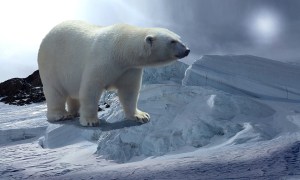
I have just finished watching a reality television series on Netflix called Alone: The Arctic. I believe it was originally produced by the History Channel. Now before you roll your eyes and dismiss what I have to say out of hand, I would ask you for a fair hearing. Hear me out, dear reader: for I too once retained your same squint-eyed skepticism.
In one of his letters to his brother Quintus, Marcus Tullius Cicero makes the following observation:
The more virtuous a man is, the less he considers others to be evil. [Letters to Quintus I.4.12]
The idea is the same as that expressed in an old Korean proverb, which I remember from my residence in that country many years ago: “In the eyes of a Buddha, everything is Buddha-like; but to a pig’s eyes, everything appears piggish.” The proverb sounds much more beautiful, of course, in the original Korean; but the point remains valid. A great spirit—a soul imbued with a certain nobility—finds it difficult to comprehend, or accept, venality and baseness displayed by others. Such a man can be trained to recognize and avoid these things, but they will always retain an air of incomprehensibility to him, as if they were fundamentally anathema to his soul. Why is this?
The Iberian peninsula’s uniqueness derives from the fact that its shores have been washed by successive cultural waves: Roman, Gothic, Arab, and then indigenous Christian. No other region of Europe has acted as a similar crossroad, or has stimulated a comparable fermentation. Each of these civilizational tides altered the terrain as it flowed in, and then receded. We now turn, once again, to the world of medieval Arabic scholarship, and attempt to pry open its chests of mysterious treasures.
We’re back, and pushing for herd immunity! It’s July 14, 2020. And here is the latest installment of the authorized G Manifesto (Twitter: @MichaelPorfirio) tweet readings.
The only authorized readings, mind you.
I recall reading somewhere that both Archimedes and the mathematician Leonhard Euler never liked to explain how they arrived at their discoveries. They took care to remove all the scaffolding before presenting their magnificent edifices to posterity; we saw the finished product, but not the arduous labor that was necessary to create it. This may be an exaggeration, at least in the case of Archimedes, whose lost Method was finally unearthed in Istanbul in 1906; but I think the point is sufficiently true, for enough famous names, to merit some reflection.
In this podcast we discuss the movie “Apocalypse Now” (1979). We deal with the problematic shooting of the film, the choices of actors, and aspects of the script. We then explore the movie’s major themes.
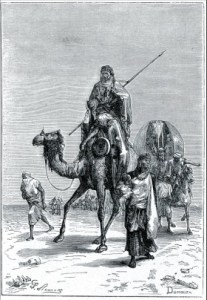
The motivations of intrepid travelers are not difficult to discern. The desire to get out, to get away from everything that reeks of contemptible familiarity, to smash through obstacles and barriers both mental and physical, to be confronted with stimuli both terrifying and strange: these would be primary impulses. Following close behind them would be a thirst to seek one’s fortune, to take a certain measure of the world and its people, and to test one’s mettle against the mettlesome natures of others. It has been so for centuries.
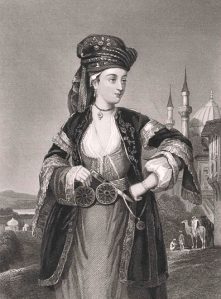
She was born in 1689 in Thoresby in Nottinghamshire, the eldest daughter of Evelyn, Duke of Kingston, and Lady Mary Fielding. When she was only four years old, her mother died, and this event became a defining one in her life; for she was raised in a decidedly male environment, a fact that imparted her personality with a bluntness and daring that distinguished her from other aristocratic women of her era. As seems to be the case for many great travelers, she had to win her education through her own efforts. She developed an interest in the classical languages at an early age; but as good instruction was impossible to come by, she taught herself Latin, French, and the basics of Greek through her own unrelenting exertions. By her teenage years, she was composing verses.








 Quintus Curtius
You must be logged in to post a comment.