On Living Near The Ocean

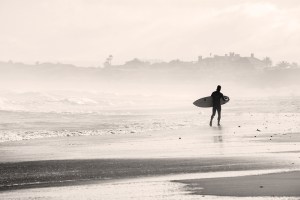
Although I do not live near the ocean now, I grew up in a small town that was close to it.  The spirit of place enters imperceptibly into one’s bloodstream; and one gets used to the tang of rotting seaweed, the early morning salt mist, the relentlessly shifting dunes, and the omnipresent screams of the gulls.  I have found that being near the ocean is restorative of health.

Continue reading

Erasmus Loses All His Money, And Still Triumphs

We have observed many times before in these pages that disaster can often serve as an impetus to growth and eventual victory. This point was reinforced in an interesting story that I recently came across in a biography of the famous humanist Erasmus of Rotterdam.

Continue reading

The Sword Of Mars

The humanist Poggio Bracciolini wrote a long letter to his friend Niccolo Niccoli in November of 1430.  The letter contained the following words:

Continue reading

People Want To Be Left Alone (Podcast)

In this podcast we talk about how the media deliberately tries to foment discord for its own self-serving purposes, and how this aligns with the purposes of the plutocracy.  We compare this ethic to an interesting anecdote related by the Roman historian Priscus that occurred while he was traveling to the court of Attila the Hun in 448 A.D.  Most people just want to be left alone to live their lives in peace, and this is the ideal we should seek in an era of perpetual outrage.

Continue reading

Coming Full Circle

As a man hopefully grows in experience and knowledge, he will begin to notice a curious thing.  The knowledge that he continues to acquire, and the sights that he continues to see here and there, subtly redirect him back to where he first departed.  It is almost as if some grand cosmic joke is at work.  Now when I say we return to where we first started, I do not mean that we return as ignorant as when we first left.  We have grown, matured, and become more complete; there is no going back to the old ways and old days.  And yet, as knowledge grows, we begin to long for the places of our youth:  the sights and sounds of our younger days, and the pleasant connections to eras past.  Wisdom reduces all things to their essentials.

Continue reading

Whether A Man Can Change, And How He May Change

Can a man change, or are his personality traits so fixed that external circumstances are incapable of adjusting them in any significant way?  This is a question that finds enthusiastic advocates for both answers.  The cynics–or as they prefer to be called, the “realists”–tell us that personality does not change.  Our knowledge contracts and expands, but the core of our being remains immutable.  We may become more polished in our presentations, or more adept at concealing our intentions, but in the end it is still the same old “us.”  We are here, and we have not changed.

Continue reading

The Eloquence of Ali Ibn Al-Athir

Ali Ibn Al-Athir (علي عز الدین بن الاثیر الجزري) was an Arabic historian, poet, and scholar who served for a time under Saladin.  Born in 1160 in the city of Jazeera Ibn Omar (the modern Turkish town of Cizre), he received his education there and in Mosul, Iraq.  From an early age, he showed an uncanny aptitude for literary work, composing verses and prose with fluent ease; he was soon able to master the essentials of grammar, philology, rhetoric, and law.

Continue reading

A Humanist Visits The German Baths

The Renaissance humanist Poggio Bracciolini wrote a fascinating letter to his close friend Niccolo Niccoli in May of 1416 while on one of his book-hunting expeditions to remote monasteries Germany.  While in Germany he had an opportunity to visit the baths near Kaiserstuhl, and he has left us a detailed description of the experience.

Continue reading

Augustine’s “Misericorditer”: Benevolent Severity In Correcting One’s Enemies

I have recently learned of an interesting doctrine articulated by St. Augustine in one of his letters.  The letter in question is Epistula 138, and I should describe briefly its context.  One of Augustine’s friends was a pagan senator in Rome named Volusian; his mother happened to be a Christian, but he was not.  The sack of Rome by Alaric in 410 A.D. had been a deeply shocking event for everyone in the Roman world, no matter what their religion was.  There was very much an atmosphere of despair.  People wondered how such a thing could have happened to what seemed the strongest military state in the world.

Continue reading