
Focus On Causes, Not On Pretexts

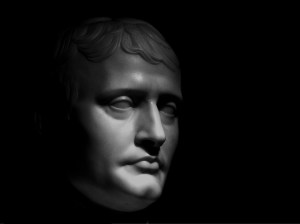
The great Irish statesman and political theorist Edmund Burke wrote a seminal essay of political theory in 1790 entitled Reflections on the Revolution in France.  His purpose was to attack the intellectual underpinnings of the revolution and show, by reasoned argument, that the French revolutionaries were engaged in the height of folly by consciously turning their backs on the past.  The long essay was cast in the form of a “letter” to an unnamed “gentleman in Paris,” and stretched to nearly 360 pages.

Continue reading

The Loss Of Memory And Attention (Podcast)

As individuals and as a society, we are steadily losing our long-term memories. Endless stimulation and “choices” have nearly turned us into the protagonist in the film Memento (2000), whose memory-loss condition puts him at the mercy of others’ manipulations.  Rote memorization–unfairly maligned by modern educators–has its merits, and deserves a reconsideration.

Continue reading

Scott Joplin: A Musical Visionary

Those who have seen the classic movie The Sting (1974) may be aware that the film’s ragtime score set off a revival of interest in the music of Scott Joplin.  Despite the incongruity with the setting of the movie (The Sting is set in the Depression of the 1930s, while ragtime is music of the 1890s), ragtime works brilliantly as a score to the film.  Its free-wheeling, optimistic, and tightly calibrated sound fits perfectly with the themes and tone of the film.  Joplin himself was a fascinating figure, a brilliant visionary who does not fit neatly into any standard classification system.

Continue reading

Theodore Roosevelt Reforms The Coinage

Theodore Roosevelt was not just a president, he was a dynamo.  He initiated anti-trust legislation to break up the plutocratic monopolies that threatened the nation’s economic life; he set aside vast tracts of western lands as national parks to protect the nation’s natural heritage against plunder by rapacious business interests; he advocated a muscular foreign policy that included direct intervention to build a canal in Panama; he promoted a new concept of nationalism; and he took steps to reform exploitative labor laws.  He was no less energetic in his private life.  Throwing himself into the thick of the action, he personally led a unit in the Spanish-American War, hunted big game in Africa, boxed, wrestled, hiked, and nearly killed himself in an incredible journey of exploration in Brazil.  There never was–and never will be again–anyone like him.  He is a man I admire deeply.

Continue reading

Some Humorous Epitaphs

Many forget that we should learn to be wise enough to laugh at the world and ourselves.  Without laughter–the universal tonic for all melancholic maladies–it becomes ever easier to take ourselves too seriously, and to retreat into comfortable recesses of our own minds that promise nothing but stagnation and sterility.  This may be the unconscious message of the humorous epitaph:  a warning to the living that our time here is not unlimited, and that unless we appreciate the idea of memento mori, we are living in delusion.  Few things are so grim that we cannot make light of them somehow.

Continue reading

The Dream Of Maxen: A Celtic Myth Of “The Mabinogion”

The Mabinogion is a name given to a collection of medieval Welsh tales drawn from the rich mythology of Celtic Britain.  The earliest manuscripts date from around 1325, but it is certain that the tales on which they were based have roots that go back centuries before this time to an age in which Welsh and Roman elements blended to form a unique oral tradition.  I have recently begun reading these tales, and it has been a refreshing experience in the literal sense of the word:  they are unlike any other myths I have encountered.  They conjure up a strange, almost hallucinatory dream-world, where heroism and great deeds exist alongside magic and surreal alternative realities.  Consider this strange yet transfixing passage from a tale called Peredur Son of Evrawg:

Continue reading

Edgar Allan Poe’s Sinister Inspiration For “The Cask Of Amontillado”

Most readers will be familiar with Edgar Allan Poe’s macabre tale The Cask of Amontillado.  It is a dark tale of revenge, in which one man deliberately intoxicates a hated enemy and then walls him up alive in a crypt.  Like most writers, Poe took his inspiration from his life experiences, and then mixed those with the creative power of his imagination.  Was The Cask of Amontillado based on an actual incident?  The answer appears to be yes, at least in part.

Continue reading

We Can’t Expect Too Much From People (Podcast)

One big frustration we can experience in life is having unrealistic expectations of other people.  That is, we can want people to behave in ways that are just not within their desires or capabilities.  What is the best way to deal with this?  We use the example of the humanist Petrarch’s strained relationship with his son.

Continue reading

The Importance Of Theodore Roosevelt’s “New Nationalism” Speech

This past weekend, I visited the John Brown cabin and museum in Osawatomie, Kansas.  This historic former residence of the abolitionist–a key figure in American Civil War history–is now a state park.  What I had not known was that the park was dedicated in 1910 by none other than Theodore Roosevelt, a man who is a personal icon of mine and certainly one of the greatest presidents in US history.

Continue reading

Sometimes It Is Not Advisable To Question Authority Or Tradition

While it may be good in some instances to question inherited tradition and authority, there are many times when one should not.  Free-thinking individualism has its place, but there is an equally valid place for respecting the power of authority and tradition.  This point is amusingly illustrated in the two anecdotes presented below.  They are related in De Slane’s edition of Ibn Khallikan’s encyclopedia, but the first tale is originally found in the Egyptian historian Al Maqrizi.

Continue reading