There is a scene in the 1987 film Wall Street when the Charlie Sheen character (Bud Fox) is about to meet the formidable Gordon Gekko (Michael Douglas). He says to himself, “Well, life all comes down to a few moments. This is one of them.”

There is a scene in the 1987 film Wall Street when the Charlie Sheen character (Bud Fox) is about to meet the formidable Gordon Gekko (Michael Douglas). He says to himself, “Well, life all comes down to a few moments. This is one of them.”


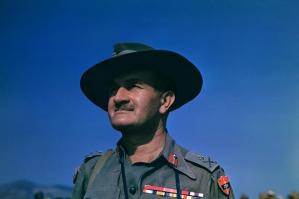
At the conclusion of his memoirs, General William Slim, the British commander in the Second World War’s Burmese and India theaters, had some pungent observations on the conduct of the war and its ultimate outcome. Originally defeated in the field, he came back to hammer the Japanese decisively in some of the most remarkable ground combat of the entire Pacific War.

The armies of the belligerents who went to war in 1914 carried rifles that today might be considered quaint. They had handsome wooden finishes, were designed for long-range fire, and were so robust that they could withstand all manner of abuse in the harsh trench environments in which they were used.
[To read the rest of article, click here.]

Small arms commentators have been predicting the demise of the submachine gun ever since the assault rifle made its inception at the end of the Second World War. And yet the weapon is still here with us. While not part of the front-line military outfit of most modern armies, it nevertheless has a role in security work and with certain special forces units. In close quarters combat, few things are more effective than a submachine gun.

The Stoner 63 System was one of those “what ifs” of small arms weapons design. The basic concept behind the system was an attempt to make use of the modular idea of interchangeability: 17 core modular “units” could be assembled to produce various types of weapons for use in different roles.

Readers may know that I’ve written two previous articles here on General William Slim’s Burma campaign during the Second World War. His memoirs continue to provide me with gems of advice on morale, conduct, and taking action.

In 1942, military forces of the Empire of Japan entered Burma and expelled the British from the country. It was one of many disasters of the war’s early years. At the time, few believed that Allied forces in Burma would be able to reconstitute themselves.

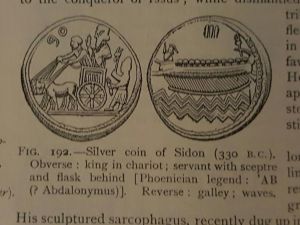
Alexander the Great knew that if he were to embark on his great project, the conquest of the Persian Empire, he would first need to secure his flanks near the Mediterranean. This meant the bringing of Syria and Egypt under his control; and to this end he moved south after subduing Asia Minor.

Finland’s armaments industry quietly produced one of the very best submachine guns of the Second World War. This weapon was the KP/-31 (also known as the Suomi m/1931). The design is not well-known now, but in its day it was the weapon that everyone else wanted.

Little Portugal, located at the western-most tip of Europe, was not endowed by fortune with natural resources (save for its Atlantic proximity). Yet it did have the daring, tenacity, and vision of great men, and that proved to be sufficient to propel it to world prominence.
You must be logged in to post a comment.