Storm Tactics: Bypassing Strong Points, Attacking Weak Points

storm1

The obvious failure of conventional infantry tactics in the early years of the First World War led to agonized soul-searching in the leadership elements of the belligerent nations.  How could the stalemate be broken?  How could ground forces move forward, and restore some sort of war of maneuver?

Continue reading

Breakout: The Escape From The Maze Prison

maze

It was touted as the “most secure prison in Western Europe.”  It was supposed to be a place for the “safekeeping” of IRA (Irish Republican Army) paramilitaries arrested in Northern Ireland.  It was Her Majesty’s Prison Maze, or more commonly known as “The Maze.”

And it became the scene of one of the most daring, well-executed prison escapes in twentieth century history.

Continue reading

The Bad Luck Of The Gardener Sinerus

gardener

Injustices thrive in atmospheres of fear and intolerance.  I came across one story recently that illustrates this point.  It could just as easily have come from Stalinist Russia, or modern-day North Korea.  The tale is found in Giuseppe Riciotti’s Age of Martyrs, and concerns the accidental martyrdom of a man named Silenus, who lived during the emperor Diocletian’s vigorous persecution of Christians in the last years of fourth century.  Riciotti does not mention the original source, but it must have come from one of the ecclesiastical historians of the period.

Continue reading

Xenophon On Cyrus’s Leadership Qualities

lead2

Xenophon’s Anabasis is one of the primary classics of ancient Greek literature.  For students of ancient Greek, it has served much the same function as has Caesar’s De Bello Gallico has for Latin; that is, it has been used as a foundational text in the study of the language.

Continue reading

The Wreck Of The Brig “Polly”: Staying Alive At Sea With Ingenuity

boat3

I recently came across a remarkable story of endurance and survival.  It hammers home the point–made repeatedly on this site–that when disaster strikes, one must dig in and use all available resources to fight on to final victory.

Continue reading

Talking And Fighting: Being Alert To “Stacking The Deck” In Negotiations

cards1

I find great profit in the study of the art of negotiation.  Where two opposing wills collide, it is essential to understand the dynamics of the interaction, so that one may have some chance of achieving the desired outcome.

When one has conducted numerous negotiations in his career, one begins to see patterns emerge.  These same patterns are also evident on the international stage, when the antagonisms of nation-states find uneasy resolution in dialogue.

Continue reading

Duress Reveals Latent Talent, And Why Women Need Role Models As Much As Men

law1

Some positive features in our characters can lie dormant for long periods of time, awaiting the right opportunity to make themselves known.  Even bad men can have positive qualities that manifest themselves only under extreme duress.

I have always thought that pressure reveals the man.  This has been my experience.  And you never really could tell who would rise to the challenge, and who would not.  Appearances in this regard can be very deceiving.

Continue reading

William H. Prescott: America’s First Great Historian

aztec

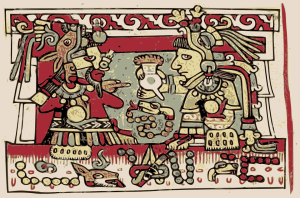
William H. Prescott was mentioned in the preceding article here, but I felt that he merited a more extended treatment in an article devoted to him alone.  He was America’s first great historian, known for his heroic style, and for his ability to fuse a meticulous attention to original sources with a striking narrative power.

Continue reading

Breakout From The Chosin Reservoir

The armies of North Korea burst into South Korea in June 1950 and quickly overwhelmed its forces, confining them to a perimeter around the city of Pusan.  Douglas MacArthur, in what can only be called a brilliant counterstroke, hit back with an amphibious landing at the city of Inchon.

Continue reading

Greed Is A Corruptor


Pyrrhus was a powerful king who ruled Epirus and Macedon for some years during the Hellenistic period. Plutarch tells a revealing story about him in his Parallel Lives (Life of Epirus, 14).

One of Pyrrhus’s valued advisors was a man named Cineas, who was entrusted on many foreign missions of great sensitivity.

[To read the rest of my article, click here.]

Continue reading