Shipwrecked On Inaccessible Island

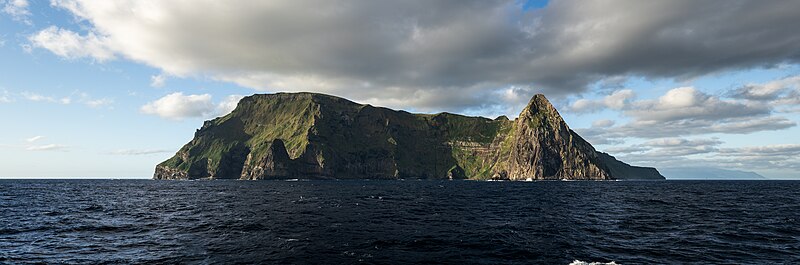
When Napoleon was finally imprisoned on St. Helena, the British government thought it prudent to occupy a small volcanic island named Tristan da Cunha, which was located about twenty degrees south of St. Helena.  It was assumed that, if the wily French emperor attempted an escape from his island lodgings, Tristan da Cunha would present an ideal staging area. Occupation of Tristan would forestall such an eventuality.  Within a few years a fort and barracks had been constructed, and the island was eventually garrisoned; a few dairy cows completed the island’s fortification.

Continue reading

The Causes Of The Rise And Expansion Of The Ottoman Empire

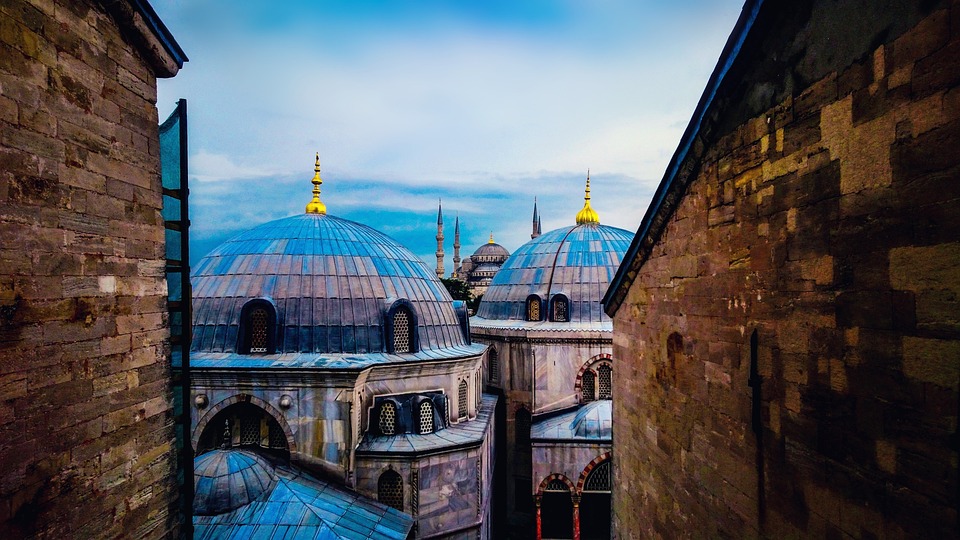
Among the most remarkable events of the late medieval period was the rise and growth of the Ottoman state in Anatolia and beyond.  George Finlay, in his seven-volume history of Greece, called the Ottoman Empire “one of the most singular creations of human genius.”  In the empire’s early centuries, at least, we cannot disagree with this verdict.  How was it that a tiny, obscure tribe of Asiatic migrants came to conquer the proud and ancient domains of the Byzantine Greeks with such rapidity? 

Continue reading

The Story Of Marcus And Barbula

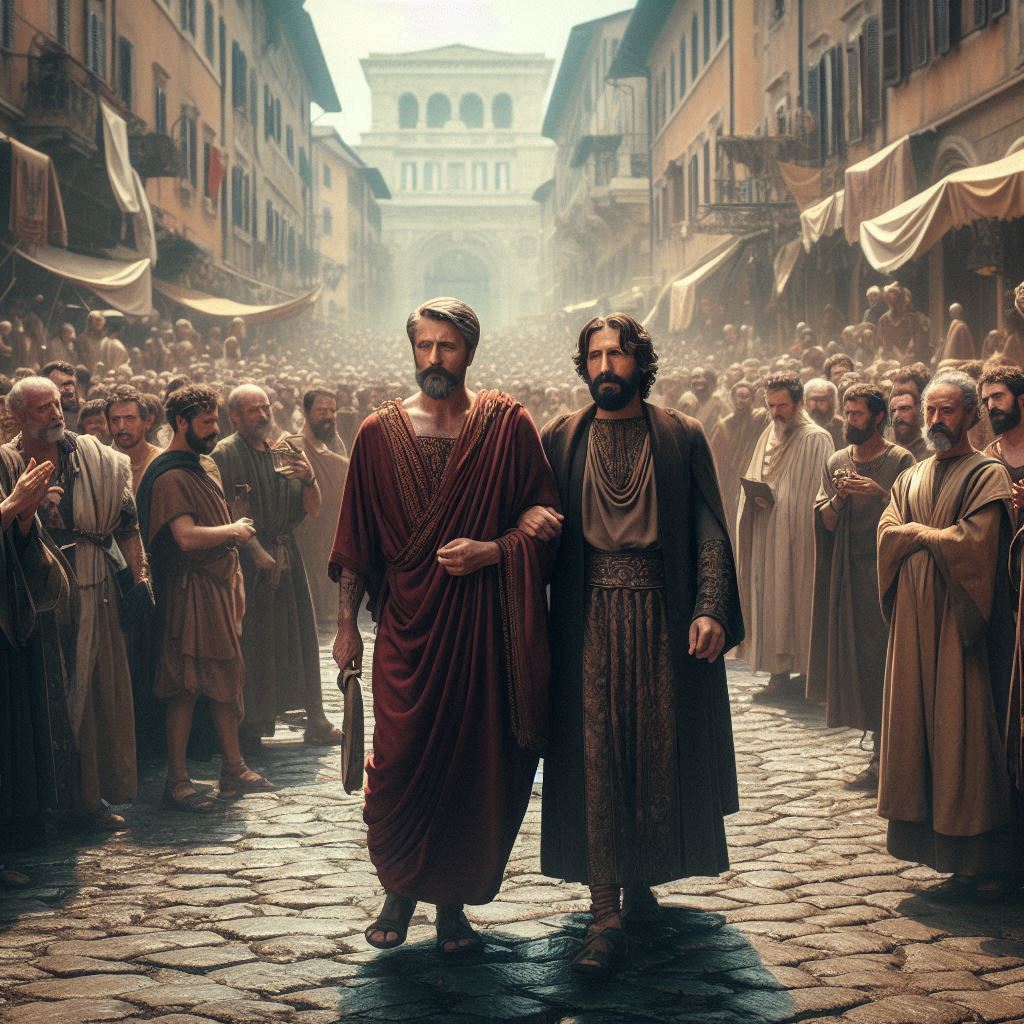
In November of 43 B.C., Rome was gripped by a terrible sense of foreboding.  The historian Appian, in his Civil Wars (IV.1.4) relates that all kinds of strange portents were observed around the city.  Statues sweated blood; a newborn infant uttered words; lightning struck sacred temples; and cattle spoke with a human voice.  So alarmed were some senators that they summoned expert diviners from Etruria to weigh these ominous signs.  The most authoritative of these was an elderly man who told them, “The monarchical rule of ancient times is returning.  You will all be slaves except me.”  Once the Etruscan priest spoke these words to the startled senators, says Appian, he closed his mouth and held his breath until he dropped dead before them.

Continue reading

The Ghosts Of St. Paul Island

St. Paul Island is one of those innumerable specks of land in the northeast Atlantic that are perpetually lashed by frigid wind and wave.  It is located about fifteen miles northeast of Cape North on Cape Breton Island; it is near the Cabot Strait between the Gulf of St. Lawrence and the Atlantic Ocean.  In centuries past it hosted residents, but is now uninhabited.

Continue reading

Two Letters Of Consolation From Abraham Lincoln

Abraham Lincoln’s literary powers were a product of his life experiences and his innate abilities.  From a young age, his exposure to tragedy had been personal and continuous.  The death of his mother, the death of Ann Rutledge, and various other hardships had given him an acute sensitivity to the meaning of loss.  In the writing of letters of consolation, Lincoln was able to harness these sentiments and express them in ways that gave specific tragedies a timeless and almost cosmic significance.  We have already here discussed the famous Bixby Letter.  Two other letters of consolation from Lincoln’s hand, much less well-known, merit our attention as models of compassion and heartfelt sympathy. 

Continue reading

When Courage Is Needed, Someone Always Has To Go First

It has been said that both courage and cowardice are contagious.  This is certainly true, as anyone who has spent time with a group engaged in some kind of enterprise knows well.  Courageous or cowardly actions always begin with one man; his example, witnessed by the rest of the group, is like a firebrand thrown on dried kindling.  And it has precisely the same effect.

Continue reading

James Madison And Abraham Lincoln: Contrasts In Wartime Leadership

It will be useful to compare the leadership styles of two wartime American presidents of the nineteenth century.  James Madison was president during the War of 1812, while Abraham Lincoln occupied the office of chief executive during the American Civil War.  The first of these must be counted a failure as a wartime commander-in-chief, while the second was able to prosecute his nation’s most terrible conflict to a successful conclusion.  What qualities enabled one to emerge triumphant, and the other to suffer the indignity of failure, we will now examine.

Continue reading

The Wounded Commodore Barney Meets The British Commanders At Bladensburg

The burning of Washington [PD: US]

It is unfortunate that the War of 1812 is understudied, for it furnishes us modernly with a great many lessons on the consequences of unpreparedness and military ineptitude in defense of one’s homeland.  While the Americans scored some notable naval victories during the war, the land campaign remains a dreary record of defeat and flight, relieved only by Andrew Jackson’s impressive, but strategically inconsequential, victory at New Orleans two weeks after the treaty concluding the conflict had been signed at Ghent. 

Continue reading

Lt. Joshua Barney Escapes From England’s Old Mill Prison

The name of Joshua Barney is unlikely to be familiar with readers.  He was, however, one of the principal American naval heroes of both the Revolutionary War and the War of 1812.  We have not sufficient space here to recount his long and distinguished career as a combatant; but we will relate his daring escape from British captivity during the revolution, as it illustrates his dominant traits of resourcefulness and courage.

Continue reading

“What You Need Is Strength Equal To Theirs”

We recently discussed some words spoken by the Greek mercenary general Charidamus to the Persian king Darius III on the eve of the Battle of Issus in 333 B.C.  But we discussed only a small part of his speech.  His complete comments are worthy of our meticulous consideration.

Continue reading