Escape From Fort Warren

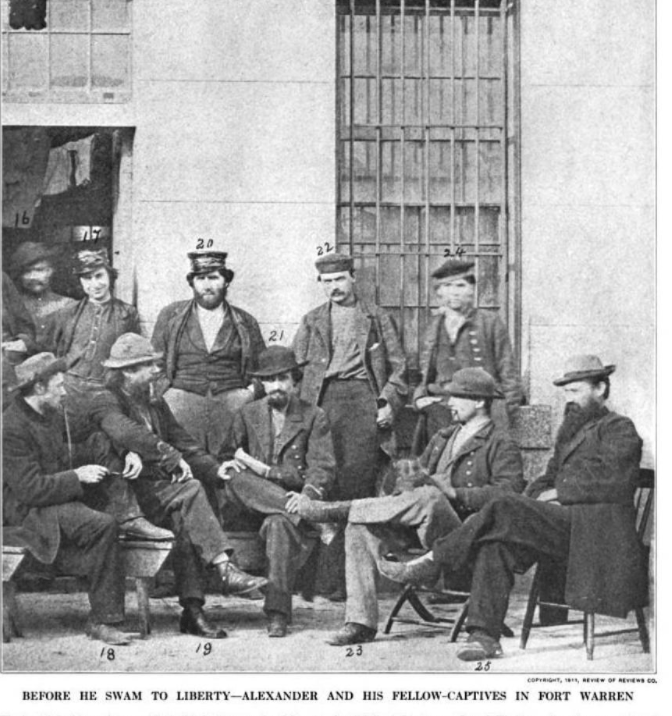
Fort Warren is a pentagonal fortress located on Georges Island in Boston Harbor.  Older reference works call the island “George’s Island,” while modern texts have removed the apostrophe; readers can decide for themselves which spelling is more authentic.  The island’s fortress was one of the most solidly constructed and intimidating military installations of nineteenth century America. It is, in fact, more of a dungeon than a fortress. 

Continue reading

The Mysterious Disappearance Of Captain Blakely And The “Wasp”

The premise of John Carpenter’s 1980 horror film The Fog is an intriguing one.  In the 1800s, we are told, a Captain Blake and his crew were lured to their deaths by townspeople who had set up a false beacon near some coastal rocks.  The ship was dashed against the rocks at night; Blake and all hands were lost.  But many generations later, the spirits of the murdered captain and his crew would wreak a brutal vengeance from beyond their watery graves. 

Continue reading

The Incredible Survival Of Augustine Le Bourdais

The ability to survive is dependent on both a strong physical constitution and an unshakeable determination.  While both of these ingredients are necessary, experience has shown that the will to live easily surpasses physical robustness in relative importance.  He whose actions are in accordance with his nature, truly lives.  Sir Thomas Browne was entirely correct when he said in his essay Religio Medici:  

Continue reading

The Astor Place Riot Of 1849: The Consequences Of Incitement

One of the strangest and deadliest riots in New York history took place on May 10, 1849 outside an opera house in Manhattan.  Although its proximate cause—a jingoistic dispute between the egos of two actors—no longer commands our attention, the riot has many lessons to teach us today.  For it was a combustible mixture of media incitement, reckless demagoguery, and opportunism that lit the fuse for an explosion that would claim around thirty dead and one hundred twenty wounded.

Continue reading

The Attack On Firebase Mary Ann

Max Hastings’s excellent history, Vietnam: An Epic Tragedy, discusses one revealing engagement that took place between American and North Vietnamese forces in late March of 1971.  This action—a ferocious assault on a remote firebase named Mary Ann—merits further reflection, I think, and we will give it its due here.

Continue reading

The Leadership Principles Of St. Benedict

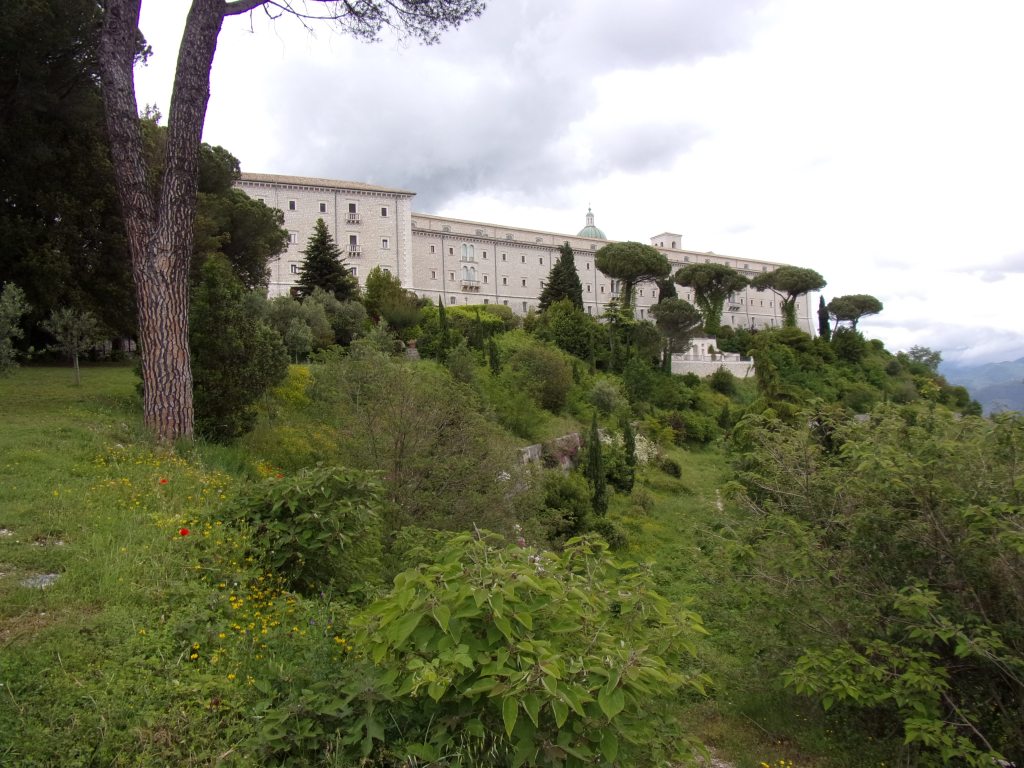
If we are to understand the mind of early medieval man, we must attempt to place ourselves in his situation and circumstances.  It is difficult for us, having been reared in an age of relative peace and prosperity, to grasp the degree to which Western Europe had succumbed to chaos, warfare, and barbarism after Roman civil authority collapsed in the fourth and fifth centuries. 

Continue reading

Roman Surgical Extraction Of Projectiles In Ancient Combat

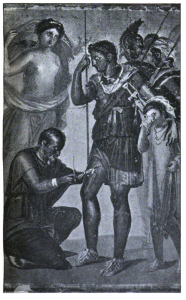
The most comprehensive treatise on Roman medicine that has survived is Celsus’s De Medicina (On Medicine), a work that fills eight carefully composed books written in a simple and elegant style.  His full name was Aulus Cornelius Celsus, and appears to have flourished during the emperorship of Tiberius (A.D. 14—37).  But beyond these bare bones we know almost nothing about the man or his background.  Scholars have established that his manual was originally part of a larger, Pliny-esque encyclopedia that included books on military science, agriculture, law, and rhetoric, among other topics; in this respect he is very much like the biographer Cornelius Nepos, whose surviving work is but a fraction of a larger corpus.

Continue reading

Max Hastings’s “The Korean War” (Review)

There are no “forgotten wars.”  We may choose to talk about them, to write about them, or to learn from them.  Or we may not.  It is a question of what value we place on the lessons.  Some eras, forged in strife and hardship, embrace history’s lessons, and consume narratives of past conflict with an eager inquisitiveness; other epochs, softened by luxury and lassitude, are largely immune to the lessons of the past.  In the end, it is always a matter of choice.

Continue reading

Prisoner Of The Bolsheviks: The Ordeal Of Henry Pearson

The newspapers and magazines of previous eras provide us a window on the age.  One gets a sense of the mood and odor of the times.  Personal accounts are better still, especially when the writer has endured a direful or traumatic experience.

Continue reading

Operation Eagle Claw: Disaster In The Desert

In early November 1979, rioting Iranian students entered the American embassy in Tehran and seized fifty-two government employees.  Whether this was a spontaneous act, or a planned operation by Iran’s revolutionary government, is still open to debate; but in either instance, the nation’s clerical leadership moved quickly to exploit the crisis.  In the United States, the Carter administration was still reeling from the shock waves sent out by the fall of the Shah, who had long been an American ally in the region.  There was a sense of confusion, even paralysis; and the problem was compounded by the fact that the Americans had very little knowledge of what was happening in Tehran.  There were no eyes and ears on the ground.

Continue reading