
What Was It That Allowed Odysseus To Return Home?

Oliver Stone’s memoir Chasing the Light, which I began reading two weeks ago, relates an interesting anecdote.  After returning from military service in Vietnam, the future director enrolled in film school at New York University; one of the classes he attended, taught by a professor named Tim Leahy, dealt with classical drama. 

Continue reading

On Whether Alexander Could Have Conquered Rome

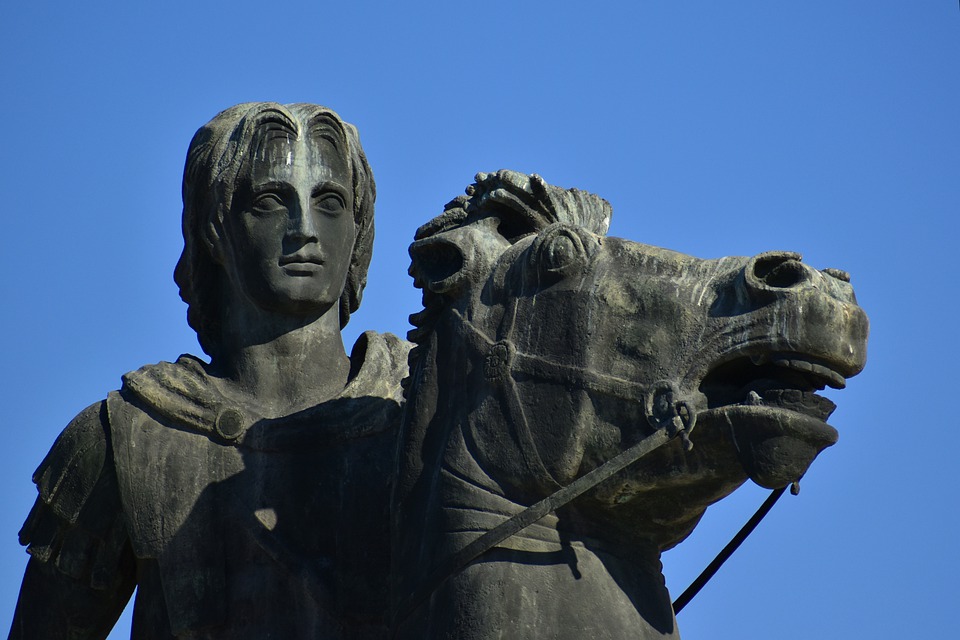
It is said that after Alexander the Great completed his conquests in Asia, he intended eventually to turn his gaze westward to the Mediterranean region, and bring those lands under his control.  Death, of course, overtook him before he could begin this campaign.  Either the lingering effects of his battlefield wounds, or his dissolute living habits, brought him to an early grave. 

Continue reading

The Moral Corruption Of The Elites

The military historian Polyaenus, in his Stratagems of War (II.17), relates the following anecdote.  There was once a man named Dinias, the son of Telesippus, who lived in the city of Cranon, which is located in the region of Thessaly in Greece.  He was originally from the town of Pheraea.  He was a poor man, we are told, and earned his living by hunting and fishing in the countryside near the city.

Continue reading

Obstacles And Pitfalls For The Youthful Student Of Philosophy

I was recently asked in correspondence to provide some thoughts on the pitfalls and obstacles to the study of philosophy.  I have to admit that it was something of a relief to get this request, as it offers me a pretext to describe my own ideas on this subject.  All of us seek a greater level of understanding of things; but perhaps few of us give much thought to avoiding the obstacles to understanding.  A horse and its equestrian rider, however, cannot clear a hurdle until they have had experience in judging its height and length.  Here, then, are some of the most commonly encountered pitfalls of the student of philosophy. 

Continue reading

Maneuvering Is Not A Substitute For Direct Action

Winston Churchill, like most statesmen, was known to have little patience for pettifoggery and pirouetting around a problem.  His mind instinctively sought the core of a problem, and was able to slash through brambles and thickets to find it.  His biographer William Manchester wrote, “[He] cared little for obtuse political or social theories; he was a man of action:  state the problem, find a solution, and solve the problem.” 

Continue reading

All Opportunity For The Good, Yet None For The Unworthy

Philo of Alexandria wrote a relatively obscure essay entitled On the Prayers And Curses Uttered by Noah When He Became Sober.  His translator has fortunately shortened this unwieldy title to the compact De Sobrietate, or On Sobriety.  It contains the following passage of importance:

Continue reading

The Almond, The Virtues, And Liberty Of Conscience

The philosopher Philo of Alexandria relates the following anecdote in his short treatise On the Life of Moses (II.23.178).  The prophet Moses, we are told, had appointed his brother to the office of high priest.  His decision had been based on his brother’s merits, but there was inevitably some grumbling by people who believed that the appointment was the result of familial favoritism. 

Continue reading

Charlemagne Instructs On The Moral Requirements Of Leadership

We do not know the precise location of Charlemagne’s birthplace.  He donned the crown at the ripe age of twenty-nine in 771 A.D. upon the death of Carloman II.  From that moment he became embroiled in an almost ceaseless series of military campaigns designed both to expand his frontiers and safeguard them; in this turbulent age, kings needed to fight as well as administrate.  Historians tell us that he undertook around fifty-three campaigns, and personally commanded most of them. 

Continue reading

Anecdotes From The Court Of Charlemagne

The chronicler known to posterity as Notker the Stammerer (“Notker Balbulus”) was born in what is now Switzerland around A.D. 840.  He seems to have come from a family that had the means to provide him with the best education his era could offer.  We find him in adulthood as a monk at the monastery at St. Gall, where he was able to exercise his considerable musical talents in composing verses and hymns. 

Continue reading

An Arabic Translation Of “Seven Pillars Of A Noble Youth”

Honorius, who manages a blog dealing with themes of history, virtue, and philosophy, has just published a beautiful Arabic translation of my essay, Seven Pillars of a Noble Youth. It is very much appreciated.

Continue reading