

George Washington was keenly aware of the psychological pressures of being in debt. He once advised a nephew on the subject:
George Washington was keenly aware of the psychological pressures of being in debt. He once advised a nephew on the subject:
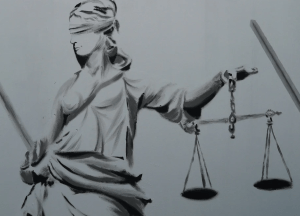
The jurist, poet, and scholar Baha Al-Din Ibn Shaddad (بهاء الدين ابن شداد) was born in the city of Mosul, Iraq in 1145. He was a close friend of the famed commander and statesman Saladin, and wrote a highly valued biography of that eminent conqueror. He served for a time as the qadi (judge) of Aleppo, and in this capacity had much opportunity to acquaint himself to the realities of human behavior; it seems that, no matter the country or culture, career lawyers and judges make remarkably astute observers. Ibn Shaddad’s biographer Ibn Khallikan says that the judge often liked to quote this line of verse from the poet Ibn Al-Fadl (known as Surr-Durr):
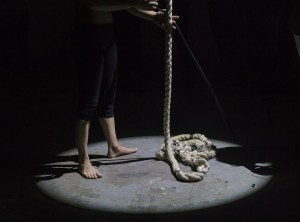
The traveler Ibn Battuta visited north India in the early 1330s to seek the employment of the sultan Mohammad Ibn Tughluq. At some point during his residence in the city of Delhi, he had occasion to observe the practices of the Indian holy men, whom he called jugis (i.e., yogis).
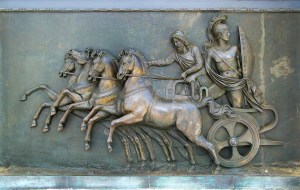
There is an interesting passage in the writings of Valerius Maximus (III.3) that is open to different interpretations. It reads as follows:

The medieval Arab traveler Ibn Battuta passed through Persia during his many years of wanderings. One of the regions he visited there was Lorestan, which is today a province in western Iran, situated in the Zagros mountains. Lorestan was at that time ruled by Muzaffar Al-Din Afrasiyab, a member of the Hazaraspid dynasty, which was a line of Kurdish Sunni composition. The sultans who ruled this country carried the title atabek, a hereditary Turkic and Persian title of nobility.

It has been said, my son, that a society which neglects its youth is a society unworthy of survival. For while libraries and museums may be repositories of our cultural heritage, it is the youth that embody our sentient aspirations, and, through their activities, redeem our errors with the vitality of innocence. Yet surging waters require dams and embankments to control their flows; their energies must be checked and directed into proper channels, lest this raw force of effluence create a destructive tide. To this end I offer some words of advice. I have drawn up seven of them; there are probably many more, but certainly there are none less.

Herman Melville’s first book, Typee, describes his adventures among the natives of the Marquesas Islands in the South Pacific. His whaler, the Acushnet, had reached Nuku Hiva, and by that time the young rogue had reached the limits of his tolerance of shipboard life. So he left. He and his friend Toby took a few personal possessions and descended into the valley of the Typee (Taipi) tribe, to see what the great Unknown had to offer. Melville had had enough with tyrannical ship-captains; he could accept no further impediments to his exploratory desires. As the Roman historian Velleius Paterculus says,

I have just finished watching a reality television series on Netflix called Alone: The Arctic. I believe it was originally produced by the History Channel. Now before you roll your eyes and dismiss what I have to say out of hand, I would ask you for a fair hearing. Hear me out, dear reader: for I too once retained your same squint-eyed skepticism.

In one of his letters to his brother Quintus, Marcus Tullius Cicero makes the following observation:
The more virtuous a man is, the less he considers others to be evil. [Letters to Quintus I.4.12]
The idea is the same as that expressed in an old Korean proverb, which I remember from my residence in that country many years ago: “In the eyes of a Buddha, everything is Buddha-like; but to a pig’s eyes, everything appears piggish.” The proverb sounds much more beautiful, of course, in the original Korean; but the point remains valid. A great spirit—a soul imbued with a certain nobility—finds it difficult to comprehend, or accept, venality and baseness displayed by others. Such a man can be trained to recognize and avoid these things, but they will always retain an air of incomprehensibility to him, as if they were fundamentally anathema to his soul. Why is this?
Continue reading
The Iberian peninsula’s uniqueness derives from the fact that its shores have been washed by successive cultural waves: Roman, Gothic, Arab, and then indigenous Christian. No other region of Europe has acted as a similar crossroad, or has stimulated a comparable fermentation. Each of these civilizational tides altered the terrain as it flowed in, and then receded. We now turn, once again, to the world of medieval Arabic scholarship, and attempt to pry open its chests of mysterious treasures.


You must be logged in to post a comment.