

Some recent travel experiences reminded me of a passage from Machiavelli’s Discourses, an intermittent companion of mine these past few weeks. The quote appears in I.17 and contains several related ideas which we will comment on.
Some recent travel experiences reminded me of a passage from Machiavelli’s Discourses, an intermittent companion of mine these past few weeks. The quote appears in I.17 and contains several related ideas which we will comment on.

If a political scientist were asked who might be the most misunderstood writer of political theory, he would probably have the name of Machiavelli high on his list. To his name have been ascribed sinister motivations and calculated duplicity; and unscrupulous cherry-picking of his quotes has fashioned him into an ogre in the popular mind.
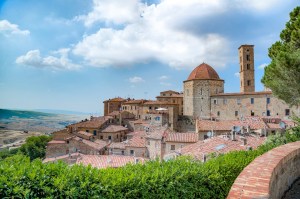
Sometimes being away from the fray and the fracases of life can allow us to compose our thoughts and regenerate our spirits. This has the effect of spurring the creative soul on to higher amplitudes of output. We forget just how distracting it is for the mind to be bombarded with invasive stimuli; and while periods of withdrawal from the fray should not be permanent, they can, in the right doses, provide just that right proportion of flint and steel to spark great works.
Today Mr. Andrew Vittoria released a very detailed and cogent You Tube video review of my On Duties. Readers seeking an in-depth and reasoned commentary will no doubt find this video useful. I have embedded the video below.

The biographer Ibn Khallikan relates the following anecdote about a man named Abu Amir Orwa Ibn Uzaina, a scholar and poet who died around A.D. 736. Not much is known of his life except that he was a member of the Iraqi tribe of al-Laith. It illustrates the importance of not chasing things in life too much. From personal experience I can attest to this principle’s soundness. When I was younger, there were times when I would try too much to chase things or control events.
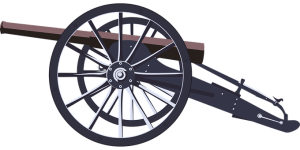
Captain Adolf Von Schell was a veteran German officer of the First World War. In 1914 he first served in Belgium, then saw extensive action on the eastern front in both Romania and the Russian border. After the end of the conflict in 1918, he stayed in the army; he was even sent to one of the US Army’s military schools in Fort Benning in 1930. He delivered many lectures to American officers on his combat lessons of the Great War; these were later collected and published under the title Battle Leadership.

This story is found in Giovanni Boccaccio’s On Famous Women (De mulieribus claris). The same qualities of greatness of soul (magnitudo animi and munificentia animi) and moral character that make men great also serve the same purpose for women, as I have recounted in these pages many times before. It is right, then, for us to praise these virtues wherever we find them.

There is a passage in Cicero’s treatise Tusculan Disputations I was thinking about today while driving home from work. The passage begins as a parable, then closes with a glorious invocation to action. Cicero makes an analogy from nature observed near the River Hypanis, then draws some conclusions from that analogy. He says:

It is unwise to incur the wrath of a powerful man if such a situation may be avoided. Sometimes it can; other times it cannot. Even being in the proximity of power can be perilous, as authority has a way of coloring everything in its field of vision with suspicion. An illustration of this principle appears in Ibn Khallikan’s Biographical Dictionary on the life of the court official (wazir) Abu Ayyub Al Muryani, who served the second Abbasid caliph, Al Mansur.

Several days ago I received a warm email from a young guy in Brooklyn who had read one of my recent articles here. The story, told in the form of a fable, underscored the importance of taking the initiative in matters of love. His questions were these: How do I know when to take the initiative? How can I develop my “initiative-taking” spirit?


You must be logged in to post a comment.