
What did the ancients think about depression, and how to cure it? We will look at the views of Celsus, who wrote the most complete medical guide that has survived from Roman times (excluding the writings of Galen).
What did the ancients think about depression, and how to cure it? We will look at the views of Celsus, who wrote the most complete medical guide that has survived from Roman times (excluding the writings of Galen).

Peroz I (or Pirouz) was a Persian king who wore the royal diadem from about A.D. 459 to 484. The Greek historian Procopius (I.4.18) relates a great fable about him and his pearl, which we will reproduce here. As is often the case with these enchanting old tales, the reader will be asked to suspend his credulity as to the fable’s literal truth, while being mindful of its deeper purpose as a moral exemplar.

We all desire to retain a sense of connection to the past. It is part of human nature. Too sudden a break with tradition can produce something very much like insanity; in individuals we call this a broken mind, and in nations we call it revolution. And both of these reactions are destructive. And at the same time, we need to feel we can project ourselves into the future, somehow. We want to escape the limitations of this frail physical life, with its miserly duration and inconstant rewards.

I am an admirer of the author Victor Suvorov. I wish I could meet and speak with him. He served for thirty years as an officer in the Soviet Army before defecting to the West in the 1980s. In his book Inside The Soviet Army, he tells the following anecdote:
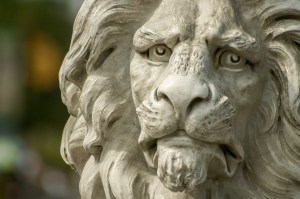
The first of the Seljuk sultans was Togrul Beg. Of him Edward Gibbon said, “It would be superfluous to praise the valour of a Turk; and the ambition of Togrul was equal to his valour.” This is a supreme compliment, and entirely true. By the time of his death in 1063 he had firmly laid the foundations for the Seljuk Empire in the Middle East and Central Asia.
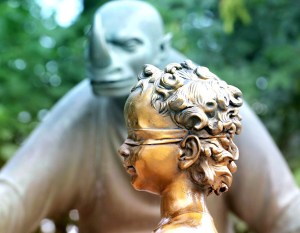
One of the greatest of the medieval Turkish princes was Mahmud of Ghazni (محمود غزنوی) or Mahmud Ghaznawi. He lived from about 971 to 1030. During this time his forces conquered large parts of what is now Iran, Afghanistan, and northern India. It was apparently for him that the title of sultan was first invented.

The Soviet Union is no more, as everyone knows. Its political system proved to be unsuccessful; it was incapable of adapting to the challenges of history.

Here are some sayings and stories taken from Diogenes Laertius’s Lives of the Philosophers. I’ve mentioned this book in a few previous articles here. Practical life advice, amusing anecdotes, and mischievous criticisms of famous names never lose their freshness or fail to bring a smile. Indeed, we often forget that one of the greatest lessons philosophy can teach us is a sense of humor about ourselves and most other worldly things.

Diogenes Laertius’s Lives of the Philosophers contains interesting stories and sayings of a great many ancient Greek sages, of whom most we would otherwise know almost nothing. My own well-worn copy of the book presented me recently with the wit and wisdom of Lyco, who is said to have lived from 299 to 225 B.C. The details about his life and legacy are found in V.4 of the Lives.
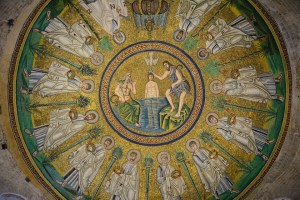
Michael Psellus (1017-1078?) was a Greek cleric, historian, and advisor to a number of Byzantine emperors. His work, known by the name Chronographia, is a series of biographical portraits of fourteen emperors occupying the throne of the Eastern Roman Empire from about 978 to 1050. Although not a well-known work, it is a candid and intimate record of palace events that the author had first-hand knowledge of.


You must be logged in to post a comment.